
Tourism
Most expensive summer on record fills hotels in Spain, but with fewer domestic tourists
The country is, after France, the most visited by holidaymakers in the world and remains in second place in Europe in prices, only behind Italy

Madrid
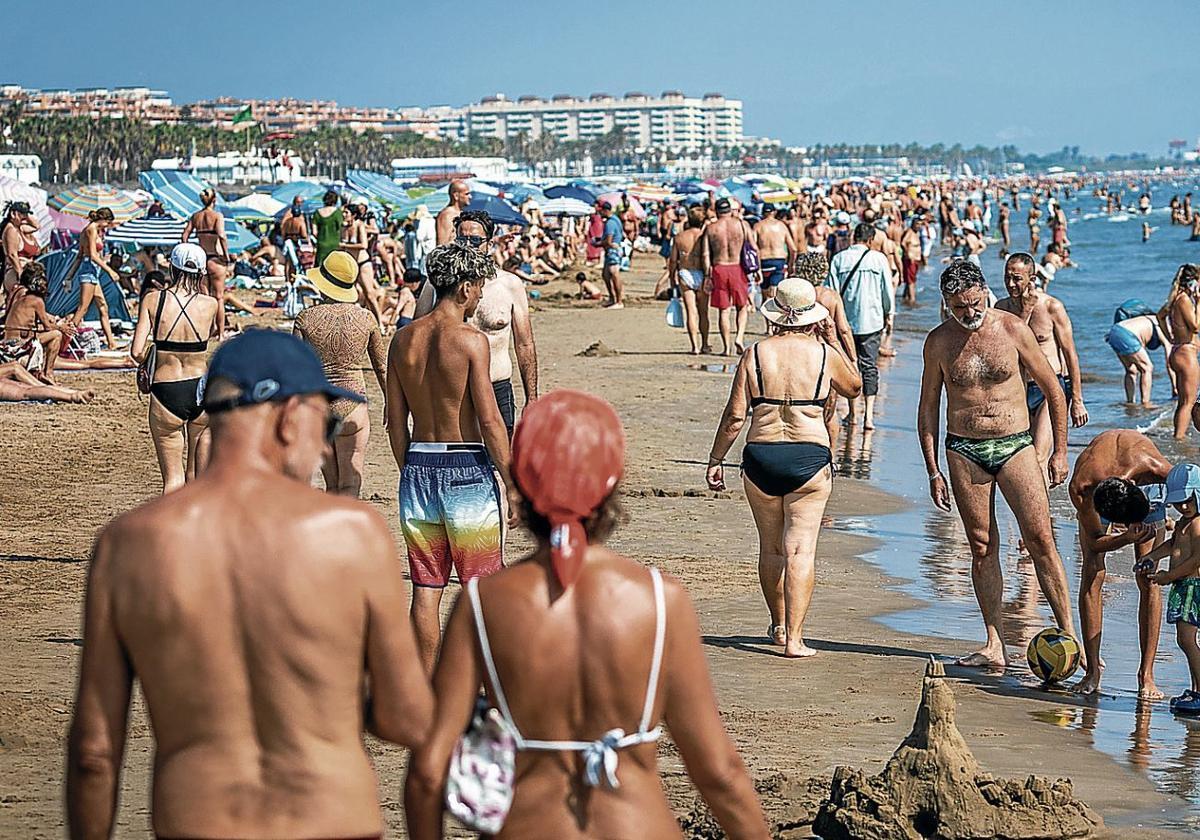
It looks set to be another record summer after Spain registered the highest number of tourists ever in 2024. They also spent the most ever. Tourism has become more of a year-round feature, moving away from just the typical sun-and-sand locations. Even so, the summer season continues to be - as is normal for the peak holiday period - the time when most people visit Spain. The data from Spain's INE national statistics institute leaves no room for doubt: 94 million visitor arrivals to Spain in 2024 as a whole, of which 22 million were between July and August, 7% more than in 2023. This year, nearly 100 million visitors are expected, 5% more, with an estimated expenditure of almost 136 billion euros.
Another record will be set by the prices charged by tourism businesses. A recent report by Amadeus and the UN indicates that the average daily rate (ADR) for accommodation in Spain rose to 240 euros in April, well above the European average of 207 euros. Only Italy, one of the main rivals in the Mediterranean zone, remains more expensive than Spain (311 euros per day), while its main competitors (in terms of climate and, thus far, price, such as Turkey and Portugal) lag far behind in terms of hotel rates. Spain's neighbour registered a daily rate of 231 euros, while Turkey was only 156 euros, according to this report.
Spain has gotten itself into such a privileged position in terms of tourism that there is a directly proportional relationship between visitors and prices. In other words, the more tourists that come to Spain, the higher the prices. Yet this does not seem to be stalling tourism, although a recent report by CaixaBank Research predicts a slowdown in the sector's growth after years of record highs, as well as reflecting that Spanish residents and citizens are travelling abroad more because of high domestic prices.
The Spanish hoteliers' trade association (Cehat) forecasts that prices will rise by 5% on average and the number of visitors will increase by another 5% thanks to improved air connectivity. "The booking figures are record-breaking. Already 53% of places have been sold," said Cehat president, Jorge Marichal, who believes that the hotel sector now faces the challenge of, between tourists and residents, "sustainably managing" this high occupancy.
Basque Country and Andalucía region, both on the rise
The latest INE data for May indicated that the occupancy rate per room set a record at 71%, which predicts a fully booked summer. In 2019, the occupancy rate per room in May was 66%. Moreover, some places exceed 80%, such as Madrid, Malaga and Barcelona, while the Balearic and Canary Islands are close behind.
Combining the incessant rise in rates with the increase in occupancy, the average revenue per available room (Revpar) also increased, climbing in May to 83 euros, according to INE data. This means that this indicator of hotel profitability has tripled since the pandemic.
People living in Spain will spend an average of 1,225 euros on their holidays, although 22% will not go on a trip at all.
Industry experts predict a slowdown in the tourism sector after three years of record figures
UN tourism data reveals that, since 2001, Spain has been the country with the second highest number of international tourists in the world, behind only France, a figure that has continued to rise. In terms of revenue, Spain is also the country with the second highest share, with 6.1% of the sector's total global revenue, behind only the USA (12.4%).
The case of Madrid is paradigmatic. Since the pandemic, both the arrival of tourists and the rise in prices have intensified much more than in other parts of Spain. Furthermore, Amadeus data reveals that it is the leading European capital in terms of bookings (17% more than in 2024), even ahead of Rome.
Other Spanish cities in the top 10 most sought-after by holidaymakers are Barcelona, Palma de Mallorca, Malaga and Santa Cruz de Tenerife. Interestingly, the report also focused on how the demand for secondary destinations has increased, with visitors "returning for less crowded experiences." Behind Madrid in terms of prices were Catalonia (138 euros on average per room), the Basque Country (136 euros), the Balearic Islands (119 euros) and Andalucía (118 euros).
Spain is positioned as one of the few countries in the travel industry to escape the stagnation of hotel bookings. In its latest report, the Siteminder platform points to a growth of 1.5% in Spain with respect to 2024, compared to a 1.2% global decline.
By region, Andalucía (up 2.4%), but especially the north of Spain, leads the way in growth (up 9.7%), while it slows in the Balearic Islands (-4%) and the Mediterranean coast (-3%).
Spending remains high, but will fall by 6% compared to last year because there will be fewer domestic tourists on holiday. Cetelem's data points to an average expenditure of 1,225 euros this summer, but 22% of Spanish citizens say they will not travel this year. The majority are feeling the pinch due to the difficult economic situation, followed by the desire to save up more money as the second most mentioned reason among those surveyed. The biggest outlay will be on accommodation, with an average spend of 579 euros per person, while transport costs total 234 euros.
This level of spending will mean that 20% of domestic holidaymakers will have to go into debt to pay for their holidays. Thus, the most expensive summer in history will have a rebound effect: a surge in borrowing. Data from the Bravo asset management company shows that accommodation has made this year's holidays the most expensive, followed by eating out and transport. As a result, 70% of domestic tourists recognise that holidays have a negative impact on their financial stability.
![[]](http://static.vocstatic.com/voc26/latest/assets/images/favicon/surinenglish/apple-touch-icon-57x57.png)