
Air travel
Malaga airport forecast to reach 31 million passengers in one year by 2031
The new airport regulation document Dora III estimates this growth rate taking into account the investment that the Costa del Sol airport will receive for its expansion

Málaga
Malaga Airport will reach almost 31 million passengers in one year by 2031. This is one of the predictions of airport operator Aena's new Dora III regulation document for the 2027-2031 period, due to be ratified by the Spanish cabinet in September.
Dora III foresees a growth in passenger numbers at all of Spain's biggest airports, considering that the country has the highest air traffic in Europe.
Leading the ranking are the airports of Madrid (73.3 million passengers in 2031), Barcelona (60.2 million) and Palma de Mallorca (35.7 million). By a considerable margin, Alicante Airport follows Malaga with 22.3 million.
Malaga Airport expansion
A record of 31 million passengers seems overwhelming if we take into account Malaga Airport's current absolute maximum capacity of 30 million passengers. Aena's estimates, however, take into account the Costa del Sol facility's planned expansion.
The Dora III document contemplates an investment of 1.5 billion euros for the expansion of Malaga Airport, which has improvement contracts worth 90 million euros already approved.
President of Aena Maurici Lucena has stated that investment is crucial for Spain's airports not to become "too small and uncomfortable for passengers".
In the case of Malaga, Dora III includes key actions to nearly double the surface area of the space occupied by the terminals from 80,000 square metres to 140,000.
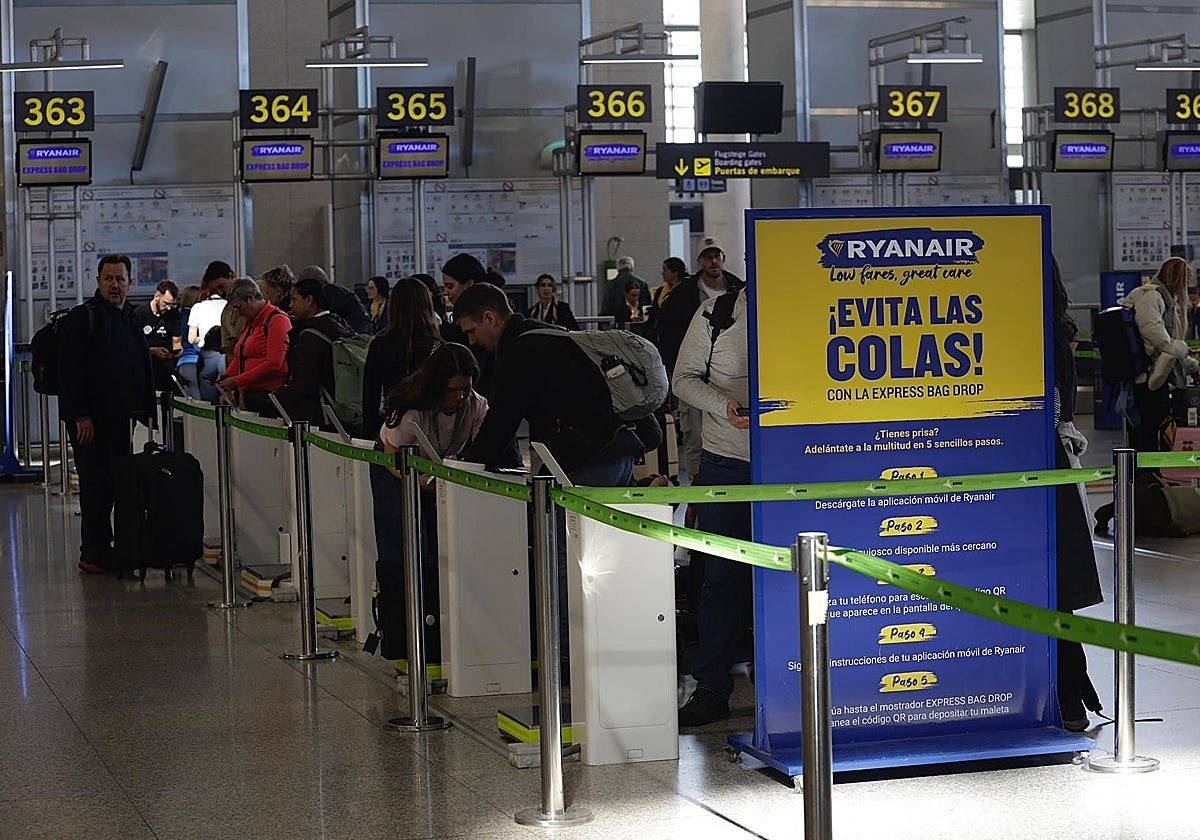
Among the actions to adapt terminal capacity and streamline airport processes, the following stand out: the construction of a new docking platform for non-Schengen traffic with a centralised border control, an increase in the number of aircraft contact positions (thereby allowing more passengers to board and disembark via airbridges), an increase in the area allocated to security control and a redesign of the baggage-handling system to improve operations for the handling agents.
Also noteworthy is the planned 41% increase in the surface area for commercial activity in the main terminal, a proportion that will increase to 43% in the case of the spaces reserved for VIP lounges. On the airfield, new taxing lanes will be built, connecting runways to the apron where aircraft are parked, which will improve the flow of air traffic on the ground. Urban layout and access points will be improved, in addition to increasing parking capacity and optimising use of that car parking.
In figures, the security screening area will increase by 112%, passport control for departures by 515%, the non-Schengen/flexible waiting and boarding area by 381% and the Schengen (EU) flights area by 126%. Commercial areas and retail space will also increase by 41%.
The aim of this complex reform is for the Costa del Sol to reach 200 destinations around the world. As Minister of Transport Óscar Puente said last year, "this expansion will be an opportunity to consolidate Malaga as an international hub".
Dora III's plans for Spain
At the presentation of Dora III, Maurici said that this proposal aims to "sculpt, prepare and improve Spanish airports for the next 30 years". The challenge will be for the expansion work to coexist with the normal activity of the airports, while maintaining quality standards.
Spain will invest a total of 13 billion euros in its airport network between 2027 and 2031. In these five years, 1.7 billion passengers will pass through its terminals.
13
billion euros is what Aena plans to invest in Spanish airports in the 2027-2031 period, which includes the Malaga Airport expansion project worth 1.5 billion euros
"These are flattering prospects and we have to ensure that the infrastructure operates smoothly," Maurici said. In order for Aena to maintain quality, airports that are reaching their technical capacity must grow.
The Dora III document is now pending approval from the state market competition watchdog. Each region will also prepare to make airport improvement proposals to cabinet.
Airport fee increase proposal
Despite this large investment wave, the Dora III document proposes an average annual fare increase of only 43 cents per passenger, although even this rather small increase has led to opposition from major airlines.
In response to criticism, Aena said that these fares will adjust to the size of airports and that the cost for companies is still "competitive", allowing them to remain highly efficient.
![[]](http://static.vocstatic.com/voc26/latest/assets/images/favicon/surinenglish/apple-touch-icon-57x57.png)