
Infrastructure
Expansion process under way for close-to-capacity Malaga Airport to handle 36 million passengers a year
Aena's board of directors has approved the multi-million-euro public tender for bidding companies to draw up the remodelling plans for the gateway to the Costa del Sol
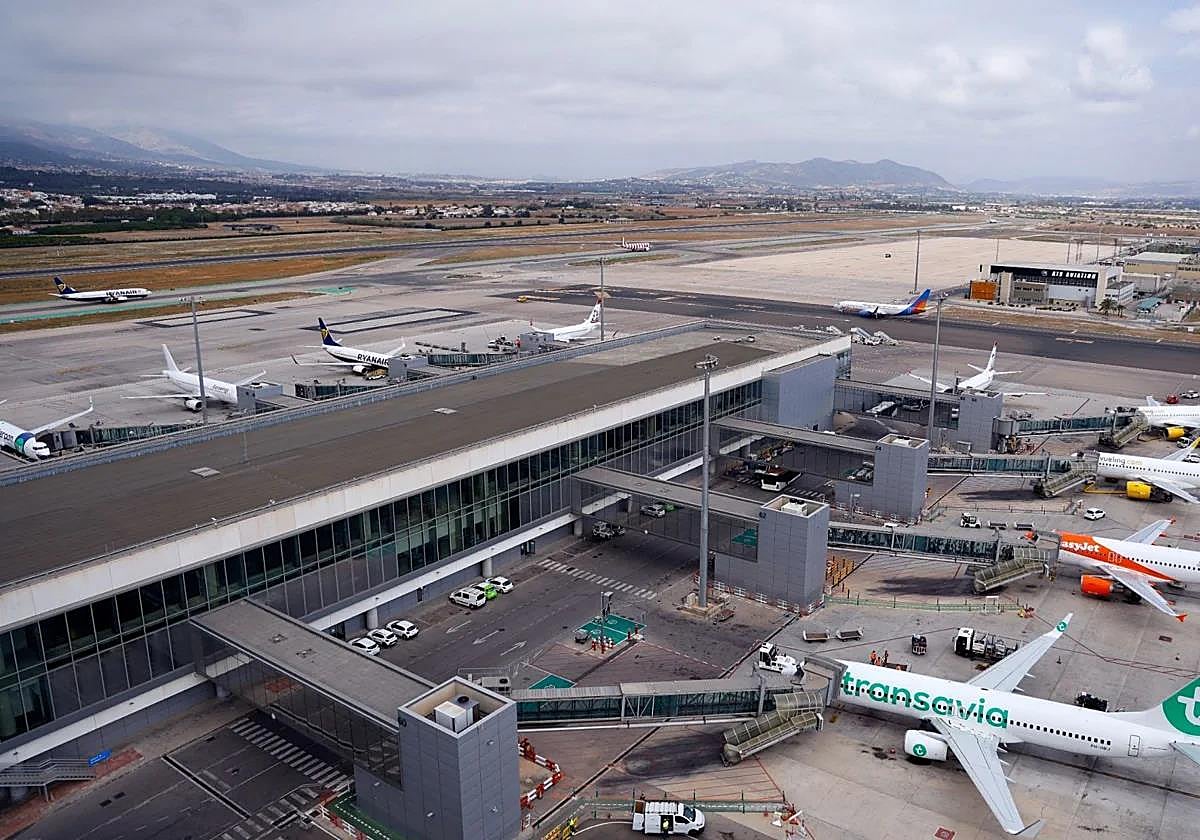

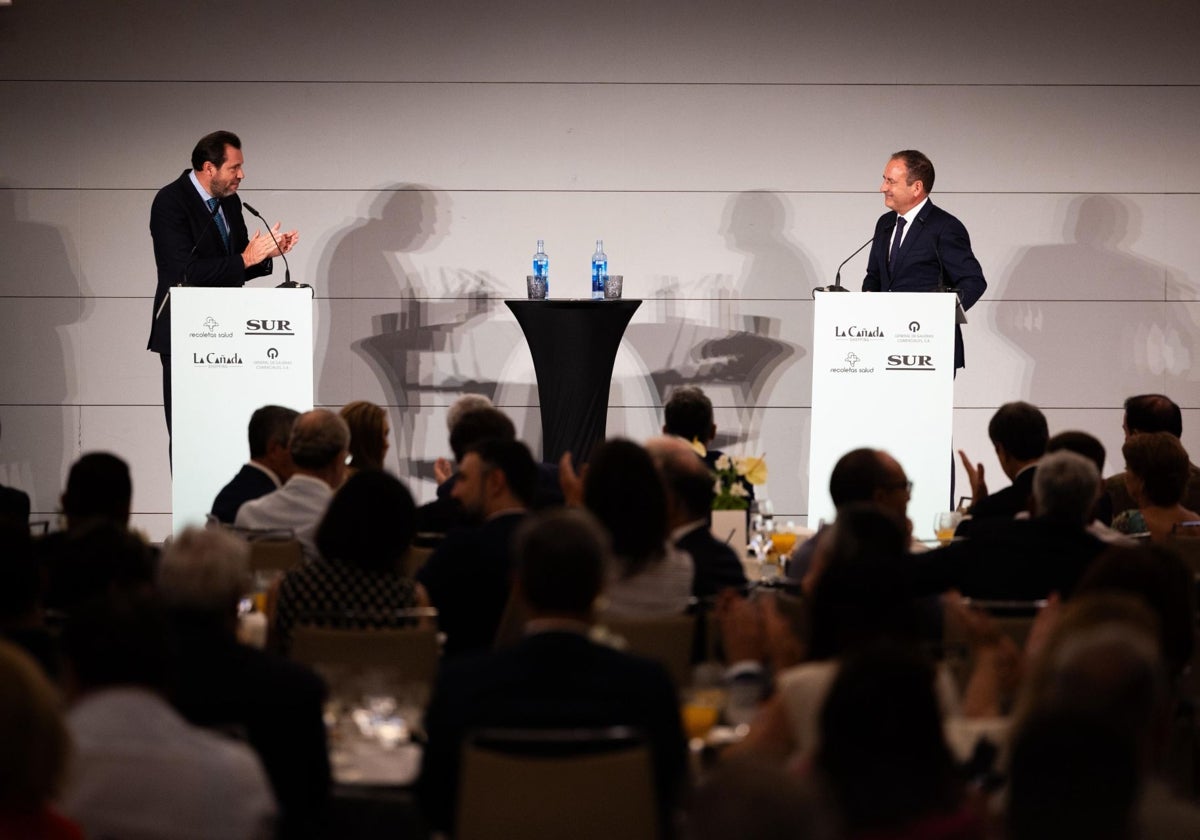
The expansion and remodelling of Malaga Airport is finally ready for take-off. As announced by Spain's transport minister, Óscar Puente, recently at the forum organised by SUR, the meeting of Aena's board of directors held the previous Tuesday authorised the opening of a public tender to select and contract the specialised aeronautical consultancies that will be responsible for drawing up the refurbishment plans for the terminal.
The approved tender, with an estimated cost of 36,525,000 euros, aims to select the technical assistance team that will draft the expansion project. This procedure marks the start of this grand renovation, which will be "the most ambitious in these facilities since 2010 (when Terminal 3 was inaugurated) and will entail an investment of approximately 1.5 billion euros", according to Aena, the company running most of Spain's airport network.
The document resulting from this technical input will serve as a "roadmap for the design and subsequent development of the planned actions, making it a fundamental step." "Even more so, considering that the airport will remain operational while the work is being carried out, so properly defining the work will not only be essential to ensure diligent execution, but also to plan its coordination and minimise the impact on the day-to-day running of the facilities", said Aena's spokesperson.
As such, work to develop plans for the future extension is expected to begin next year (2026). "I am convinced that this expansion is both a technical challenge and an opportunity to consolidate Malaga as an international hub," said the transport minister, emphasising that all this work will be included in the future Dora III plan (the regulation and management of Spain's airport network), which will be approved in September 2026 and will then be active from 2027 to 2031. Therefore, this must be the target date for the work.
As a result, "Malaga's gateway to the rest of the world", as Óscar Puente described it, will receive heavy investment in the coming years by Aena for the expansion of these facilities, which will increase airport capacity to 36 million passengers, as well as significantly improving the travel experience.
The minister was quick to comment on this announcement: "I made a commitment a few days ago in Malaga to expanding the airport and today we are getting that process under way. The Aena board of directors has approved the tender for assistance in drafting the project. More capacity and more quality for the airport, with an overall investment of 1.5 billion euros."
For now there is still room for growth, as the airport's facilities can continue to absorb up to 30 million passengers, thanks to the investments being made for modernisation. In this regard, Puente said that, in the period 2022-2026 alone, more than 100 million euros have been invested. Still, given the significant growth forecasts, "It's necessary to anticipate and not react." That is why Aena has already completed the functional study of the airport.
Doubling terminal size
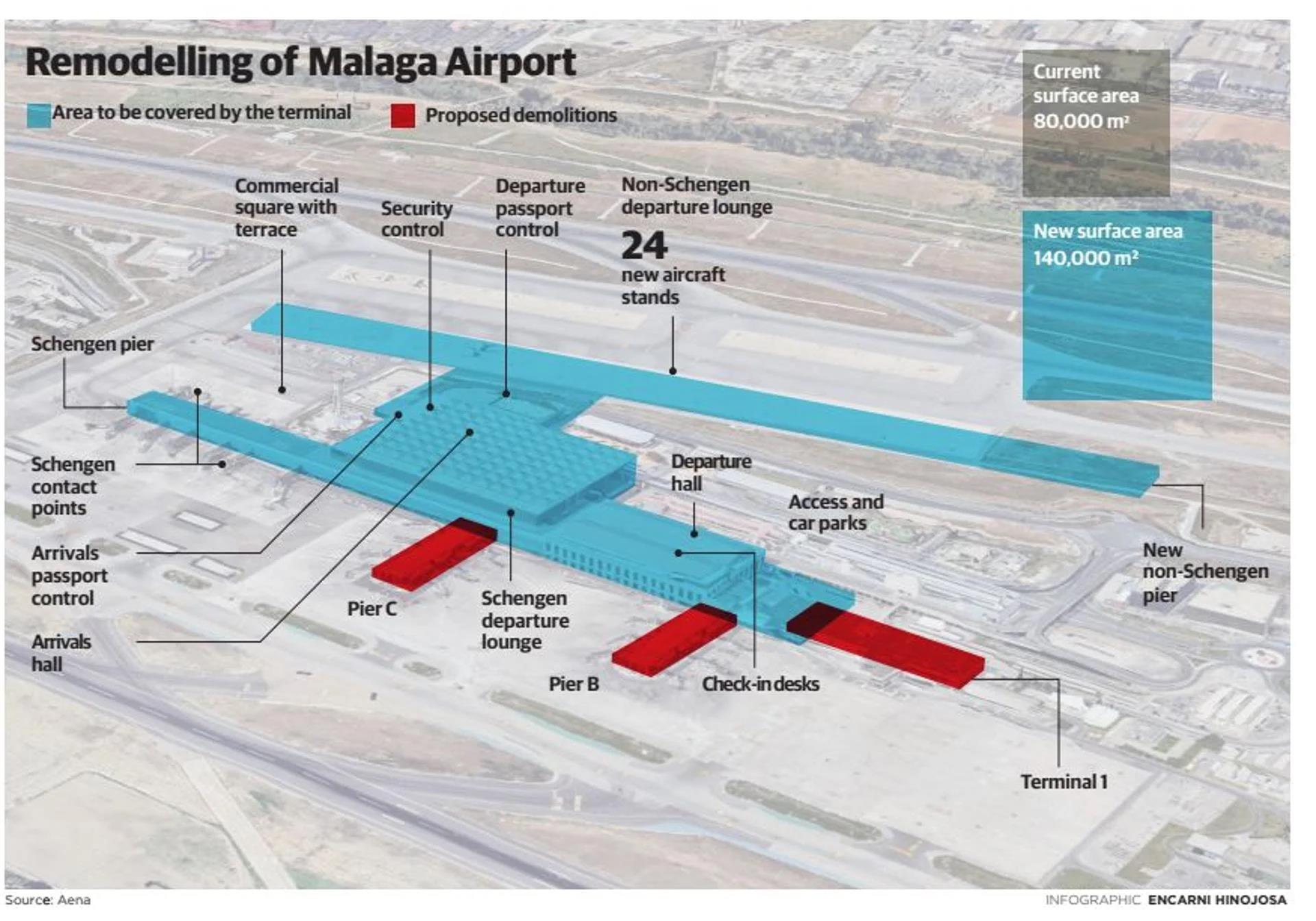
This announcement includes key actions to nearly double the surface area of the space occupied by the terminals from 80,000 square metres to 140,000m2. Among the actions to be undertaken to adapt terminal capacity and streamline airport processes, the following stand out: the construction of a new docking platform for non-Schengen traffic with a centralised border control, an increase in the number of aircraft contact positions (thereby allowing more passengers to board and disembark via airbridges), an increase in the area allocated to security control and a redesign of the baggage-handling system to improve operations for the handling agents.
Also noteworthy is the planned 41% increase in the surface area for commercial activity in the main terminal, a proportion that will increase to 43% in the case of the spaces reserved for VIP lounges. On the airfield, new taxiing lanes will be built, connecting runways to the apron where aircraft are parked, which will improve the flow of air traffic on the ground. The runways have and will have sufficient capacity. Regarding the wider airfield itself, urban layout and access points will be improved, in addition to increasing parking capacity and optimising use of that car parking.
In figures, the security screening area will increase by 112%, passport control for departures by 515%, the non-Schengen/flexible waiting and boarding area by 381% and the Schengen (EU) flights area by 126%. Commercial areas and retail space will also increase by 41%.
This infrastructure still has room for growth without consuming more land, at least over the next decade: "We are going to double our facilities and the margin for growth is very large without considering complex operations from an environmental and mobility perspective," said the minister, referring to the possibility of looking into a second airfield in Malaga province. The remodelling will result in a v-shaped terminal, which will 'fly' over the road to approach the second runway.
On the other hand, although the growth threshold may seem unambitious (from the current max capacity of 30 million to 36 million passengers), technical sources explained to SUR that the most important aspect of Aena's expansion project is the increase in capacity to absorb traffic on peak hours and days in the various airport subsystems.
The maximum capacity is always dictated by the most restrictive element. So, the increase and improvement of the most restrictive sub-systems, such as check-in counters, security filters and number of gates, is what increases the total capacity of the infrastructure. Therefore, the proposal allows for growth at peak hours and days beyond the previous scenario for maximum capacity without the need to construct new buildings.
Maximising within the available space
However, we must also keep in mind the warning issued to SUR by expert sources in the aeronautical sector, which is that this intervention will exhaust the airport's land area, taking into account the space occupied by the airfield (the two runways). "This is as far as Malaga Airport can go, this is the maximum that can be reached", declared these experts .
Last year, passenger traffic reached nearly 25 million, so the expansion will allow the handling of 11 million more passengers. All this within the context that this infrastructure will continue to grow, with figures well above the network average in Spain. In the first five months of this year, Malaga Airport has added 7.7% more passengers than those logged in the same period last year. The boost in May, with a further increase of 8.7% and a record-breaking 2,584,681 users, has raised to almost ten million the number of passengers that have passed through these facilities between January and last month, according to Aena.
30
million passengers is the maximum capacity available at the current terminals and docking facilities at Malaga Airport. This capacity is close to being exhausted as last year closed with an almost 25-million-passenger throughput and some 27 million passengers are expected this year.
A simple calculation allows us to venture that, if this growth rate is maintained, 2025 will end with around 27 million people using the airport. So, in a maximum of two years, we would reach the 30 million passengers mark, the limit of the current facilities although, as previously mentioned, traffic can be redistributed to get a little more out of this capacity.
What will the expansion look like?
According to the plans to be included in Dora III that will be approved in September 2026 and rolled out over the next five years, the proposed redesign of the terminals envisages almost doubling the surface area of this entire infrastructure. This will increase the current area from 80,000 to approximately 140,000 square metres.
Among the main actions envisaged are the demolition of T1 (currently unused) and of the non-Schengen flight docks, currently known as Areas B and C. In return, a new boarding/disembarking area will be built next to the second runway.
Specifically, Aena plans to build a new docking area for non-Schengen (non-EU) traffic, with centralised border control, as well as increase the number of docking spots to improve the quality of service to airlines and passengers alike, a larger area for security control and the redesign of the baggage-handling system to improve handling operations, among other measures.
In conclusion, if it is necessary to continue increasing capacity after 2031 (the last year of the five-year term of Dora III), the debate will have to go in other directions. To begin with, the development of new land nearby can be addressed, such as the Airport City project promoted for decades by the local council for Alhaurín de la Torre.
Other options include the construction of a second airport, like the project in Antequera, or using Granada Airport as a satellite for Malaga (as happens in other large European capitals with neighbouring cities). To achieve this, a train connection from this terminal to the Costa del Sol capital would be vital.
Enthusiasm among Malaga's PSOE politicians: "The airport only grows when there is a socialist government in Spain"
Secretary-general for the PSOE party in Malaga and regional MP, Josele Aguilar, and the deputy government delegate for the province, Javier Salas, visited the airport this Tuesday to assess this important step. Thus, for Aguilar, the airport "has only grown when a socialist prime minister is in charge of the Spanish government. It did so under José Luis Rodríguez Zapatero and Magdalena Álvarez, the Malaga minister in government at that time, and it will do so again now under the government of Pedro Sánchez."
In this regard, Javier Salas also mentioned central government's commitment to promoting the new north access from Malaga's 'Hiperronda' - the A-7 (MA-30) loop road around Malaga city. The drafting of this road improvement project is being finalised, with the aim of going to public consultation in the first half of 2026. Furthermore, this infrastructure has a favourable environmental report, with an estimated investment of 42 million euros. In this case, although the previous PP government had it all drafted, it had to be "started from scratch again because it didn't consider links to regional and municipal roads."
![[]](http://static.vocstatic.com/voc26/latest/assets/images/favicon/surinenglish/apple-touch-icon-57x57.png)