
Wildfires
León and Zamora fire on course to become the worst in Spain's history
The first estimates put at 37,000 hectares the area burnt since Sunday by a fire that started in Molezuelas and spread to Valdería on Monday
Borja Pérez
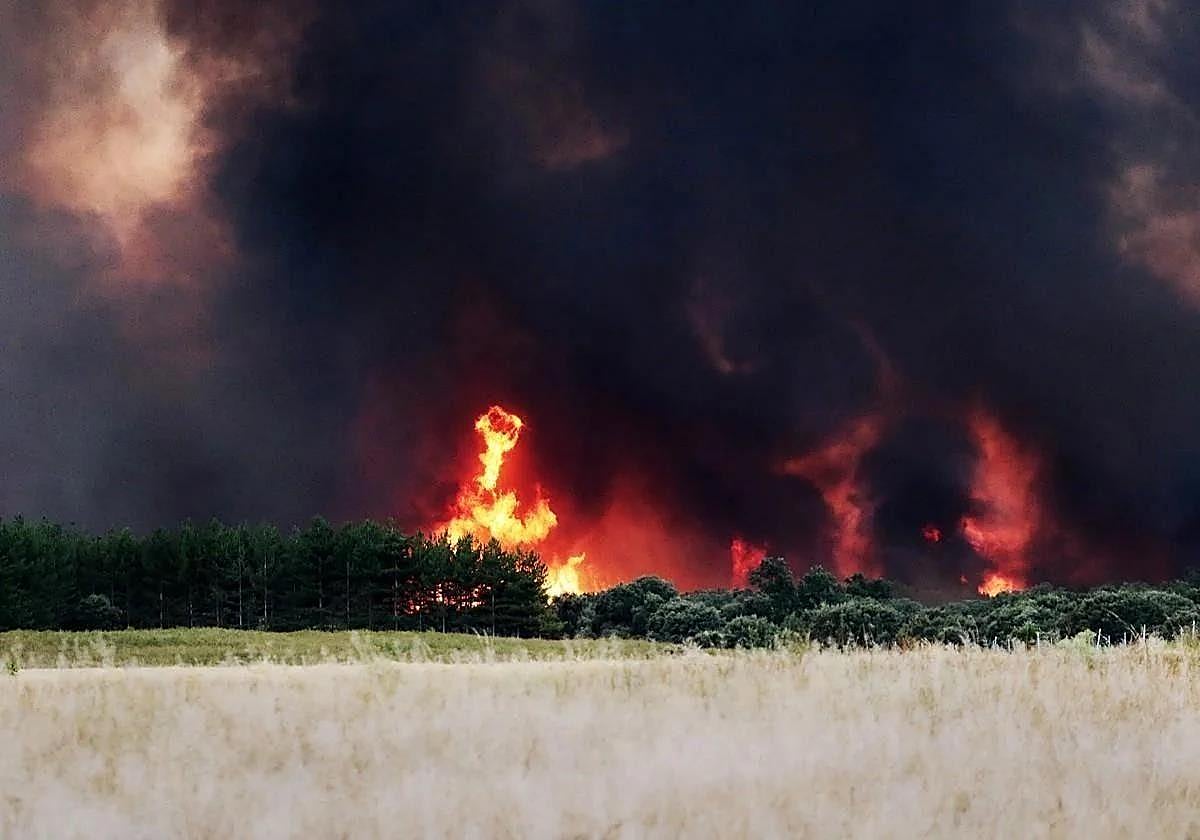
The province of León is experiencing one of the biggest catastrophes in living memory this August. Mountains razed, animals, houses and vehicles burnt, thousands of people evacuated, several injured people and even one death are the main outcomes of the fire that is on its way to becoming the worst in the history of Spain since 1968 - the year when wildfire data collection was set up.
The fire originated on Sunday, 10 August, in Zamora, in the town of Molezuelas de la Carballeda, but the progressive expansion of the flames, maintained by the adverse weather which made any attempt at extinction impossible, caused it to jump to the province of León, where it has already devastated several villages. After five days of no respite, the fire keeps threatening other villages in the area.
Related story
On a tragic scale
With time, it has been possible to develop the first studies on the extent of the fire. The European forest fire information system (Effis) has published the first estimate of the territory devastated by the fire, based on satellite images.
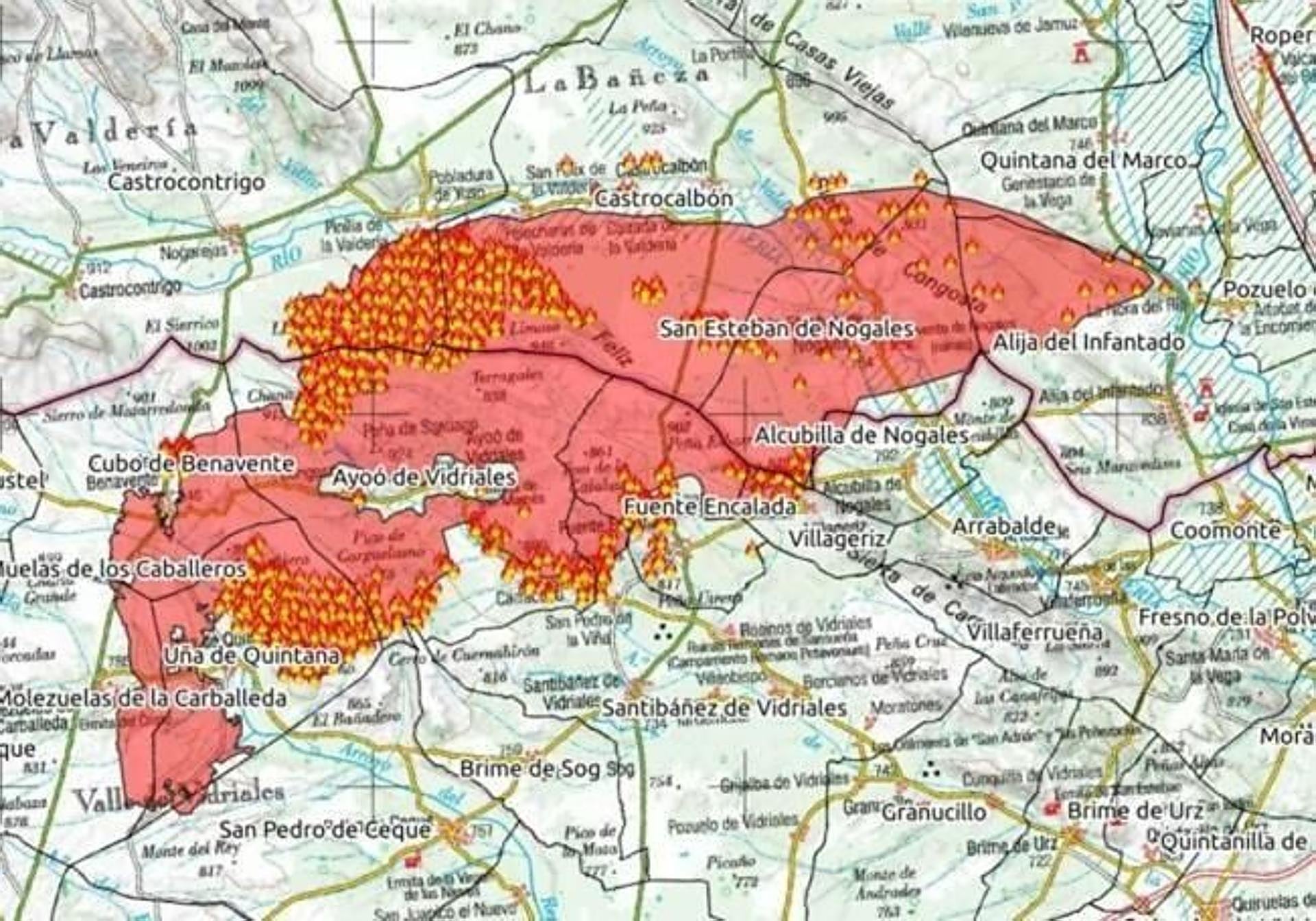
Updated on Wednesday night, the figures show a perimeter of 37,906 hectares burnt only in the fire that started in Zamora. It should be noted, however, that these initial estimates refer to the perimeter of the burnt area and not to the entire surface area - it is quite possible that there are areas within the perimeter that have been spared devastation.
What is without a doubt, even before the fire has been extinguished and the official figures have been released, is that this incident will go down in history as the worst wildfire in Spain.
According to documents of the Ministry for Ecological Transition and the Demographic Challenge, the most extensive fire recorded so far is that of Minas de Riotinto (Huelva), with a burnt surface area of 29,867 hectares.
The two fires that devastated the Sierra de la Culebra (Zamora) in 2022 - perhaps the most remembered precedent up to now - reached a total of around 60,000 hectares. However, although they coincided in time and came to be connected, they are considered separately and each of them is below the scope reached so far by the latest fire.
The figures that mark the reality
Beyond the countless material damage, the fire is also generating situations of extreme difficulty for the residents of the affected area. There are already 34 localities that have been evacuated, with around 8,000 people who will be kept out of their homes.
Shelters are provided by the town halls of La Bañeza and Astorga and the Red Cross and civil protection are collaborating in what is a gesture of solidarity that shows that all is not lost.
Personal damage
Four people have suffered serious burns as a result of the fire in León and Zamora, in addition to eight others who were slightly injured. Two of the victims were transferred to Hospital Río Ortega in Valladolid, while the other two remain in the Complejo Asistencia Clínico Universitario in León.
What has been the most tragic loss so far is the death of Abel Ramos - a 35-year-old man from Bañez who lost his life trappped between the flames while volunteering to fight the fire.
In addition to the fire in Molezuelas de la Carballeda, the province is still involved in extinguishing 14 active fires, including the one in Yeres (around 1,800 hectares burnt), which completely destroyed Las Médulas and is still at emergency level 2.
Unesco World Heritage site Las Médulas is in ashes. The images of what is left convey the experience of seeing an area admired for its beauty as it turns into mere embers.
A call for caution
Another fire in Llamas de la Cabrera, which has already burnt nearly 1,500 hectares, is on its way to join the Yeres fire, as confirmed by the regional government of Castilla y León.
Sub-delegate of the central government Héctor Alaiz has called for prudence in the hopes that, little by little, the number of evictions will be reduced and the situation will improve in a province that is going through some of the most fateful days in its history.
![[]](http://static.vocstatic.com/voc26/latest/assets/images/favicon/surinenglish/apple-touch-icon-57x57.png)