
Population
Second-generation immigrants: three out of ten babies are born to a foreign parent in Spain
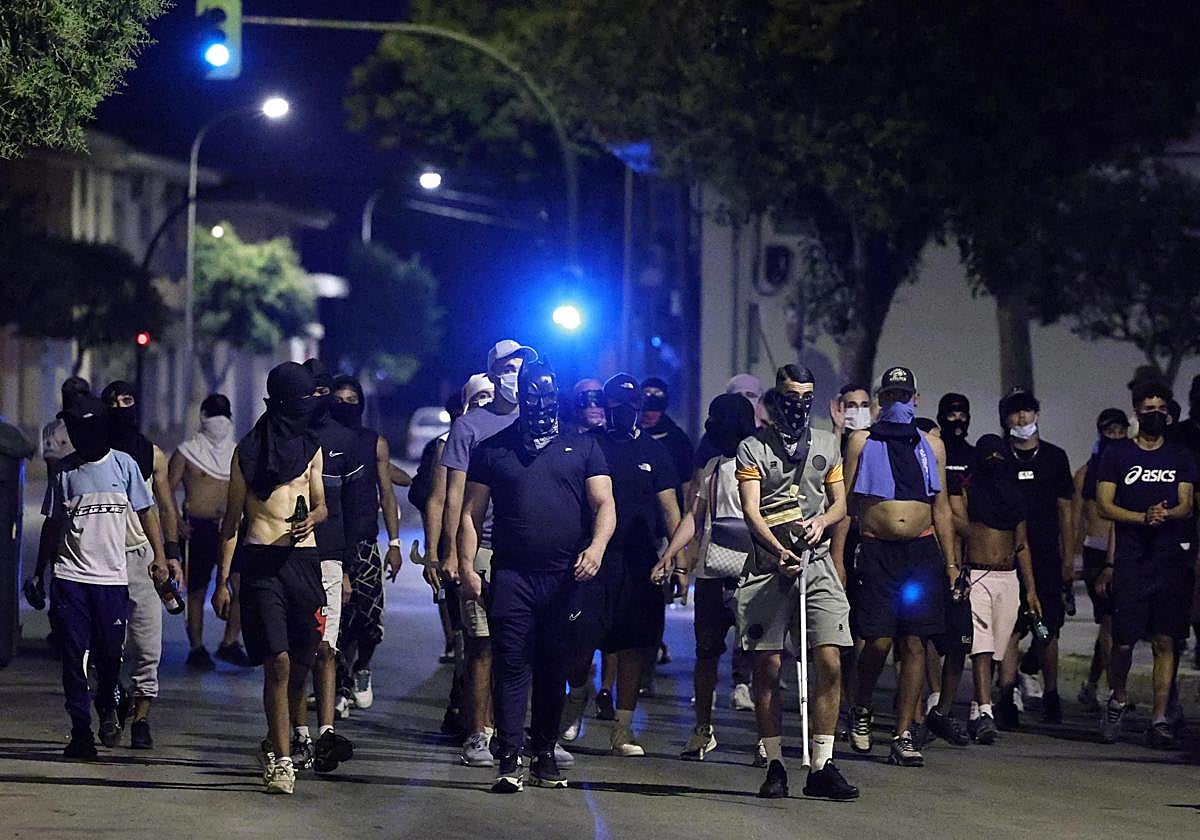
The racial unrest and violent disturbances in the Murcia region town of Torre Pacheco and the far-right's talk of "remigration" are fuelling the debate about when an immigrant ceases to be an immigrant in Spanish society

Madrid
In Torre Pacheco in the Spanish region of Murcia, the centre of a spiral of violence against immigrants, fuelled by far-right racist groups, 60% of babies born have at least one foreign parent. These children, like another 100,000 born in Spain in 2023, have not had to leave home as their parents did, but they are still regarded as immigrants, in this case, second-generation immigrants. On average they represent 30% of the total number of births. They already accounted for just over 20% in 2007 and barely 4.5% back in 1996, the first year for such information to be collated.
In some provinces in Spain, these births account for almost half the total birth rate, with Girona (47.9%), Lleida (46.3%) and Tarragona (44.1%) leading the statistics. Barcelona is sixth. These percentages show a west-east divide across Spain: one with more babies born to foreigners (father or mother) and the other where their proportion of births is low, especially in Jaen and Badajoz, which are below 10%.
Alejandro Portes, professor emeritus of sociology at Princeton University and the University of Miami, and Rosa Aparicio Gómez, professor and researcher at the Instituto Universitario Ortega y Gasset in Madrid, refer to second-generation immigrants as "young people born in Spain to foreign parents or brought to the country before the age of 12." Using their own definitions presented in their 2013 research report, 'longitudinal research on the second generation', published by the Elcano Royal Institute (a major think tank in Spain on global, social affairs), they explain that, while "adult immigrants constitute an unstable population", the children - born in Spain or brought to the country at an early age - "tend to put down roots and stay" becoming 'the new Spanish' citizens." Thus, "their situation, achievements and attitudes can modify and set a new tone for the cities and regions where they are concentrated."
"Adult immigrants constitute an unstable population - here today and gone tomorrow. However, children - born in Spain or brought to the country at an early age - tend to put down roots and stay."
Alejandro Portes and Rosa Aparicio
Researchers of second-generation immigrants
A similar picture emerges for foreigners under 12 years of age in Spain. In 1998, the figure was one in every 100 children up to that age. The jump was exponential within a decade: one in every ten. However, since the beginning of this century, the proportion has stagnated with a resulting slowdown in that increase: children of at least one immigrant parent accounted for 12.3% in 2022, the latest year available from the ongoing census statistics. This translates to more than 600,000 under-12s in that last data-collection year.
Following Portes and Aparicio's definition, there are at least three million second-generation immigrants in Spain. Firstly, there are over 600,000 under-12s (631,139) of foreign nationality (the so-called "1.5 generation"). Then there are at least 2.2 million babies born to foreign parents in the last three decades, between 1996 and 2023 (the second generation itself). Of the latter, half (1.1 million babies) were born from 2012 onwards. Moreover, this does not include the most recent numbers as they are not available in this level of detail in the statistics.
Proper solutions, not short-term 'fixes'
A week after various extremist groups called for a "hunt for immigrants" in Torre Pacheco following the alleged assault of a local resident by a North African person now locked up, this municipality in Murcia has become the epicentre of a public order crisis, but also of a debate on the social agenda about how to address the immigration phenomenon. "We need people to feel safe and find the right solutions, not just patch over the problem. We have to analyse why this has happened and look for solutions," said Nabil Moreno, president of the local Al Manar Islamic community. "If there are four conflicts that are bothering our communities, we must speak with social workers, who are always closer to the people," said Moreno.
Rocío de Meer, MP and spokesperson for Vox's social and demographic policies, said in early July that it was necessary to "take into account the second generation" in a speech in which she advocated a process of "remigration", alluding to the fact that "it is extraordinarily difficult for them to adapt to our customs and habits." Words that she later sought to qualify further.
Portes and Aparicio, in their 2013 paper, argued that the study's results "do not support negative or alarming conclusions about second-generation integration." They also argued that the differences with the children of Spanish parents "are diminishing over time."
In Torre Pacheco 30% of its 38,000 residents are foreigners - 11.6% is the national average - and it is one of the towns with a population of over 10,000 inhabitants with a high proportion of babies born to a father or mother of another nationality: 168 in 2023, equating to 60% of all births there. It is among the 25 towns with the highest percentage, with Oropesa del Mar, Adeje and Hospitalet de Llobregat topping the list. In those three places, three quarters of the babies born in that year had at least one foreign parent. Furthermore, 97 children under the age of 12 also reside there, almost a quarter (23.3%) of the total.
The Moroccan population in Torre Pacheco, now a target of extremist groups, is driving second-generation births in the municipality. In 2023, 119 babies were born there to Moroccan parents, 43.1% of the total. It is the eighth municipality with a 10k-plus population with the highest proportion of births to at least one of the parents being Moroccan, with Manlleu (Barcelona) leading the way at 53.9%.
It is also among the top 20 municipalities in terms of Moroccan immigrants under the age of 12 (17.55%), just before they enter secondary education (ESO).
"The main barrier is the language," said Antonio Vicente, head of Sabina Mora secondary school in Roldán. He is not referring to the pupils, 68% of whom are of Moroccan origin, but to "the adults." He sees the need for "a language immersion programme for the entire municipality." For Osama Alalo, owner of an employment agency, it is a priority for the town hall to establish "a genuine dialogue with the Moroccan community, creating bonds of trust and, once and for all, treating them as authentic Pacheco locals." Many have been in the municipality for decades, with at least 6,448 babies being born to foreign parents since 1996, making them second- or third-generation immigrants.
"Torre Pacheco town hall has to move to establish a genuine dialogue with the Moroccan community, creating bonds of trust and, once and for all, treating them as authentic Pacheco locals."
Osama Alalo
Employment agency business owner
Still, is calling them second-generation immigrants a misnomer? "Some studies suggest that the term 'second generation of immigrants' serves to create a symbolic boundary between the immigrant group and their offspring, on the one hand, and the locals, on the other," said Nasara Cabrera Abu, sociology professor at the University of Las Palmas de Gran Canaria. She is also a director at the university's vice-rectorate for internationalisation and cooperation, publishing a study on 'Second generations of foreign origin'. In this document she argues that one cannot ignore "the normally pejorative connotation that the term 'immigrant' implies." Children born here never actually migrated and this, she muses, makes one wonder "when an immigrant ceases to be an immigrant."
These figures help us understand the reality of these "new Spaniards" on the basis of the INE's micro-data from the ongoing registering of Spanish citizens and birth statistics. However, there are some inconsistencies here: since this analysis is based on foreign nationality, it does not include the children of immigrants who previously obtained Spanish nationality or of those who arrived before the age of 12 and also became nationals, among others. In contrast, if we were to count only their places of birth, that provides fewer years of data to explore population trends as this information is available only with microdata from 2007 and would be sensitive to the cases of Spanish citizens who only settled abroad for a short time. Even taking these issues into account, the data shows that the presence of second-generation immigrants is an increasingly important reality in Spain today.
![[]](http://static.vocstatic.com/voc26/latest/assets/images/favicon/surinenglish/apple-touch-icon-57x57.png)