
Motoring
Firefighter's viral video warns motorists of risks of new V-16 beacon, soon to be obligatory in Spain
The expert has warned that the emergency devices "are not visible on the crest of a hill, on bends or in daylight" and recommends drivers "to continue carrying a warning triangle"

Málaga
There are only two weeks to go until the V-16 connected beacon becomes obligatory for motorists in Spain, replacing the roadside emergency warning triangle. On 1 January, the device becomes compulsory for virtually all vehicles. This aims, in principle, to reduce the approximately 25 accidents that occur every year involving drivers getting out of the car after a breakdown or an accident.
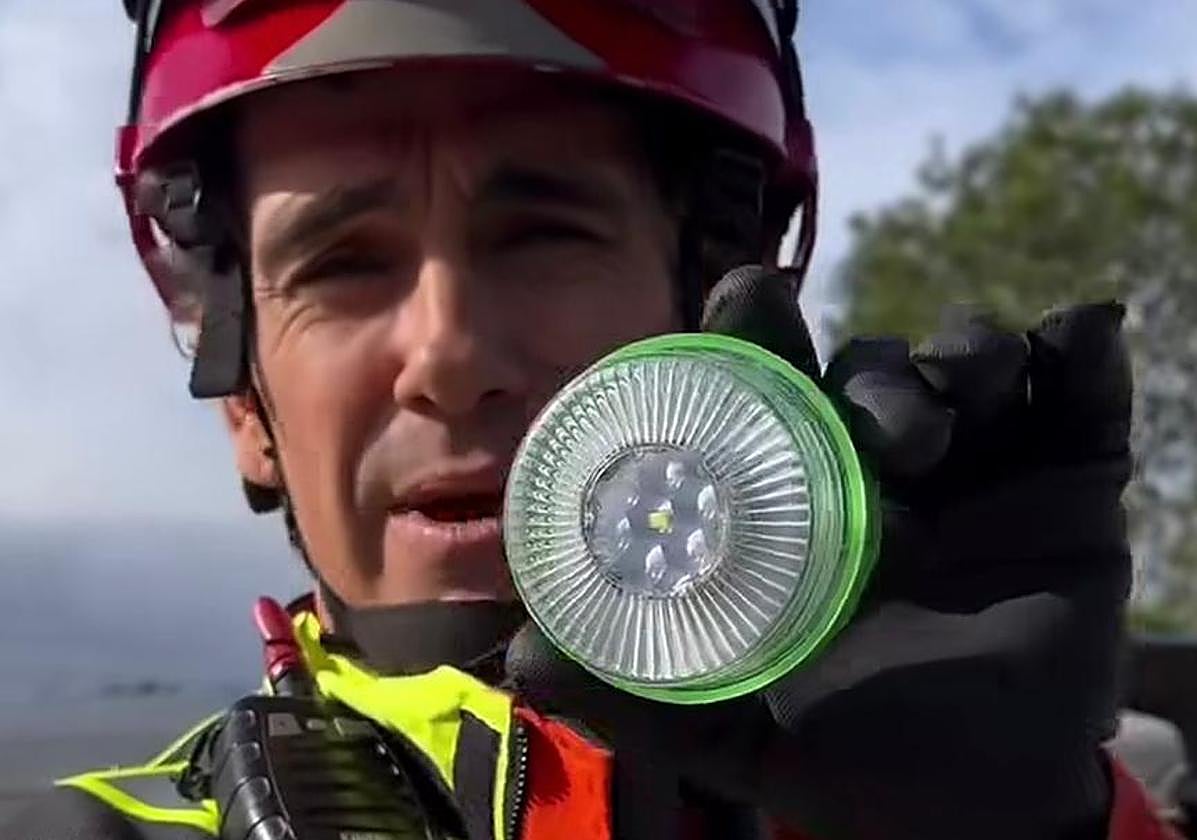
However, the measure has been debated. In recent days, various security personnel have been warning of the risks associated with this new device. The latest to go viral has been Valencian firefighter Edi Díaz, known for his informative videos on TikTok. His latest video talks about the V-16 beacon. "Never forget to carry your triangles," he said in the video, shared more than 8,500 times and liked more than 107,000 times.
The video was uploaded from the scene of a road traffic accident, on a bend, with the vehicle overturned. Díaz addressed his more than 33,300 followers on Instagram, saying: "Look what we've just been called to: an accident in the middle of a bend, with a car overturned on its side. Tell me where to place the new beacon. My opinion as a professional is that it will not be visible on the crest of a road, or a bend or in daylight. Either we signpost the incident well 50 metres in advance or we are going to be in trouble when other vehicles can't slow down in time. Don't forget to carry your triangles. Nothing more to say."
"In a vehicle fire, don't get close to the flames and don't try to put it. It is very dangerous and useless. Besides, its battery life is limited"
In addition, in the caption, Díaz lists a series of cases in which the V-16 beacon alone entails risks, including limited daytime visibility and lack of places to put the device if the car has been wrecked or overturned. "In a vehicle fire, don't get close to the flames and don't try to place it. It is very dangerous and useless. If you drop or hit it, the light may break and then it is useless. Besides, its battery life is limited," the firefighter said.
Díaz then talks about the advantages of warning triangles and when to use them. "On bends, on crests, they always work. In daylight; in accidents; in fires. They don't break. They don't have a battery. And other drivers can see you in advance," he says, reminding drivers to wear a reflective waistcoat when placing the triangle 50 metres behind the vehicle.
Head of the DGT traffic authority Pere Navarro has responded to people's concerns about the V-16 beacon. "It's all advantages," he said during his appearance in a TV programme.
According to him, the beacon will not only be visible physically, but also digitally. "It is connected and you will see it on the navigation system, on Google Maps, on Waze. It will tell you that, 1.2 kilometres ahead, there is a vehicle stopped on the road," he said. He also defended the new measure by referring to the quick procedure of placing the light. "You just take it out of the glove box, turn it on and put it on the roof. From the inside. It's as simple as that," he said.
As for the use of triangles, Navarro said that they will not be banned, although they will no longer be compulsory. "What will be compulsory is the beacon," he said, adding that those who decide to continue using triangles will be doing so at their own risk. "The beacon sends data without any identification, it only tells us that there is a vehicle that is stopped," he stated.
![[]](http://static.vocstatic.com/voc26/latest/assets/images/favicon/surinenglish/apple-touch-icon-57x57.png)