
Road safety
Animals caused more than 36,000 traffic accidents on Spain's roads in 2024, a third of all incidents
The number has doubled in the past decade, which has led the DGT to unveil a number of high-tech innovative measures in a bid to reduce the incidence
José Antonio Guerrero
Madrid
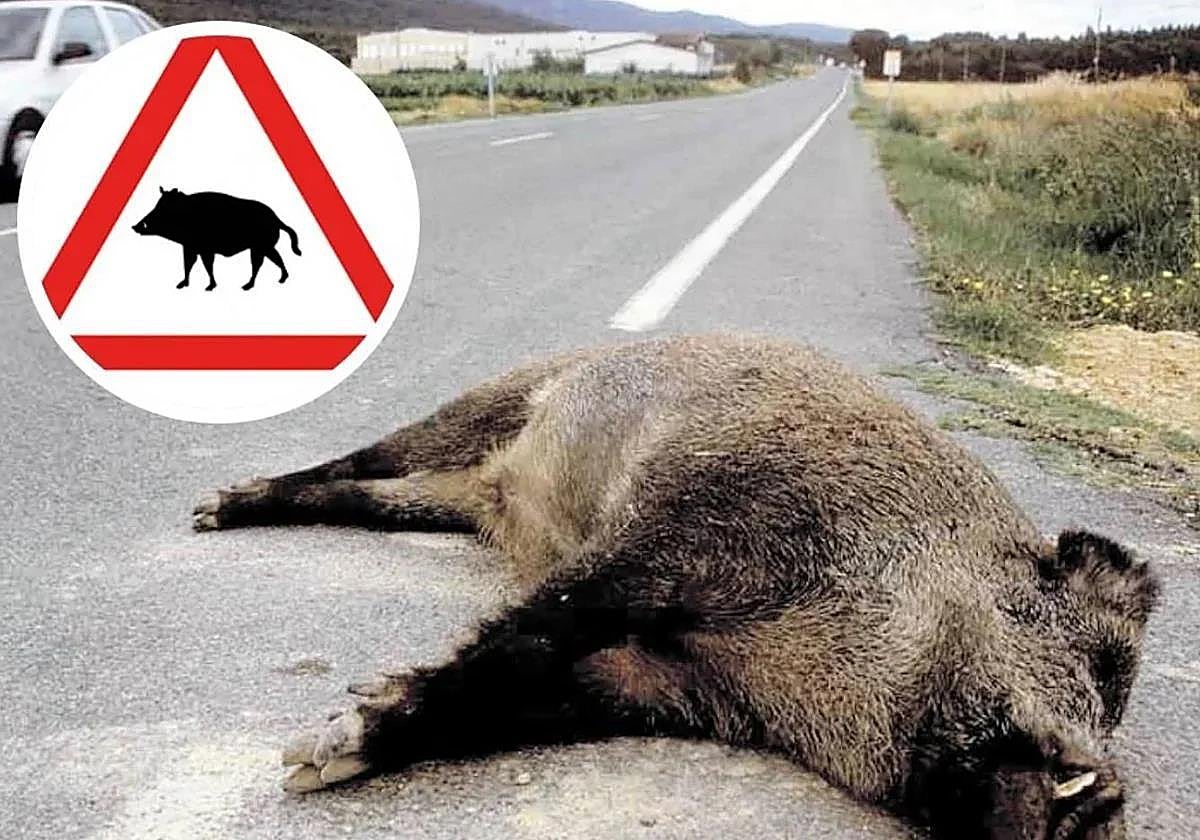
Traffic accidents caused by animals have doubled in the past ten years. In 2024 alone, 36,000 - an average of a hundred a day - were recorded, representing a third of all accidents on the main roads across Spain. The animals most involved in road accidents are wild boar (42%) and roe deer (32%) and the areas mostly affected are unpopulated regions of Spanish and the green spaces of Galicia, Castilla y León and Castilla-La Mancha. Despite the high incidence, the seriousness in terms of casualties is low: only 1.5% of these accidents involved motorist fatalities (eight) and hospitalised injuries (58).
However, In an attempt to reduce these types of incidents, which cause daily risk situations for drivers (head-on collisions, swerving to avoid collisions), the Directorate-General for Traffic (DGT) has proposed a guide with measures.
According to the DGT report, 88% of all accidents are concentrated on conventional roads, where the levels of environmental control are usually lower than on high-capacity roads. The study has therefore identified the roads with the highest concentration of accidents. They will be incorporated into the DGT 3.0 platform so that navigation systems can warn drivers when they approach a risk area, encouraging hightened attention.
Measures to reduce the accident rate
The measures proposed by the DGT are divided into five main blocks: interventions aimed at the driver, the animals themselves, physical separation measures, solutions for ecological permeability and other complementary initiatives.
-
1
Driver behaviour: technology, visual warnings and visibility improvement
In order to influence drivers' behaviour, the DGT has installed wild boar LED signs on roads where the presence of this animal has been detected. There are also intelligent systems that detect the presence of animals in real time by means of thermal sensors or artificial vision technology, already in operation in areas such as Girona, Castilla y León and La Rioja.
In addition, clearing of vegetation on roadsides to ensure better visibility has also been included in the actions, alongside the installation of speed limit signs and warning systems within vehicles.
-
2
Technology and sensory barriers to keep wildlife off the roads; the 'scented fences'
Another priority action is to stop animals from stepping on the road in the first place. Measures include visual deterrents, such as reflectors that deflect light from vehicles to scare wildlife away, and acoustic systems, which use ultrasound often activated by passing vehicles. In addition to these technologies, olfactory barriers based on pheromones or repellents, popularly known as 'scented fences', create an invisible but effective line to keep wildlife away from traffic areas.
-
3
Barriers and safe crossings: keys to preventing wildlife entry on roads
The use of physical barriers remains one of the most effective strategies to reduce the presence of animals on roads. Fencing is the most common solution to prevent wildlife access. However, its effectiveness is multiplied when complemented by specific infrastructure such as wildlife crossings or escape ramps, which allow animals to move safely without invading roads.
In some regions, such as Asturias, Galicia or Castilla y León, more innovative solutions are being tested, such as virtual fences: devices that combine light and sound and are activated by thermal sensors to deter animals before they reach the road.
-
4
Green infrastructure to ensure wildlife permeability
With the aim of preserving biodiversity and avoiding the isolation of wild species, Spain has opted for the creation of infrastructure that facilitates the safe passage of animals across the road network. Among the most outstanding solutions are eco-pipelines and bridges covered with vegetation that allow wildlife to cross over roads without being exposed to traffic.
-
5
Assisting measures: protection, management and clean-up.
Motorcyclist protection systems (MPS) have been installed for the protection of motorcyclists, but they also act as a deterrent to prevent animals, particularly wild boars, from entering the roadway.
'Without alarming the public'
Introducing the new guide, DGT director Pere Navarro highlighted its incorporation into the road safety strategy 2030, the main objective of which is achieving a safer and more sustainable road environment.
Navarro stressed the need to develop effective preventive measures to minimise the incidence of animal accidents, "without unnecessarily alarming the public". "Road safety can no longer be conceived without taking into account the interaction between infrastructure and biodiversity and it is necessary to integrate this approach into the design, management and planning of roads in order to move towards a safer, more efficient and sustainable road environment," Navarro said.
![[]](http://static.vocstatic.com/voc26/latest/assets/images/favicon/surinenglish/apple-touch-icon-57x57.png)