
Heritage
Largest 'supercave' in southern Iberian Peninsula uncovered in Malaga's Sierra de las Nieves range
Speleologists have found the gallery connecting two large caves, the missing link that leads to an underground complex that is vast both in depth and length
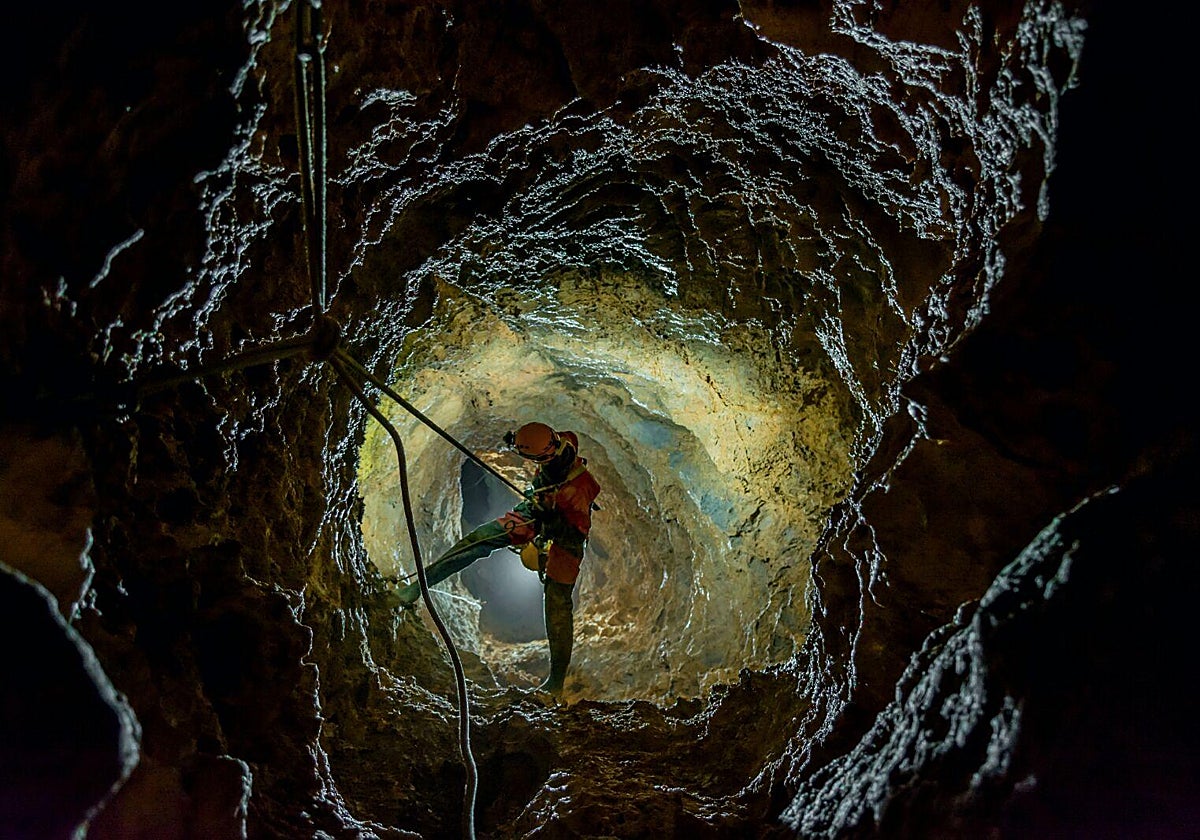

Far below the Spanish 'pinsapos' (firs) of the Sierra de las Nieves mountain range, near Tolox, lies a labyrinth of underground caves, several hundred metres deep, that stretches for miles. They are known as 'supercaves', a term that reflects the uniqueness of these galleries of previously unknown dimensions. Now, speleologists are gradually beginning to decipher this complex underground world. Members of the underground explorations group, part of Malaga's hiking society, have just confirmed this unknown connection between two large chasms that were already known, but thought to be separate. The discovery of this missing link has now turned this cave system into the largest supercave in the southern Iberian peninsula.
The new Nevero-Aire cave complex is over 26 kilometres long with a vertical drop of 955 metres in total. That is six kilometres more than what was previously thought to be the largest cave in Andalucía, the Sima de la Luz. Moreover, this is just the beginning. Experts know, after years of studies, that this latest cave also connects at some point - as yet undetected - with the previous ones, which would create an underground route of almost 50 kilometres. "It's very impressive, something very exceptional. We're now opening Pandora's box," says Rogelio Ferrer, one of the few professionals capable of delving deep into the bowels of the Earth and still reeling from the excitement of this discovery. He spent five days inside the supercave in June.
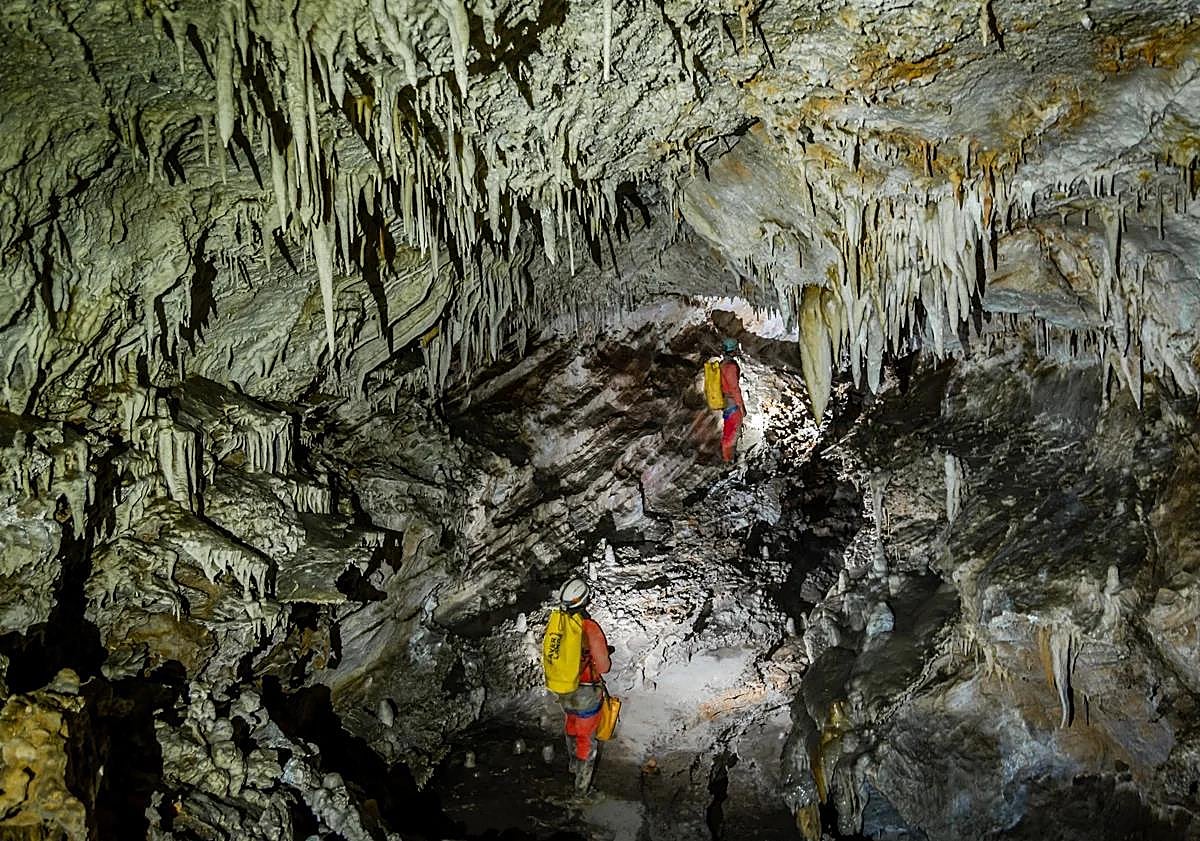
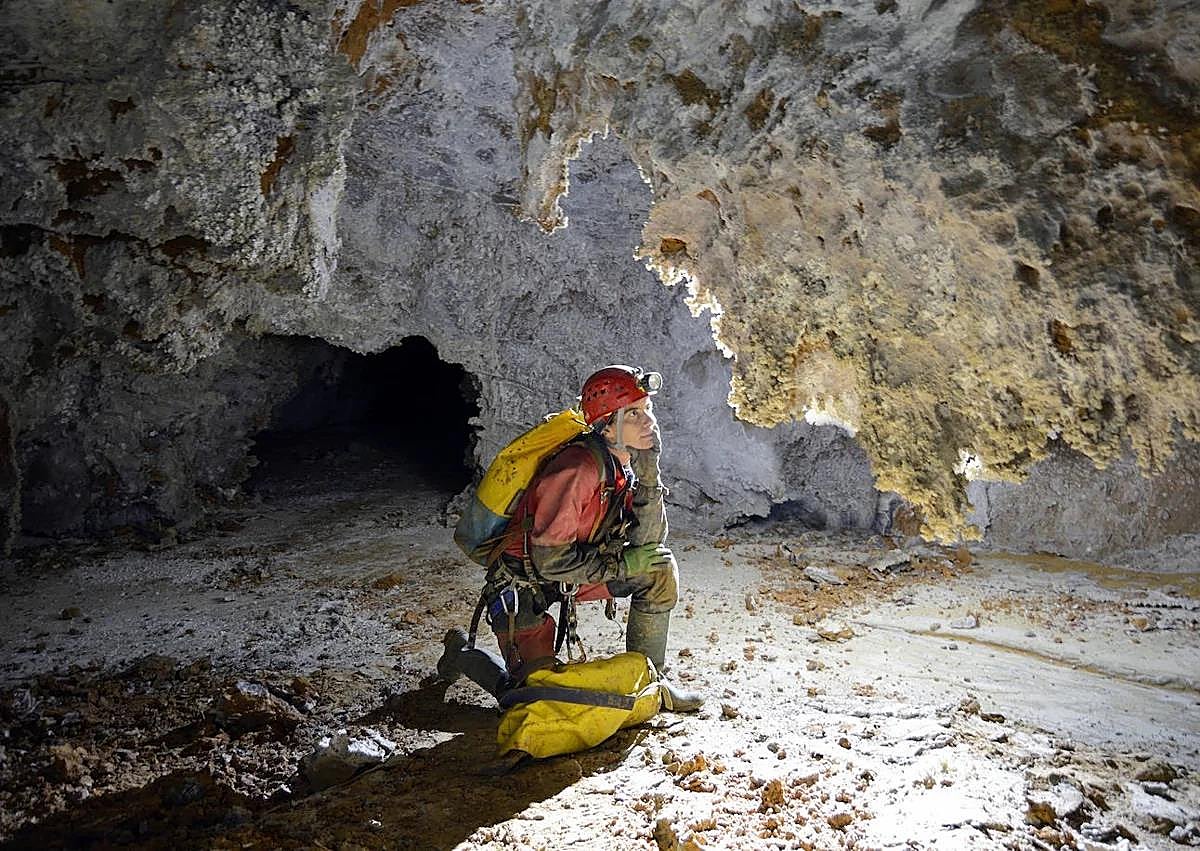
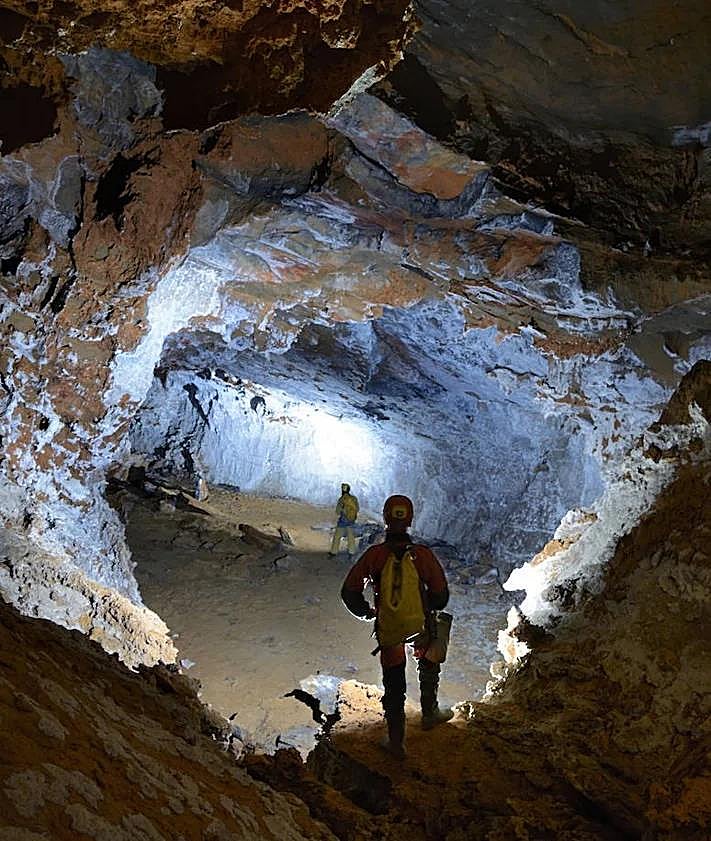
We are talking about authentic underground cathedrals with large vertical shafts hundreds of metres deep, immense chambers of up to 30,000 cubic metres in volume (equivalent to four hot air balloons) and long galleries. All this in what is very much a small karst system in the Sierra de las Nieves, nothing like the much larger karst areas in the Picos de Europa or the Pyrenees in northern Spain. Therein lies part of the wonder that this has inspired among experts: that there are such enormous subterranean systems, previously only seen in the north of Spain, in such a particular and limited area.
Wait, there's more. What lies hidden in the Sierra de las Nieves is a true "geological jewel" that is being investigated by scientists, because its formation alters paradigms that seemed pretty set in stone. Typically, when rainwater infiltrates the ground, it opens up fractures in the rock until it reaches a water table. However, supercaves are not formed that way. There are very vertical chasms with other horizontal networks and galleries have been discovered several hundred metres below the surface of the water table and flooded caves. This indicates, as geologist Juan José Durán explained at the time, that there are other hypogenic (crystallisation) mechanisms for the creation of these cavities, such as waters coming from within the massif with different chemical elements and temperatures that generate hyperkarstification processes. An "absolutely atypical" phenomenon.
Years of work
Speleologists and geologists have been working together for decades, both underground and above ground, to decode the system of tunnels, shafts and galleries beneath the Sierra de las Nieves mountain range. They knew that some of the Nevero-Aire galleries were barely 100 metres apart and that somewhere they had to coincide, connect somehow.
It has large vertical shafts, immense chambers and long galleries stretching 26 kilometres and descending 955 metres
"Like a surgeon", they delimited the whole area, following a series of high-quality topographical surveys and numerous team assessments. This has been no easy feat, with expeditions descending to depths of 500 and 600 metres, spending several days without seeing sunlight. By this summer, they had already decided where to venture into this convoluted labyrinth to seek out a possible connection. How right they were. On Saturday 26 September, two members of Malaga hiking society's underground explorations group physically confirmed that the connection between the two chasms was real, deep underground in this national park. This was a milestone achievement for speleology in the province, placing Malaga in the spotlight for underground science and research.
![[]](http://static.vocstatic.com/voc26/latest/assets/images/favicon/surinenglish/apple-touch-icon-57x57.png)