
Water welfare
Malaga waters: committee to declare end of drought for provincial countryside after five-year crisis
Irrigators fear that pre-drought water levels cannot recover and warn of storm damage to infrastructure
Chus Heredia
The drought committee is meeting this Friday to decide the fate of Malaga province’s countryside.
All signs point to a formal declaration of "normality" across all districts, marking the official end of a gruelling five-year water crisis.
However, the mood among local farmers is cautious. While the water is back, many are now dealing with the aftermath of a relentless succession of storms that have battered rural infrastructure.
Related story
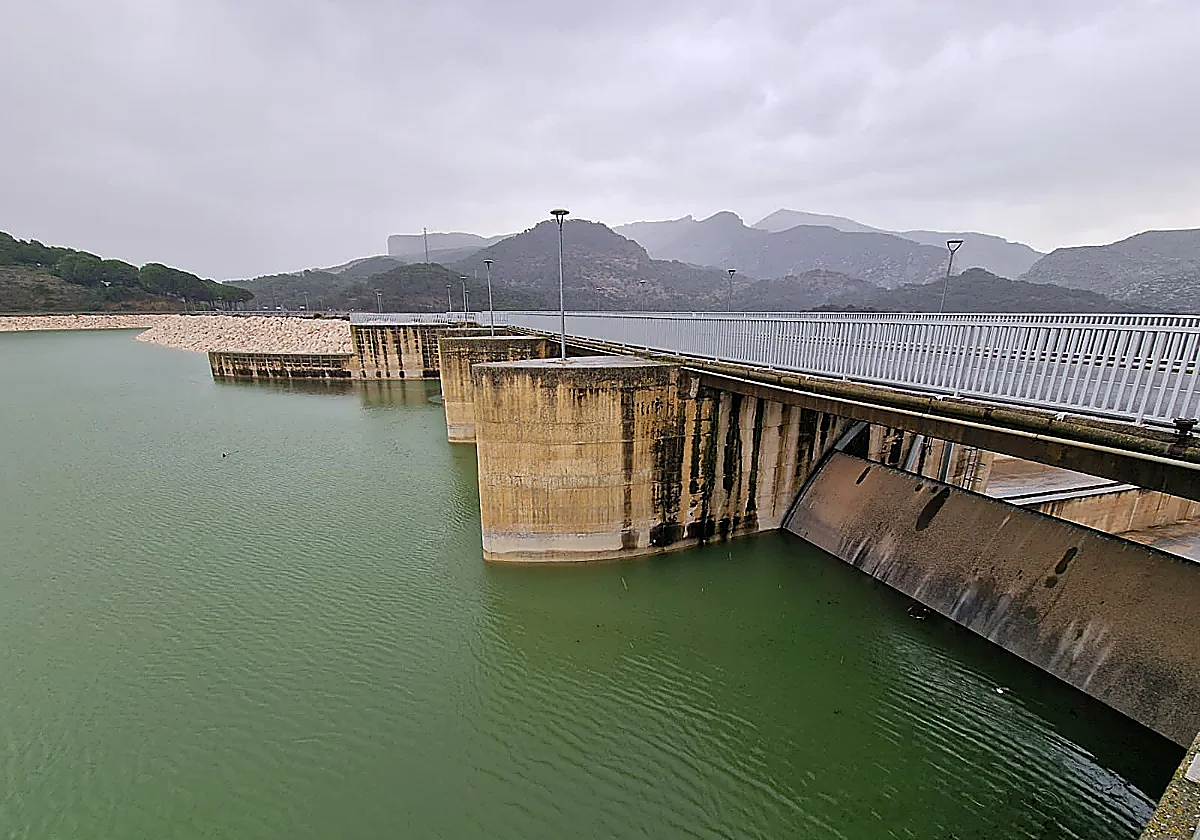
The province's reservoirs currently contain 575 million cubic metres, which equals 95 per cent of their capacity. Last year also registered a lot of rain, but most of it fell in March, after the committee had held the annual meeting.
Back then, only the Costa del Sol returned to normal conditions. Malaga city moved into a phase of moderate scarcity and La Viñuela remained at a severe level. All of this entailed restrictions on the flow of water from the reservoirs to the headwater storage tanks. It's worth remembering that the first drought decree was issued in 2021.
575
million cubic metres
is the current water reserve of Malaga province, which equals 95 per cent of the dam network's capacity
According to estimates, the committee should declare normal conditions for all of the province's districts, with one exception: the Axarquía, which should reach that phase in May, once it has slowly moved up the preceding thresholds.
With urban water supplies now unconditional, the concern lies with farmers and irrigators. They've been through some tough years. Two years ago, the Guadalhorce river basin received a mere six million cubic metres of emergency irrigation annually. While it's true that it increased to 30 million cubic metres last year, the figure exceeded 43 before the drought.
The directors of Aprema, the main association of irrigators, don't understand how the committee can maintain the water allocation when the reservoirs have been draining for weeks. They have warned that irrigation cannot begin around 20 April without the irrigation system having undergone essential tests.
The province's irrigators describe dozens of chronic problems that have worsened with the recent series of storms (silting up in the canals, damage to siphons like those in Cártama and Dehesa Alta). Last year, once irrigation began, the Cártama siphon left farmers without water for more than a month. "We will be caught off guard, like every year. The water should already be in the canals for us to identify the damage and check the overall condition," Aprema representatives stated.
Aprema represents more than 7,000 of the 10,000 hectares of irrigated land in the Guadalhorce Valley.
30
million cubic metres
is what the drought committee allocated to the Guadalhorce Valley for irrigation last year; 12.8 for the Axarquía district, in addition to reclaimed water
Two years ago, the Axarquía district received just three million cubic metres per year. This increased to 12.8 million cubic metres last year. A key factor here is the regional government's investment of millions in tertiary irrigation systems using reclaimed water (pipelines from El Peñón del Cuervo in Malaga, storage reservoirs, and pipe repairs to combat seawater intrusion).
The district's annual production capacity is around 21 million cubic metres. However, reclaimed water is a source that many avocado growers, for example, avoid due to its high salinity. The price is also not optimistic. Meanwhile, many regional government experts are increasingly advocating for recycled water and greater conservation of water from reservoirs.
The Adax association recently asked the regional government to increase the allocation of cubic metres per hectare per year of the Guaro plan from 2,000 to 6,000 - in other words, to triple the allocation.
The Guaro plan regulates the water supply from the La Viñuela reservoir for crops located below 140 metres above sea level, which are the only ones entitled to receive water from the reservoir. In total, this covers approximately 6,400 hectares of irrigated land, primarily dedicated to subtropical crops such as avocados and mangoes.
Reservoirs and unregulated areas
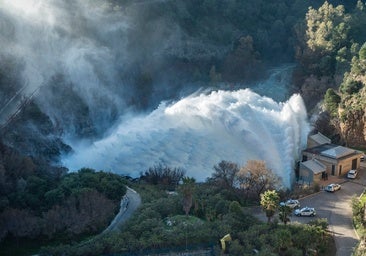
Currently, Malaga's reservoirs are at their best figure since 2013. Four reservoirs are at 100 per cent (the three Guadalhorce reservoirs and Limonero); one at 91 per cent (La Concepción, which can fill even above the established safety threshold); and another at 89 per cent (La Viñuela, in the Axarquía region). Casasola, a flood control reservoir, is at 59 per cent.
Surface reserves total 575 million cubic metres, which represents an increase of 12 just in the last week, despite the releases.
Malaga's unregulated areas (those that do not receive water from reservoirs) might also see a return to normality.
![[]](http://static.vocstatic.com/voc26/latest/assets/images/favicon/surinenglish/apple-touch-icon-57x57.png)