
Health
Malaga residents complain of mosquito proliferation in abandoned sites
After SUR reported the risk of the increse in mosquito breeding grounds following recent rains, locals have started to complain of helplessness in the face of water accumulation

Málaga
SUR has received the first complaints about the accumulation of water in abandoned sites in Malaga city. Last week, the newspaper reported that the recent storms have created pools of stagnant water that bring forward the mosquito season.
Now, the first local residents from the Bailén-Miraflores district have denounced the abandoned state of a plot that has become a breeding ground for these insects.
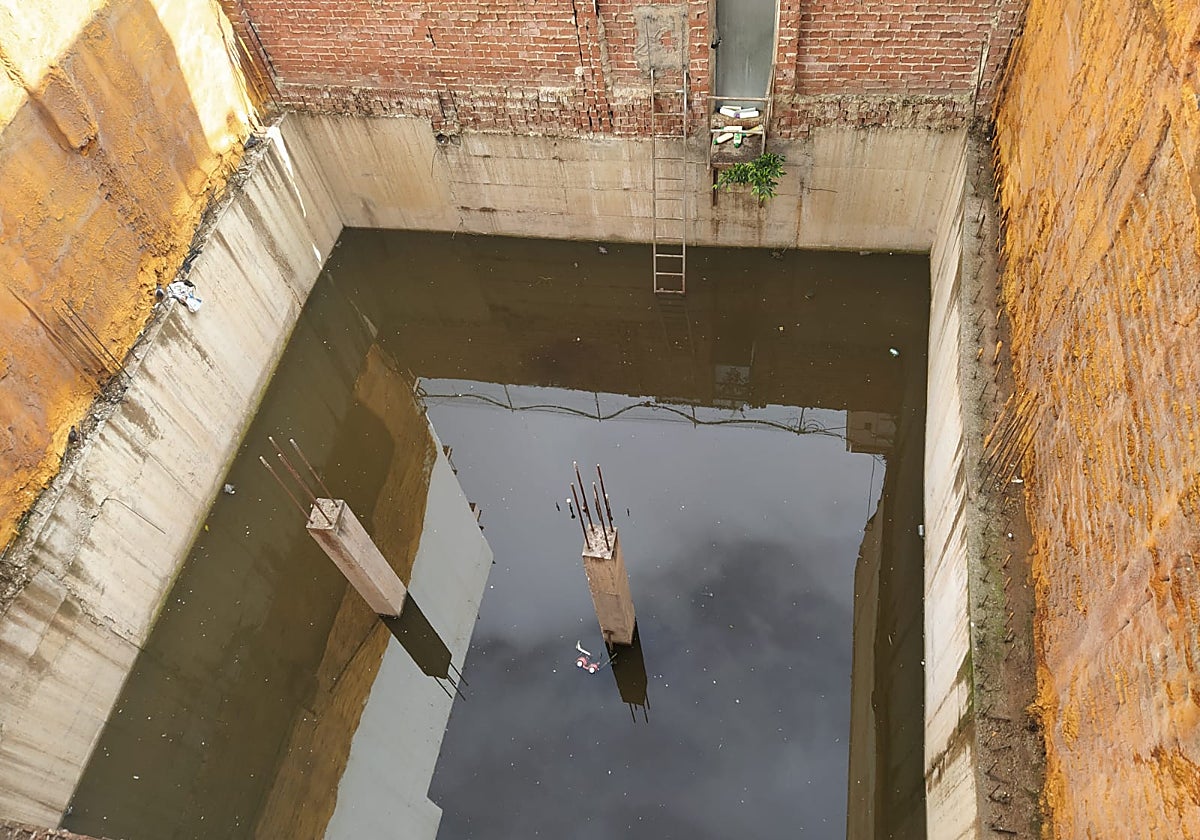
The building site in question has not had any work done in years, since the laying of the foundation and the building of four walls. The recent rains have turned it into an open-air "swimming pool" and a direct health threat due to the proliferation of mosquitoes.
According to local resident Juan Antonio Sánchez, the concrete box collects around 50-60 centimetres of stagnant water that attracts insects and emanates bad smells.
"They knocked down an old house, dug out the foundations, made the base and the concrete perimeter and the work came to a standstill," Sánchez, who lives right next to the site, said. "There could very well be 50,000 litres in there," he believes.
With rising temperatures, he and his wife have already noticed the increase of mosquitoes. "We can't open a window. We have mosquito nets all over the place. Even so, if we are careless, they come in," he said.
A local resident even installed a pump from his terrace to remove the stagnant water, but he couldn't completely drain the site.
They cannot let their grandchildren play on the balcony or the patio because they get bitten. All of them have started to use repellents.
A pump is not enough
Sánchez has written to the city council to request an intervention due to the lack of actions from the site owners, but to no avail. He decided to take the matter in his own hands, knowing that nobody is taking care of the health risk.
"I installed a pump from my house, a hose of elevent metres, and I pumped a lot of water onto my roof," he said. This, however, is a partial remedy, as he cannot completely drain the water.
According to Sánchez, the solution would be for the owner, whether a bank or a construction company, to cover the concrete box with a provisional structure that would prevent rainwater from accumulating. "A simple canopy could prevent it from filling up again," he said.
Sánchez demands that the city council declare the abandoned site in a state of insalubrity. So far, the only response he has received is that it is a private property and the city council is not allowed to enter.
The locals refuse to believe that the city council cannot do anything, given that this is a matter of public health. "If there is a private site that affects the public, the owner should be forced to solve it. It can't be because it's private that nobody intervenes," they say.
Environmental health experts have been warning for days that the combination of abundant rainfall and rising temperatures at the end of February creates the perfect breeding ground for larvae to hatch in puddles, building pits and unmaintained plots of land.
Juan Antonio Sánchez and many others in the area live with their windows closed and permanently surrounded by repellents and insecticides. "We are not asking for anything extraordinary, just that they prevent an abandoned plot of land from becoming a breeding ground for mosquitoes and bad smells."
![[]](http://static.vocstatic.com/voc26/latest/assets/images/favicon/surinenglish/apple-touch-icon-57x57.png)