
Health and environment
Malaga health: storms bring mosquito season forward
Experts warn of the risk of disease transmission and urge the public to avoid stagnant water, which faciliates mosquito proliferation

Málaga
Beware mosquitoes: this is the warning researchers want to extend to the population of Malaga province these days.
Following the relentless rains of the last few weeks, there are large accumulations of water not only in dams but also in all sorts of nooks and crannies, which creates the ideal breeding ground for these insects.
While some mosquitoes are just annoying, there are specimens that adapt to urban environments and transmit diseases. This is the real danger in their extended breeding season.
With rising temperatures, it seems that spring is coming sooner to Malaga, which implies an increase in mosquitoes.
Stagnant water
Researchers warn that the rains have filled aquifers, puddles, gardens, swimming pools and ditches.
"It has rained a lot and, as soon as temperatures rise a little, mosquitoes find more resources to reproduce," Professor of Zoology at the UMA Raimundo Real says. He confirms that there is a direct correlation between the abundant rainfall this winter and the increased proliferation of mosquitoes.
Stagnant surface waters facilitate the larva phase of these insects. In addition, February has already registered some peaks in maximum temperatures, which also favours mosquito proliferation.
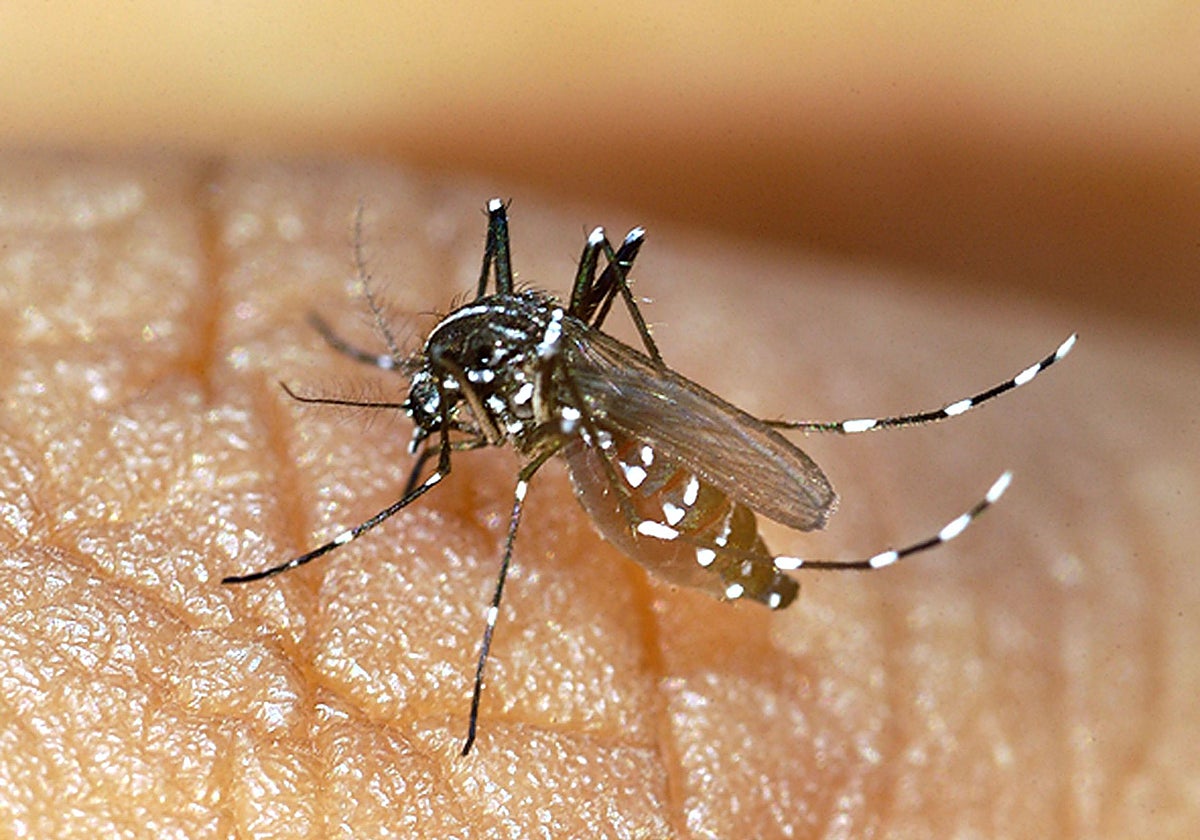
The tiger mosquito takes advantage of small water reservoirs in parks, terraces and gardens to breed.
In years of drought, the mosquito population drops, but this year is different. The accumulation of water is multiplying the spaces where they complete their biological cycle.
The tiger mosquito, in particular, takes advantage of small water reservoirs in parks, terraces and gardens to breed. This species is the greatest cause of concern because of its ability to adapt to urban environments, unlike other species that stick to marshes and rivers.
"With five to seven days of accumulated water, it can complete its cycle, depending on the temperature," Real says. He urges locals to frequently empty flowerpot dishes, buckets and any other containers that may collect water. "If there is no standing water for five days, the tiger mosquito cannot complete its cycle."
Water in abandoned properties
What experts worry about the most is that there are private plots of land and dwellings that exist unoccupied. Public bodies do not have the right to intervene there to empty containers with standing water, so these properties become uncontrollable breeding grounds.
According to Real, this calls for a modification in the regulation. "If a closed site is generating tiger mosquitoes and the neighbours are suffering from it, it can become a public health problem," he warns.
Municipal surveillance
Sources from Malaga city council's environmental sustainability department have confirmed to SUR that they are monitoring all species of mosquitoes, according to the protocol. "The traps are checked every month," they said.
There are two types of actions: preventive and forced. Forced actions happen when disease-spreading mosquitoes enter urban traps. Preventive actions usually take place at the mouth of the Guadalhorce river.
"For the moment, we are going to maintain the plan, but we are prepared to act if we see an increase," sources stated.
Sources from the regional ministry of health also told SUR: "In Andalucía, we monitor throughout the year, with baseline monitoring with mosquito traps and human and animal surveillance."
![[]](http://static.vocstatic.com/voc26/latest/assets/images/favicon/surinenglish/apple-touch-icon-57x57.png)