
Health
Malaga city hospital recognised for its 'pioneering' work with rare disease patients
The Más Visibles association also honoured Madrid's Hospital 12 de Octubre at a gala event held in Palma de Mallorca

Malaga
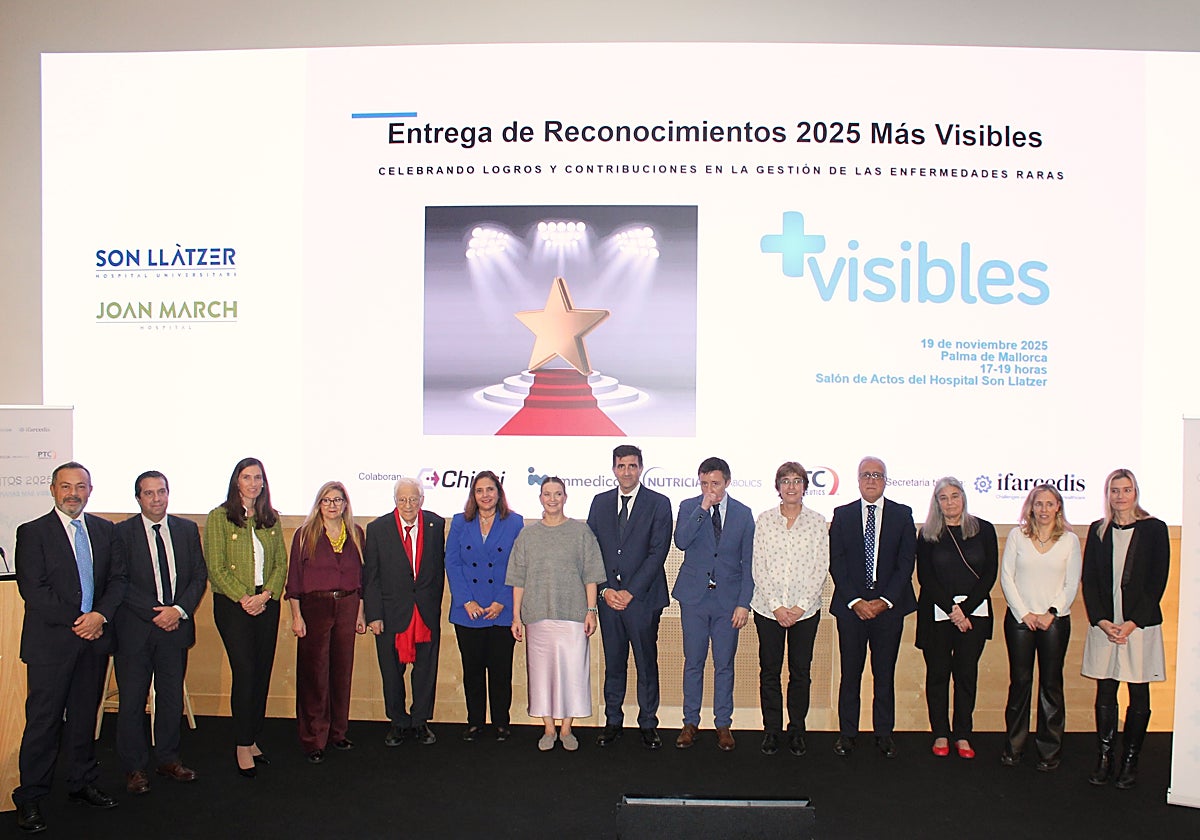
Malaga city's Hospital Regional Universitario has received an award for its work with patients suffering from rare diseases, as explained to SUR by the president of the Más Visibles association for rare diseases, Pedro Lendínez. He explained that the awards ceremony took place on Thursday 19 November at the Son Llatzer Hospital in Palma de Mallorca, where the manager of the Malaga hospital, José Antonio Ortega, went to receive the award.
Lendínez explained that the award was given to Madrid's 12 de Octubre hospital and the Malaga hospital "for their involvement in rare diseases and the care provided to these patients, mainly in diagnosis thanks to screening and the transition that is made with metabolopathy patients who move from paediatric to adult". A metabolopathy is a group of rare genetic disorders that affect the way the body converts food into energy, often due to defects in specific enzymes.
He pointed out that the Hospital Regional Universitario is "a pioneer in the transition of patients with rare diseases from childhood to adulthood, since before the person is seen by a doctor as an adult, he or she goes to the paediatrician, both professionals spend two consultations together and the patient does not suffer, it is certainly a clear example of humanisation in hospital environments".
Other reasons that the hospital was given the award include research into rare diseases with the hospital's new trial units, or the numerous projects they carry out jointly with the Institute for Biomedical Research of Malaga and the Platform in Nanomedicine (IBIMA Plataforma BIONAND) in the field of rare diseases.
Rare diseases "are those that have a low prevalence in the population," explained the Spanish Federation for Rare Diseases (Feder). To be considered rare, each specific pathology "can only affect a limited number of people: specifically, it must affect fewer than five per 10,000 inhabitants".
However, "there are many people who live with them all over the world - more than 300 million in the world, three million of them in Spain - as it is estimated that there are more than 7,000 rare diseases, of which 6,417 have been identified, according to Orphanet data," added Feder.
![[]](http://static.vocstatic.com/voc26/latest/assets/images/favicon/surinenglish/apple-touch-icon-57x57.png)