
Health
Research breakthrough for Alzheimer's in Malaga concerning the human proteins causing this disease
This latest discovery by researchers from Malaga's biomedical research unit (Ibima-Plataforma Bionand) opens up new avenues for understanding the complexity of the disease and, in the future, hopefully developing more effective treatments
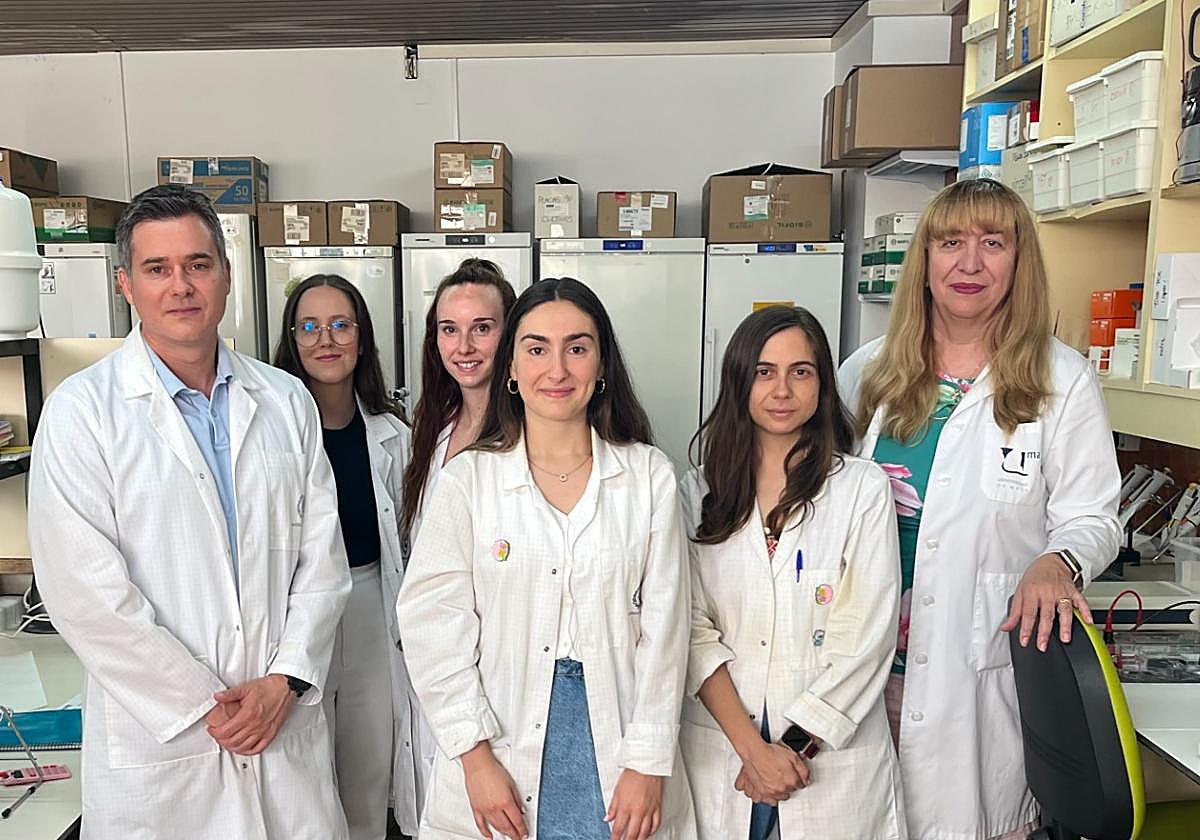

Researchers at Malaga's biomedical research institute and nanomedicine platform (Ibima-Plataforma Bionand) have published a study in the bi-monthly, peer-reviewed, open access journal Aging Cell that establishes that the proteins that trigger Alzheimer's disease cause more serious damage in human brains than those of mice. Experts describe the finding as "unexpected", but it opens up new ways of understanding the disease and could, in the future, open up windows of opportunity to develop more effective treatments. This is because these proteins, which are disseminated as 'seeds' in the brain, spread differently in humans and rodents, substantially increasing the destructive potential of the former compared to the latter. The damage is undoubtedly more severe in humans.
The research team from the neuropathology of Alzheimer's group (Neuroad) at Ibima's biomedical research unit is led by Antonia Gutiérrez Pérez. Other participants in the study were the department of cell biology, genetics and physiology at the University of Malaga (UMA) and the institute for memory impairments and neurological disorders at the University of California, (Irvine, USA).
According to the study's lead researcher, David Baglietto, "Understanding the specifics of these pathogenic seeds brings us closer to more precise and tailored treatments for each variant of Alzheimer's." The next step will be to explore how to modify or neutralise these seeds using antibodies or small compounds.
50 million people affected worldwide
Alzheimer's disease, which affects nearly 50 million people worldwide and is expected to double in number by 2050, is characterised by the accumulation of two misfolded proteins. When they unfold abnormally, they act as 'seeds' that capture their healthy counterparts and convert them into diseased copies.
According to the Andalusian institute of neuroscience (Ianec), more than 10,000 people in the Costa del Sol province suffer from this disease.
This propagation process explains the spread of lesions to different parts of the brain, although until now it was not understood why human seeds and those of other mammals behave differently. Understanding how these 'seeds' spread is fundamental to unravelling the complexity of Alzheimer's and finding ways to halt its progression.
The research group, led by David Baglietto and Juana Andreo López, has carried out a crucial study to address this question. To do so, they injected brain extracts from Alzheimer's patients and genetically modified mouse models of the disease into the hippocampus part (the area responsible for memory and learning) of the brains of live mice. The aim of the study was to determine whether the human 'seeds' were more likely to convert healthy proteins into their diseased copies, as well as to establish possible differences in the response of the brain's immune cells to this disease.
Thus, the results of the study have revealed a complex and, in some respects, unexpected picture. It was observed that human Alzheimer's brain extracts inoculated into the brains of mice demonstrated a markedly more aggressive capacity compared to those receiving brain extracts from mice. This higher potency of the human 'seeds' was confirmed by calculating the aggregation activity of the samples, with greater activity observed in the human samples compared to those from mice.
"Our data indicates that human Alzheimer's 'seeds' possess different properties, facilitating the formation of amyloid aggregates more efficiently than mouse ones," states the published journal paper. This suggests that human 'seeds' may have distinct, structural conformations or strains with unique pathogenic properties, which would help explain the clinical heterogeneity observed in Alzheimer's patients.
An international piece of research with a Malaga-California label
To shed light on this enigma, this consortium of Spanish and US researchers from the aforementioned research groups and academic institutions came together to collaborate on and participate in this study. Together, they designed an unprecedented experiment involving the extraction of brain tissue from deceased Alzheimer's patients. These samples were then inoculated into key areas of the brains of live mice. After months of incubation, they quantified and studied the inflammatory response, highlighting the role of microglia, the 'barrier cells' responsible for surrounding and isolating any damage.
Microglia, understood as the "guardians" or "immune cells" of the brain, typically cluster together to limit neuronal damage. After injecting mouse seeds, the researchers observed a much weaker microglial response and an increase in neuritic damage and phosphorylated tau adjacent to these bare plaques. In vitro cell culture experiments revealed that the mouse seeds were also more toxic than the human ones, suggesting a state of "exhaustion" that compromises the protective function of these cells.
To approach sporadic Alzheimer's (95% of all cases are sporadic), they studied a new mouse model without familial mutations. After 18 months of exposure to human seeds, no amyloid plaques appeared, but there was an increase in structures associated with impaired removal of brain waste and early neurodegenerative processes. This suggests that sporadic Alzheimer's may require multiple additional factors or even longer incubation periods.
Key findings
This research work provides several key lessons: firstly, it highlights the differences between species: not all animal models faithfully reproduce human pathology, which is vital for designing effective therapies. Secondly, it establishes microglia as a therapeutic target, so boosting the function of these cells could slow disease progression. Thirdly, it promotes early detection, as early biomarkers can be analysed before plaque formation, opening the door to earlier interventions.
![[]](http://static.vocstatic.com/voc26/latest/assets/images/favicon/surinenglish/apple-touch-icon-57x57.png)