
Malaga city hospitals at forefront of AI in oncology
The new technology is being used to analyse thousands of datasets to help improve diagnoses and fine-tune treatments
Iván Gelibter
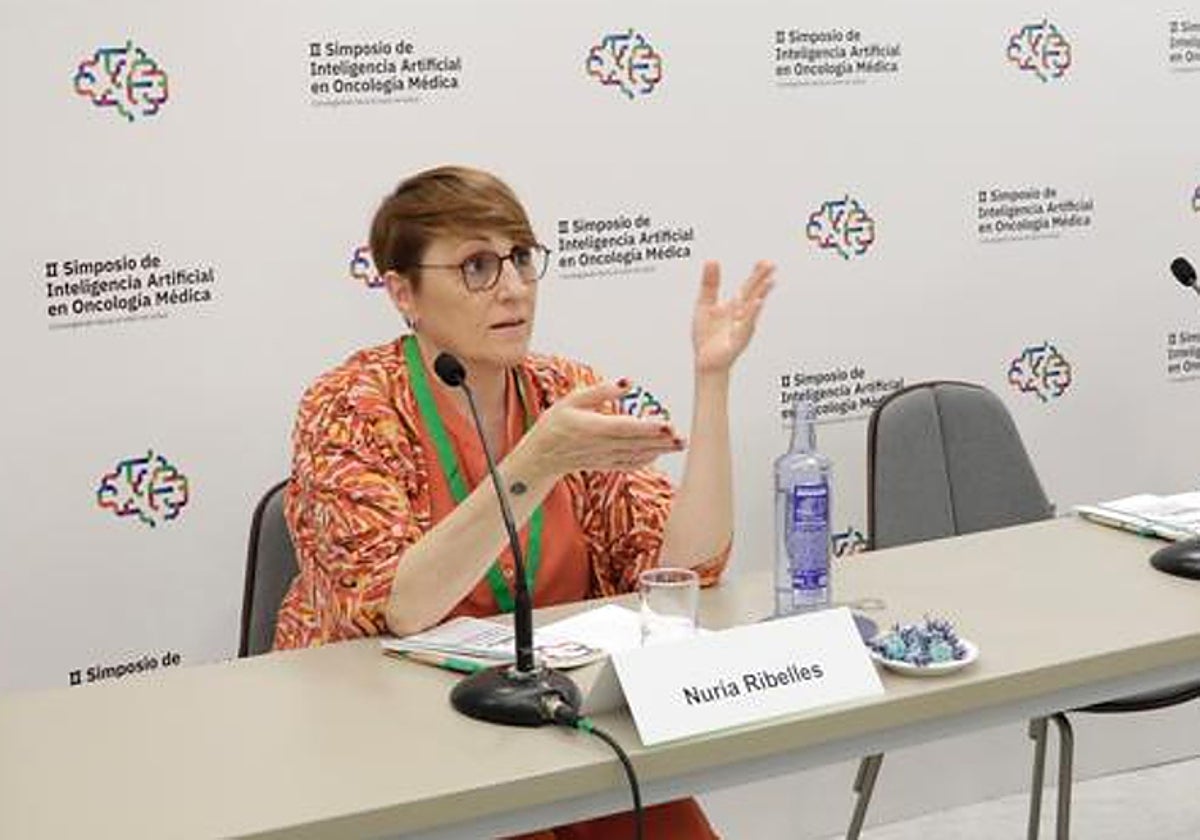
Oncology is one of many areas where artificial intelligence is aiding in the analysis of data. AI expert and oncologist from Malaga city's hospitals Nuria Ribelles, stressed that "at no time can artificial intelligence replace the oncologist". However, she pointed out that it was a very useful tool in certain areas, such as in radiological scans, where certain applications can be used "in conjunction with the radiologist".
In oncology the main function of AI is to analyse information, Ribelles said. "Most of it is collected in the medical records, but it is written in free text. This written information is very difficult to analyse, as it has to be structured into classes or intervals. This is a field in which artificial intelligence techniques are involved and in which we have been working for some time."
The expert was a co-participant at the second Symposium on Artificial Intelligence in Medical Oncology, held on 15 June in Malaga. She explained that 'real-world data' is a basic concept when it comes to understanding what AI is used for in oncology.
Real-world data is all the data that is included in electronic medical records. "These massive amounts of data tell us what is really going on. What happens is that clinical trials are an ideal scenario in which the patients included are the best possible patients. But then there is the real world, which is what really happens, so real-world data information is extremely valuable information, not only to see the efficacy of treatments, but to be able to plan resources," Ribelles said.
Malaga's oncology departments contain data from the late 1980s concerning almost 65,000 patients. "This allows us to look at patterns, detect changes over time and try to analyse why these changes have occurred," Ribelles added.
The data is the product of local work, but also analysis tools that have been developed with the School of Computer Engineering at the University of Malaga. "We have been workingwith t he Chair of Computational Intelligence and Language since 2006, making successive versions of our information system. This is the third version and I believe that in Spain there is no other database of oncology patients of this magnitude," Ribelles said.
![[]](http://static.vocstatic.com/voc26/latest/assets/images/favicon/surinenglish/apple-touch-icon-57x57.png)