
Water supply
Costa del Sol will close water year in 'normal' situation, while the Axarquia and Malaga city will be on alert and pre-alert
The latest technical report from the Junta de Andalucía assesses the situation in the province's reservoirs and sets the supply criteria for the forthcoming hydrological year which starts on 1 October

Malaga
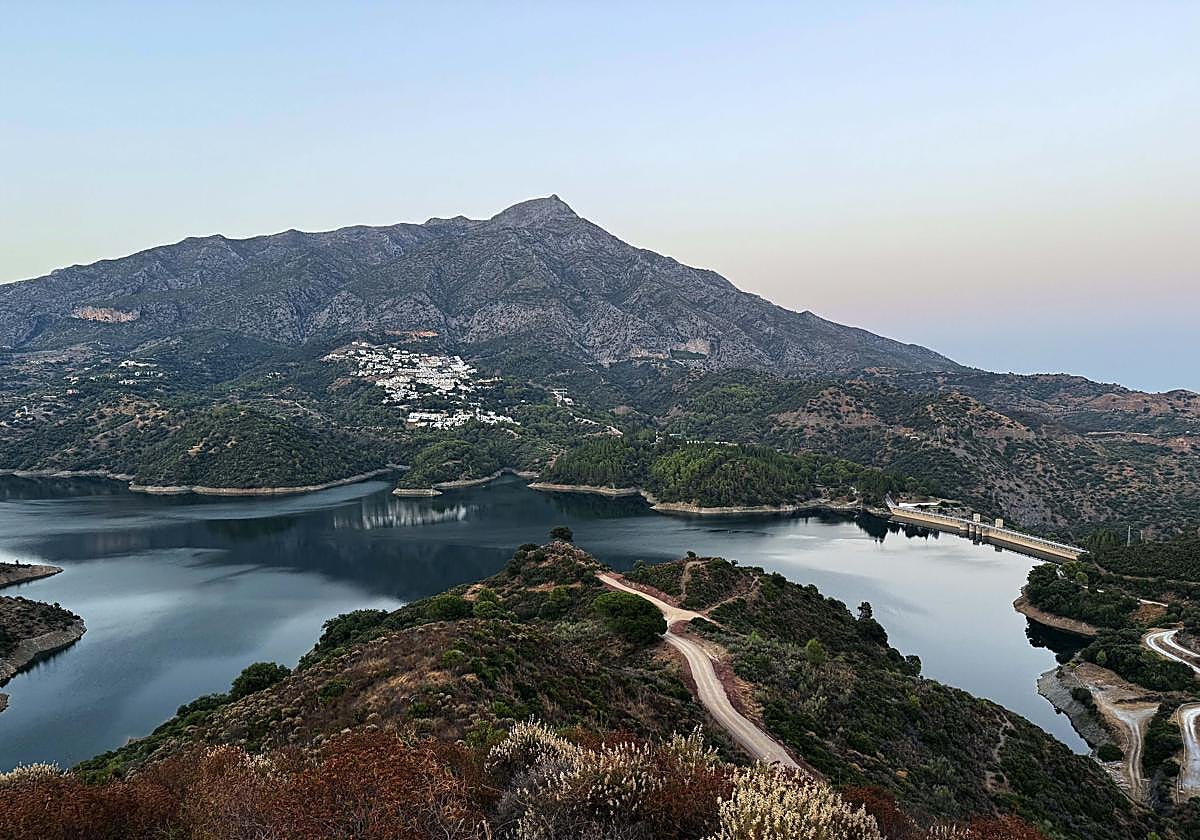
If average consumption and evaporation rates in Malaga province's reservoirs remain constant, they will close the hydrological year slightly below 50% of their capacity. The situation is the best it's been in recent years, thanks to the generous floods and storm surges back in March this year and November last year. In any case, only the Costa del Sol will enter the new year in 'normal' status on 1 October, according to the latest report from the Junta de Andalucía regional government's drought management committee, prepared in mid-July, to which SUR has had access.
The document provides a detailed overview of the most recent months and includes medium-term simulations. These simulations show that the current shortages this summer place the western Costa del Sol and the Guadalhorce-Limonero system in 'normal' status. La Viñuela is on pre-alert status. However, the prognosis for the last bit of summer will put the provincial capital on pre-alert and the Axarquia area on alert.
Related story

In any case, there are no plans to alter the current daily allowance of water per inhabitant, which is 250 litres on the west coast and 225 litres in the other two areas. It's worth remembering that this year the Guadalhorce river has an allocated irrigation volume of 30 million cubic metres and the Axarquia has 12.8 million cubic metres reserved.
Related story

The report states that "As of 14 July 2025, the reservoirs of Malaga province have stored a total of 351.49 million cubic metres, a very positive figure compared to the same date last year when the reservoir volume amounted to 143.07 millino cubic metres. The current percentage for the province is 57.48% compared to 23.39% the previous year at the same date." Reserves are currently down to 320 million cubic metres (the peak after the rainy season was 378). By the end of the summer it will be around 305.
814
mm of rainfall have been collected this year in La Concepción reservoir, 618 in the Guadalhorce and 590 in La Viñuela. These are increases of between 20 and 30% over the historical average.
By area, the rainfall pattern has helped a lot in the western Costa del Sol: "It has been a wet year, marked by abundant rainfall during the 'Dana' storms of November and March. Thus, at La Concepción reservoir pluviometric [rainfall] station, 814 mm were collected, which is 126 % of the historical average (645 mm). The inflow to the reservoir, including transfers, totals 101 hm3." This last fact confirms that the reservoir, with a capacity of 57 million cubic metres, would have been filled twice over if it had been increased in size by being built higher, as originally intended in Spain's national hydrological plan.
Marbella desalination plant
Estimates for this area suggest that the Marbella desalination plant will contribute more than 10 million cubic metres to the system during the hydrological year. It's worth noting that the second phase of its modernisation work was completed before summer. This means that it has regained the nominal capacity it was designed for, a capacity that was lost due to problems of obsolescence and wear and tear. For the 2025-26 hydrological year it will be able to provide up to 20 million cubic metres.
Fuengirola's wells
This year the coastal area will receive 4.8 million cubic metres from the Fuengirola wells. The Guadalmansa wells are not operational at the moment, nor have they exchanged any water flow with either the Campo de Gibraltar or Malaga city, according to this report, which estimates that 37 million cubic metres will be stored by 1 October. Interestingly, the report's technicians estimate evaporation at 3 million cubic metres.
10
million cubic metres of water will be provided this year by the Marbella desalination plant.
In the system supplying Malaga city, there are also no transfers with the Axarquía area. The commitment continues to make the greatest possible use of the resources that flow to the Aljaima dam on the Guadalhorce river, from the Grande river and from the Aljaima and Fahala well system. The provincial capital will be greatly strengthened by having two further resources becoming operational in the coming hydrological year: the large underground reservoir of the Lower Guadalhorce and five wells in Perales and Puente del Rey, which could supply the city with up to 800 litres per second.
Reservoir discharges
"The rains in March have significantly improved water reserves in each of the reservoirs, increasing fourfold compared to the beginning of the 2024/25 hydrological year," the document states, noting that in March it was necessary to release water from the Conde de Guadalhorce reservoir. These discharges totalled more than 21 million cubic metres. The report also states that "This volume of discharge flows directly into the Tajo de la Encantada gorge in El Chorro, so the dam, in addition to having to release these volumes, has had to discharge its own contributions, which have been estimated at an additional 20 million cubic metres to ensure the safety of the dam, its operation and the functioning of its drainage systems."
41 (21 + 20)
million cubic metres have been released from El Conde del Guadalhorce reservoir.
The Limonero dam has released a total of 0.64 million cubic metres, of which 0.48 was in November due to flooding. The Casasola dam has released some 11.8 million cubic metres, of which 9.7 corresponded to the month of March.
La Viñuela
The La Viñuela-Axarquía system is breathing with a new lease of life after some extremely difficult years, but it still remains at the threshold of severe shortage. It is expected to start October below 70 million cubic metres.
The reservoir has collected 563.7 litres per square metre this year, which is 130% of the historical average (433). Inflows to the reservoir totalled 69.66 million cubic metres (144% of the average).
2.2
million cubic metres will be collected from the wells of the Chíllar river.
"Taking into account the source of this water supply, it is planned to collect up to 2.20 million cubic metres from the Chíllar river wells with an average flow rate of 70 litres per second and a total consumption of 15.30 million cubic metres from the reservoir reserves", states the report, also mentioning the provision of 12.8 million cubic metres for the 6,400 hectares on the right bank of the Guaro Plan. The contribution of 70 litres per second from the Chíllar river wells, together with all of the above, leads the technical experts to project kicking off October - the new hydrological year - with some 62 million cubic metres of surface water reserves.
![[]](http://static.vocstatic.com/voc26/latest/assets/images/favicon/surinenglish/apple-touch-icon-57x57.png)