
Carratraca
Javier Lazpita, the mind behind Evolution Park: 'There will be those who travel to Malaga just for the park'
The biologist and director of the project that will be situated in Carratraca says that it will be a unique space where leisure and education go hand in hand: "We want people to have a good time, but also to learn"

Carratraca
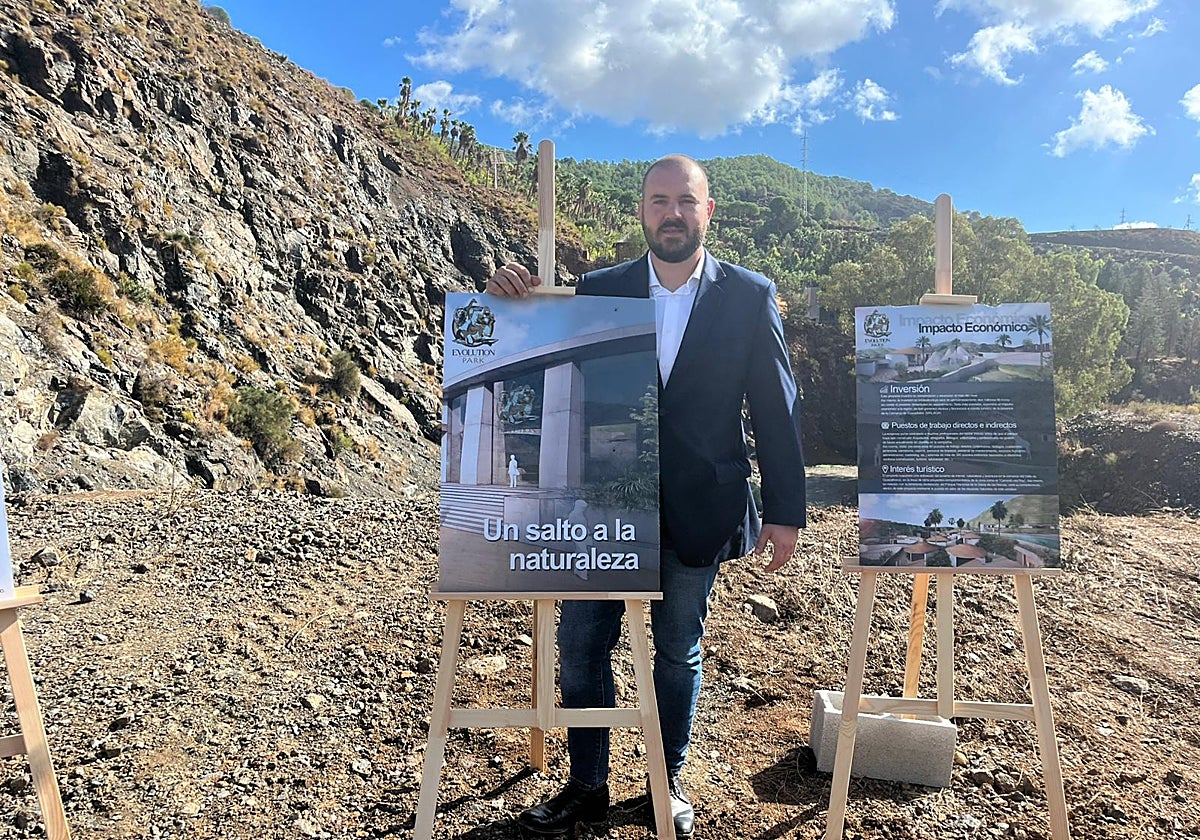
Malaga's future nature and biodiversity theme park, Evolution Park, is starting to become a reality after more than a decade of work and bureaucracy. Behind this ambitious project is Javier Lazpita, a biologist from Madrid and future director of the park, whose passion for conservation and environmental awareness has been the driving force behind an idea that promises to put Carratraca on the world map of sustainable tourism. Convinced of the potential of the initiative, Lazpita says that "there will be those who travel to Malaga just for the park", convinced that Evolution Park will be a unique destination where leisure and education go hand in hand.
Related story
-
 Julio J. Portabales
The origin of this project goes back several years, when Lazpita was approached by a company about the idea. His experience in the field of biology and his master's degree in the conservation and recovery of endangered species are a guarantee that he is the right person to take the helm of this initiative. In addition to this, he has loved zoos since he was young: "I found it very exciting and so I decided to embark on this adventure," he recalls.
From that moment when he said "I do", as if he were a groom on his wedding day, the path has been long and complicated. Evolution Park began eleven years ago, but the paperwork involved was the most challenging aspect during its first years of life. The many permits for roads, water and use of public rights of way were major stumbling blocks that delayed the project.
Although the biologist has never lived in Malaga, he knew from the very first moment that the province's interior was the ideal place to create his project. "The location was perfect, both for its natural surroundings and for its proximity to the Caminito del Rey," he explains, recalling that the chosen estate (located in the Sierra del Agua, about four kilometres from the town of Carratraca) is an area thousands of tourists pass through.
Why the enclave
‘The location was perfect, both for its natural surroundings and its proximity to Caminito del Rey’
Lazpita took advantage of his talk with SUR to explain the project in more detail, which promises to be one of the most ambitious in the coming years. The idea is to develop it in two phases for logistical reasons, building from the highest part of the mountain to the main access. However, he clarifies that this does not imply that the park will be opened in two stages, but rather that the aim is to optimise the work. Although he acknowledges the difficulty of setting a date for this type of project, he hopes to have the work completed and open to the public by 2030.
Fun and learning
When this idea began to take shape, there were many reasons to push it forward, although in Javier Lazpita's mind there were only two: fun and learning. For him, the main mission of the park is to ensure that people visit Evolution Park and leave feeling satisfied: "We want people to have a good time, but also to learn," he says.
The aim is for visitors to understand the importance of biodiversity and how to care for the planet. To achieve this goal, they will offer a variety of attractions: from the longest aquarium in the world (with a length of 80 metres), to a giant aviary (the largest in Spain), a planetarium, a virtual safari and a 360-degree cinema. All these spaces aim to create an unforgettable experience, where visitors will see something they cannot find anywhere else.
-U51601225833MiL-748x524@Diario%20Sur.jpeg)
Lazpita insists that Evolution Park will not be a traditional zoo. The project proposes a new model, focused on the recreation of themed natural habitats and scientific dissemination. "We want to showcase wildlife in a respectful and educational way, not only to admire it, but to understand its history, its evolution and its role in the ecosystem," he explains. "Environmental education will be one of the park's fundamental pillars."
Aim of the project
‘We want to showcase wildlife in a respectful and educational way, not just to admire it, but to understand its history, its evolution and its role in the ecosystem’
The impact on tourism and the local economy will also be significant. The director is confident that the park will attract visitors from all over the world: "It won't be just another place on a trip to Malaga, but a destination in itself. There will be people who come just to see Evolution Park," he says. "We are going to offer something that doesn't exist right now in Europe: a theme park focused on nature, with museums, animal facilities, technological attractions and educational spaces. It's something you can't miss out on.
Lazpita acknowledges that institutional support has been key in getting to this point. "The public institutions are the ones that grant the permits and can help or complicate the way forward. In this case, we have had a great deal of support, especially from the Carratraca town hall," he stresses. "That support has been fundamental for other administrations to listen to us. Without it, we probably wouldn't be here."
Looking to the future, the biologist is clear about the image he wants to project with the park: "I want nobody to leave indifferent. I want visitors to have a good time, to see something spectacular and also to learn something," he says with conviction. "If a child leaves here saying that he or she doesn't want the tigers to become extinct, we will have achieved our goal. We want people to have fun, yes, but we also want them to leave here more aware of the value of life and the importance of protecting it.
With the first stone already laid and a planned investment of ten million euros, Evolution Park is beginning to take its first steps towards becoming one of the major benchmarks for nature and sustainability tourism in Andalucía. "It has taken many years of work, effort and enthusiasm," concludes Lazpita. "Now all that remains is to make it happen."
![[]](http://static.vocstatic.com/voc26/latest/assets/images/favicon/surinenglish/apple-touch-icon-57x57.png)