
Food and drink
'Citrus caviar': the exotic pearl being grown in Malaga province
The Guadalhorce valley and the Axarquía areas are home to most of the farms that grow the fruit which comes from Australia

Malaga
Its pearls give a small explosion of flavour that is being added to dishes or drinks across Europe. Citrus caviar arrived in Spain from Australia more than a decade ago and seems to be here to stay. Today it is an exclusive, original and versatile product that can be found in a sophisticated cocktail, a tartar or an Asian recipe.
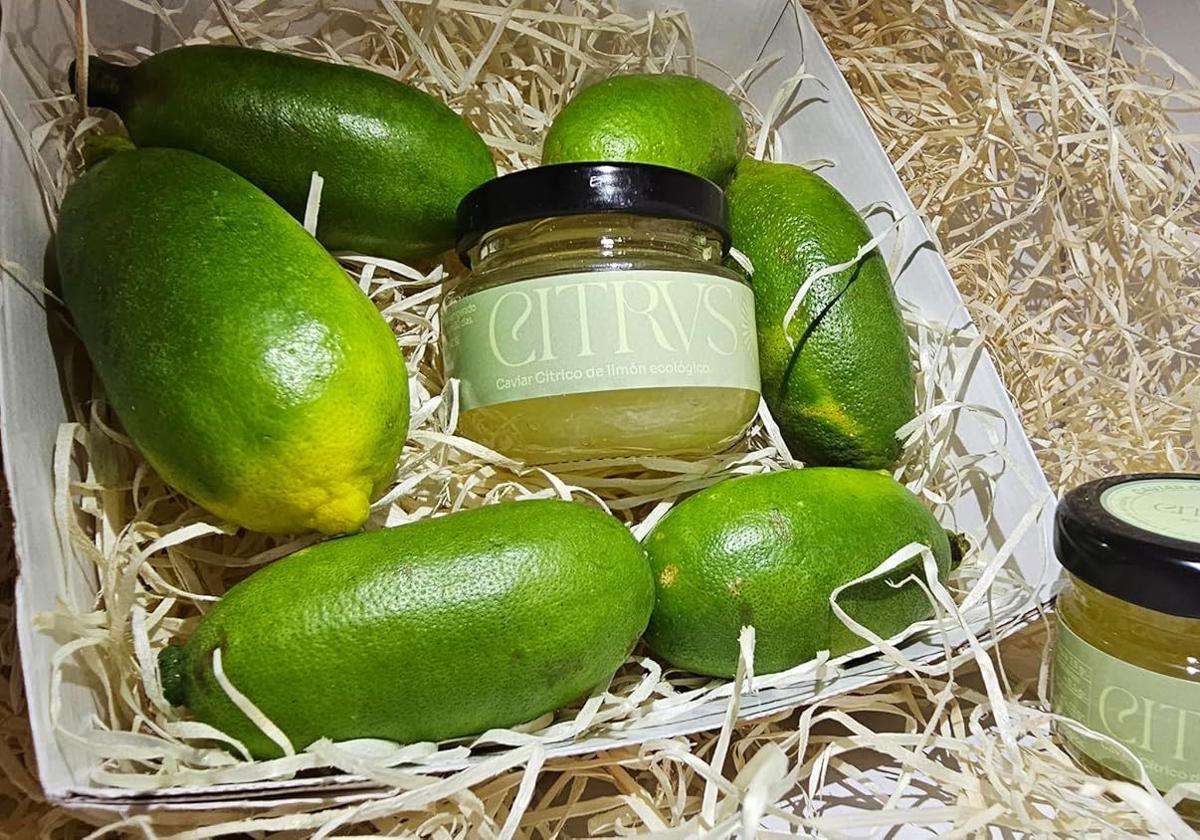
The small, finger-sized fruit contains pearls, which has led to it being popularly and commercially referred to as 'citrus caviar'. This name may also be due to the price of the product. However, as José Ignacio Jiménez, Sales Director of Citrvs, the Malaga brand that markets this fruit most, points out, the price has come down a lot from the 80 euros that a kilo of this fruit used to cost. "It has come down quite a lot and it is becoming increasingly easier to find," he comments, as both supply and demand have also increased considerably. Today, a container of approximately 200 grams of pearls can be found for between six and seven euros.
In Pizarra, in the Guadalhorce Valley, Citrvs, which is a brand of the company Novedades Hortícolas, has approximately two thousand trees, which is the largest farm dedicated to this crop and it is also certified organic.
Unlike other citrus fruits, this 'caviar' does not come from a tree but from a shrub. It has adapted perfectly to soil where orange, lemon or mandarin trees also grow.
It has been three years since Citrvs started marketing the product, to the point that it not only sells the fruit but also jars containing just the pearls. It is distributed via Frutas y Verduras Eladio or Comercial Galera, but end consumers can also buy them directly from the company via its website (Fruta Gourmet) or other intermediaries. Although this fruit is especially associated with summer (it is harvested between July and September), at the Pizarra farm they have citrus caviar all year round.
Although nowadays much of what is grown in Pizarra is exported to other European countries, it is increasingly present in bars and restaurants in Malaga province. Not only in Asian cuisine or cocktail bars, but also in many others that use it in different recipes. "Some people add it to a Russian salad or even a cheesecake," says José Ignacio Jiménez, who has already taken the product to various gastronomic events to promote it.
Two varieties
Currently, Citrvs has two varieties, one that is more reminiscent of lemon in flavour and another that resembles lime. Although the latter is the best known, in Novedades Hortícolas they have opted especially for the former because "it has more flavour and can be associated more with Mediterranean cuisine". Jiménez adds that the pearls of this variety are more suitable for cocktails, they go up and down, while those that resemble the flavour of the lime fall to the bottom of the glass or cup,
Another company that markets citrus caviar in the province is Bematropik, based in Benamargosa in the Axarquía. As in Pizarra, here it is grown near the river, in an area where it coexists mainly with lemon trees.
"The crop is like any other citrus fruit, but in this area it behaves in a strange way, because there are trees that don't produce fruit every year", explains Paco Fortes, manager of Bematropik, where they even sell individual fruits (around 10 grams each).
It is more difficult to market in the Axarquía but more and more farmers are planting it. In Australia it is added to any salad and used in the same way as lemons are used in Europe.
![[]](http://static.vocstatic.com/voc26/latest/assets/images/favicon/surinenglish/apple-touch-icon-57x57.png)