
THE STORY BEHIND A PLACE NAME
Nerja: abundant spring, ironically
The village of Maro, which sits to the east of the bigger town, is named after marum, a white plant that grew abundantly in the area
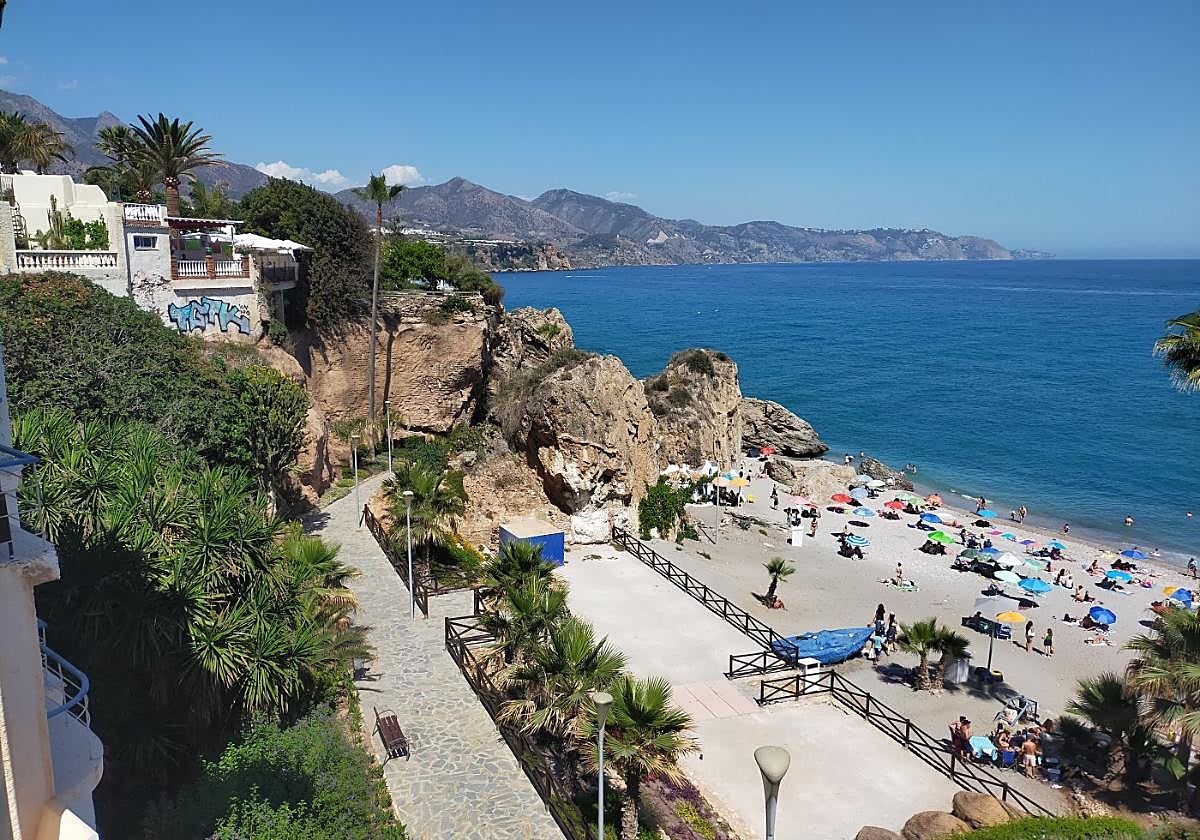

Nerja
Nerja was once known as 'Narixa', meaning abundant spring, which, given the current drought and water restrictions, perhaps 'dwindling spring' would be more appropriate these days.
The name comes from the Arabic Narija or Naricha, and is in turn a derivation of a Roman term referring to the abundance of the Chíllar river, which has provided Nerja with water for its residents and agriculture since the first human settlements.
There are a number of remains from the Roman period, including a stretch of the old road that linked Sexi (Almuñécar) with Caviclum (Torrox) and a bridge that served as communication with the Roman town of Detunda (Maro).
But evidence of human presence in the area dates back to the Upper Paleolithic period, as shown by human remains found in the Nerja cave, which was discovered in 1959 by a group of children playing in the area.
Nerja is described as a large farmstead in the middle of a field of mulberry trees and lush orchards in documents dating back to the tenth century. The village was sheltered by a fortification, the remains of which can still be seen on the road to Frigiliana.
After the fall of Vélez-Málaga to the Catholic King and Queen in the late fifteenth century, Nerja became part of Vélez in 1501. In 1509, and to defend the coast from attacks by pirates, the construction of a fortress was completed on a rocky bastion overlooking the sea, which is known today as the Balcón de Europa.
Maro
According to the historians Lafuente Alcántara and Guillén Robles, present-day Maro, which sits next to the aforementioned Roman road, appears as Detunda during the Roman period, and is thought to have been an area of commerce from the quantity of Roman coins found there.
The area of Maro is thought to have been settled in the first century BC on the site of an ancient Phoenician or Carthaginian settlement. Later, at the dawn of the Christian era, it became a village, which was called Marum (Maro), named after a white plant that grew abundantly in the area at that time.
![[]](http://static.vocstatic.com/voc26/latest/assets/images/favicon/surinenglish/apple-touch-icon-57x57.png)