
Infrastructure
Axarquía growers launch major project to expand use of reclaimed water for their subtropical crops
A network of pipelines almost 30 kilometres long and a 93,000-cubic-metre reservoir will ensure the irrigation of 2,910 hectares with a water mix to combat drought, in a project requiring an investment of 35 million euros

Axarquía
Despite the positive hydrological year that ended on 30 September and the rainfall since the start of the one now under way, which are both providing real relief for Malaga province's reservoir levels and put an end to a five-year drought, reclaimed water continues to be a real lifeline for subtropical crops, mangoes and avocados in the Axarquia area.
However, the available infrastructure is not yet sufficient to reach all of the more than 6,600 hectares of crops located below the 140 metres above sea level, meaning those within the area covered by the Junta's Guaro Plan for improving irrigation.
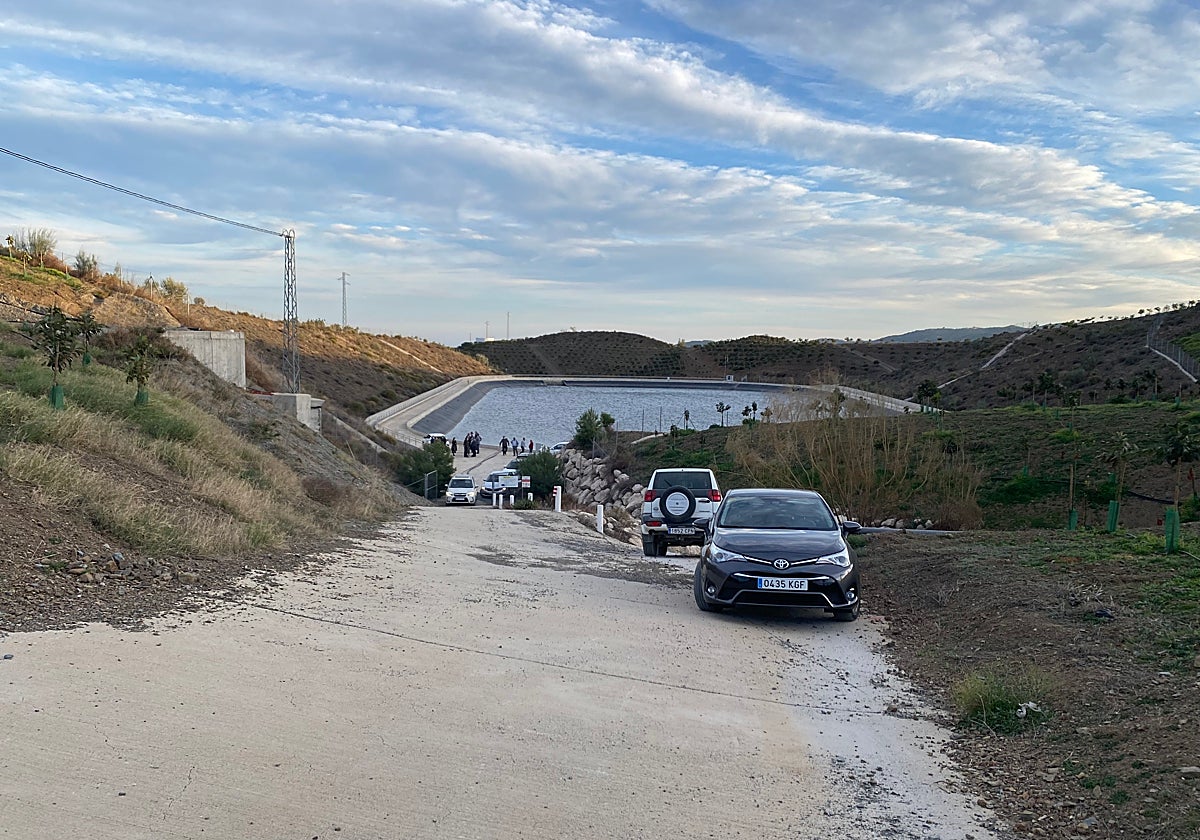
Therefore, to further increase the availability of these resources and store them for the summer months, the Junta de Andalucía has been investing 17.6 million euros since the start of 2025 in the construction of two new, large reservoirs with a storage capacity of around 0.25 million cubic metres. The project, now at an advanced stage of execution, was designed by the more than 2,000 farmers belonging to the community of irrigators in the southern Guaro. Together, they cultivate some 3,000 hectares of subtropical crops located on the right-hand bank of Vélez river. The work is being carried out by the public company Tragsa, through a management contract with the regional ministry of agriculture.
Work is nearing completion on two new, large reservoirs, capable of storing around 0.25 million cubic metres of water
However, farmers on the left bank, with nearly 3,000 hectares of crops, do not want to be left behind and aspire to have access to a share of these water resources as well. To this end, the local water irrigation community for the Axarquía area, in collaboration with Wats Ingeniería and regional government, is promoting an ambitious project to bring reclaimed water to almost 3,000 hectares of crops on the left bank, with an investment exceeding 35 million euros, financed by EAFRD funds. This initiative falls under the Parra Plan, which is still awaiting approval of applications submitted by irrigation communities in Andalucía. The Parra Plan seeks to guarantee the future of subtropical agriculture through a water mix that combines reclaimed water, resources from La Viñuela reservoir and future contributions of desalinated water.
The Axarquia area is accelerating its water transformation to save its most emblematic agriculture. The Axarquía's irrigation community, together with Malaga-based engineering firm Wats, has designed a project to supply reclaimed water that aims to ensure irrigation for 2,910 hectares of crops, primarily subtropical, which are regarded as the social and economic engine of this eastern part of Malaga.
Parra Plan
According to the project's corporate video, to which SUR has had access, these water reserves will be implemented through the Parra Plan for the regional ministry of agriculture, with an investment exceeding 35 million euros and co-financed by European agricultural funds (EAFRD). "The incorporation of non-conventional water resources increases the capacity to adapt to drought," stresses a spokesperson for the Axarquía irrigation community, adding that the aim is to "contribute to the maintenance and reliability of the productive sector and the conservation of natural resources".
The system will rely on the incorporation of reclaimed water from the Peñón del Cuervo wastewater treatment plant (WWTP) in Malaga city, which will be connected to the irrigation network for the Axarquía, along with the future arrival of desalinated water. This plan will make it possible to configure a water mix intended to meet irrigation needs while simultaneously reducing pressure on the groundwater and surface water resources of the eastern area, which has been particularly hard hit in recent years by drought and water supply restrictions.
It includes a 15.9-kilometre main pipeline made of 630mm diameter PVC pipe.
The project includes a 15.9-kilometre main pipeline made of 630-millimetre-wide PVC pipe, which will start from the discharge point of the Peñón del Cuervo-Rincón de la Victoria WWTP system, to be managed in coordination with the southern Guaro irrigation community. This key pipeline incorporates an intermediate pumping station capable of pumping a flow of up to 410 litres per second to the system's main storage pool.
This large pool, called the Balsa Axarquía, will have a capacity of 93,000 cubic metres and will serve as the network's main hub, allowing for the regulation, mixing and subsequent distribution of the various water resources. From this point, surface water from La Viñuela reservoir will also be integrated by means of a specific pipeline of 1.2 kilometres of oriented PVC that is 710 millimetres in diameter, to which flows from desalination plants will be added in the future.
Almost 3,000 hectares
The distribution network will run along 29.6 kilometres of pipelines, with diameters up to 1,000 millimetres and a design flow rate at the head of the network of 896 litres per second. According to the project, the system will serve 28 main irrigation intakes, with 41 outlets to secondary distribution networks, supplying an area of 2,910 hectares integrated into the management scheme of the irrigation community on the left bank of the Guaro Plan.
The entire infrastructure will be integrated into a comprehensive automation and remote control system, employing advanced digital techniques to optimise water and energy use. "Wats designs infrastructure that enables the optimal use of water and energy, allowing for regulation, mixing and subsequent distribution," states the presentation video, in which the project is presented as "a project for the reliable, safe and sustainable development of agriculture in the Axarquia area".
Sources within the agricultural sector have been calling for years for the implementation of structural solutions based on reclaimed and desalinated water to guarantee the viability of mango and avocado farms, especially after the episodes of drought that have significantly limited water allocations from La Viñuela reservoir. The deployment of this project is seen as a decisive step towards reducing the exclusive dependence on reservoir and groundwater resources in one of the most pressured areas for irrigation in Andalucía.
The incorporation of non-conventional water sources "is essential to sustain the productive fabric and employment"
The project video stresses that agriculture in the Axarquia is "of high value, a social and economic engine of the area" and one that is threatened by the management of a "structural" resource like water, key for both the sector and the area's natural heritage. The Axarquía's irrigation community insists that the modernisation of infrastructure and the incorporation of non-conventional water sources "are essential to sustain the productive fabric and employment linked to subtropical crops".
This community of irrigators is the main promoter of the project, with technical support from Wats Ingeniería, and is fully part of the water planning activities promoted by the Junta's regional agriculture ministry through the Parra Plan. Funding from the European Agricultural Fund for Rural Development (EAFRD) is part of the EU's strategies for adapting to climate change and promoting a more efficient and circular use of water in Mediterranean-based irrigation.
![[]](http://static.vocstatic.com/voc26/latest/assets/images/favicon/surinenglish/apple-touch-icon-57x57.png)