
Transport
Malaga high-speed rail delay forces airlines and agencies to increase alternative transport options
Hoteliers warn of a 25 per cent drop in occupancy for Easter Week and possible impact during April's first two weeks

Málaga
Travel agencies, flight operators, hotels and holiday homes in the Costa del Sol are pulling all the stops to prevent holiday and work trip cancellations due to the delayed reopening of the high-speed rail.
With the latest reopening deadline (23 March) still a few weeks ahead, the main airlines have increased the number of connections between Madrid and Malaga to eight per day. For many people, this is the preferred travel option due to its speed convenience.
At the same time, various companies and hospitality businesses are sending private shuttles to transfer their customers from Antequera-Santa Ana to their destination, without the need for them to transfer from the train to a public bus to Malaga.
A combination of the two - charter flights for the opening and closing ceremonies and a private transfer by road - is the strategy that the director of Malaga Film Festival announced this week.
The popularity of air travel to get to Malaga is reminiscent of the days before the high-speed line in Andalucía. "We are relying more on the plane, because we don't know exactly when they are going to reopen," president of the association of travel agencies Sergio García says.
He states that it is precisely thanks to air travel that the high-speed line suspension has not had a strong impact on foreign tourism. "It is true that, in some cases, there have been plan changes. Those who had planned to come from Madrid by train are now coming by plane," he says.
Easter Week hotel occupancy in decline
Hoteliers share their concern that occupancy during Easter Week has dropped to around 25 per cent in Malaga. In addition, they say that the suspension of the high-speed rail in the province is already having an impact on bookings for the first two weeks of April.
Railway uncertainty has gone from being a logistical nuisance to a real threat to employment in the hospitality sector. According to president of the hoteliers' association Javier Hernández, "the impact is greater the longer the suspension lasts". "We are talking about a drop in demand: a customer, faced with the inconvenience of the trip, simply stops booking," Hernández said.
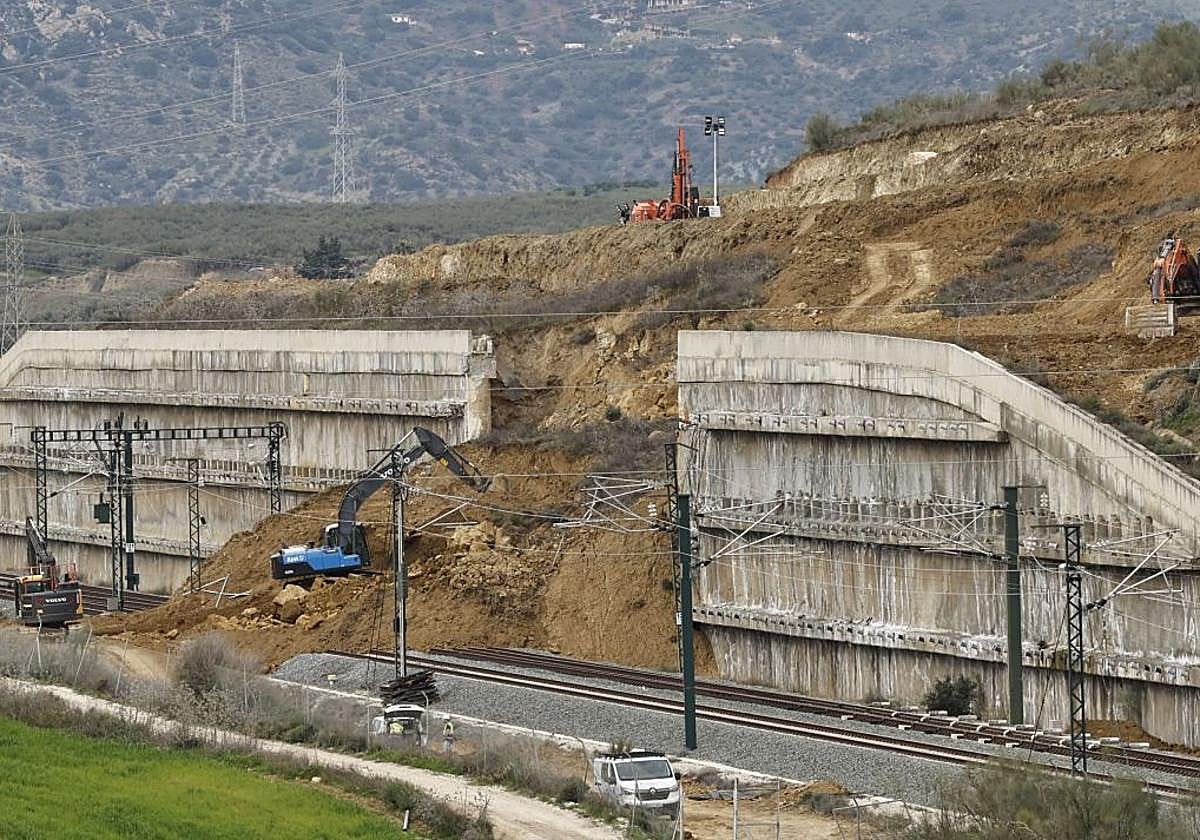
In addition, there is concern over the loss of passenger trust in the high-speed rail, especially if state rail infrastructure company Adif prolongs the work in Álora beyond 23 March.
![[]](http://static.vocstatic.com/voc26/latest/assets/images/favicon/surinenglish/apple-touch-icon-57x57.png)