
Rail transport
Repairs to Malaga high-speed rail line move to 24-hour shifts ahead of Easter
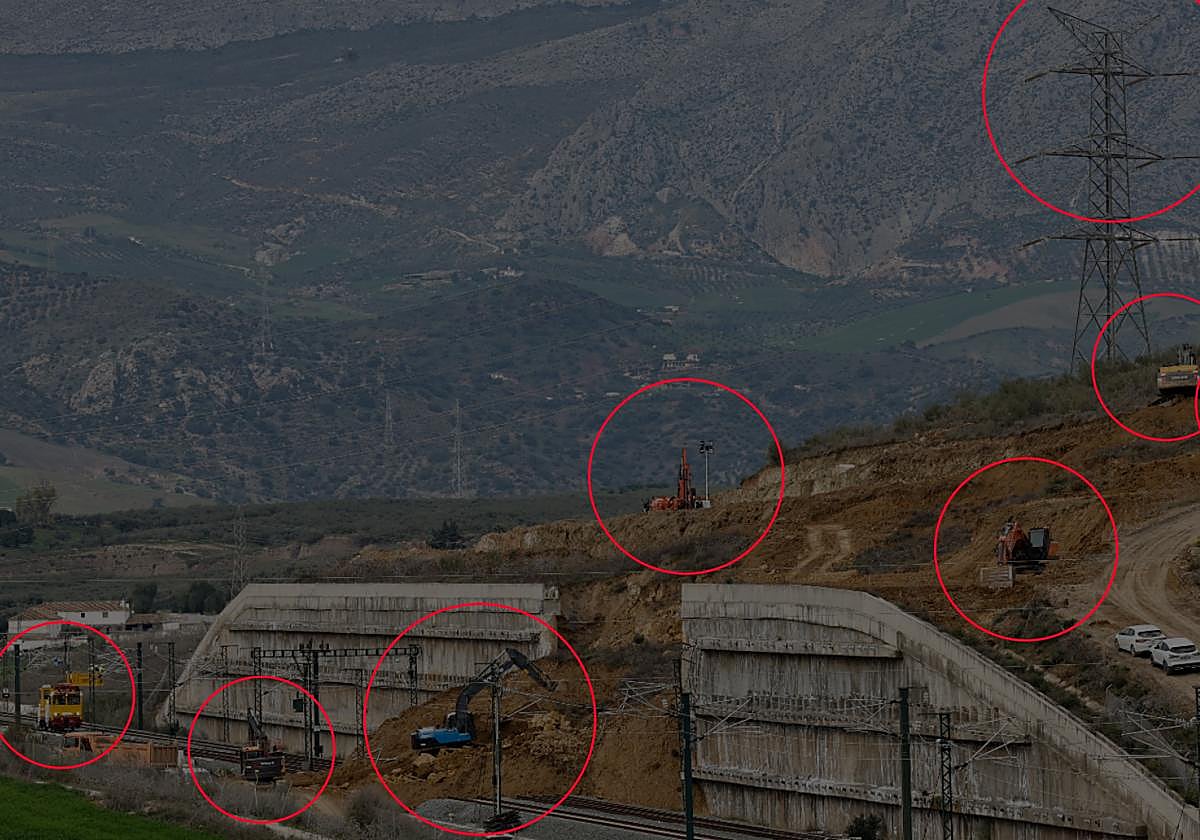
Pressure from the tourism sector and criticism from rail experts have pushed Adif to accelerate work on the 'brutal' landslide in Álora

Málaga
Spain’s rail infrastructure manager, Adif, has finally committed to a 24-hour work schedule to repair the landslide in Álora that has severed Malaga’s high-speed rail connection.
While Adif maintains that round-the-clock shifts were impossible until now due to "unsafe working conditions," anonymous engineers have told SUR that a "shortage of material resources and personnel" in Malaga caused an unjustifiable delay.
According to sources, the pressure from hoteliers, who this week warned that there will be grave losses in tourism during Easter Week due to the lack of trains, has played a key role in pushing authorities to speed up the recovery of the rail.
Anonymous criticism from rail experts
Engineers have been critical of the slow pace of rail repair in these first weeks. In a conversation with SUR, they stated that Adif is not efficient enough in re-establishing the connection with Madrid.
10,000
passengers arrived by train in Malaga last Friday of Sorrows, which was one of the busiest days of the year
These experts described a state of "paralysis" during the first 20 days after the landslide collapsed in Álora on 5 February.
According to them, the state prioritises Catalonia to recover the local Rodalies line.
Adif's response
In response to criticism, the state rail manager said advancing in Álora has not been safe for the workers on the ground until now. Adif cited the possibility of more landslides as the reason for the delay. Now that the ground is stable, work can progress 24 hours a day.
The state company denies that Malaga has received a "different treatment". "We have approved an emergency project, as in many other places," Adif sources said.
"Adif is not going to spare a single euro in human and technical resources, because reopening the line as soon as possible is as much in its interest as in anybody else's," they added.
According to Adif, critics are underestimating the extent of the damage in Álora. "It's not that just a little bit of earth has fallen on the track (...) There has been a brutal landslide that requires a lot of work," the company said.
"It has to be done from above, eating away at the slope. For safety reasons workers cannot access the rail because there is a high risk of a new landslide," Adif said to explain how it is planning this "complex and slow" recovery.
Among other things, the process includes the partial demolition of a concrete wall anchored to the ground and the relocation of a high-voltage power line.
Easter Week losses
Unofficial estimates set the number of arrivals on high-speed trains at the María Zambrano station in Malaga on Friday of Sorrows (the first day of the Easter holiday) last year at around 10,000 people: an average of 400 people on 25 trains.
In addition, there is a loss of "hundreds of thousands of euros" that Adif is not collecting from train operators.
![[]](http://static.vocstatic.com/voc26/latest/assets/images/favicon/surinenglish/apple-touch-icon-57x57.png)