
Infrastructure
The multi-million-euro water bill continues to rise for Malaga town some 20 years after high-speed rail line construction incident
Adif and Tragsa are obliged to invest another one million euros in water tankers, added to the more than 30 million they have paid since a tunnel boring machine accidentally punctured the supply acquifer

Malaga
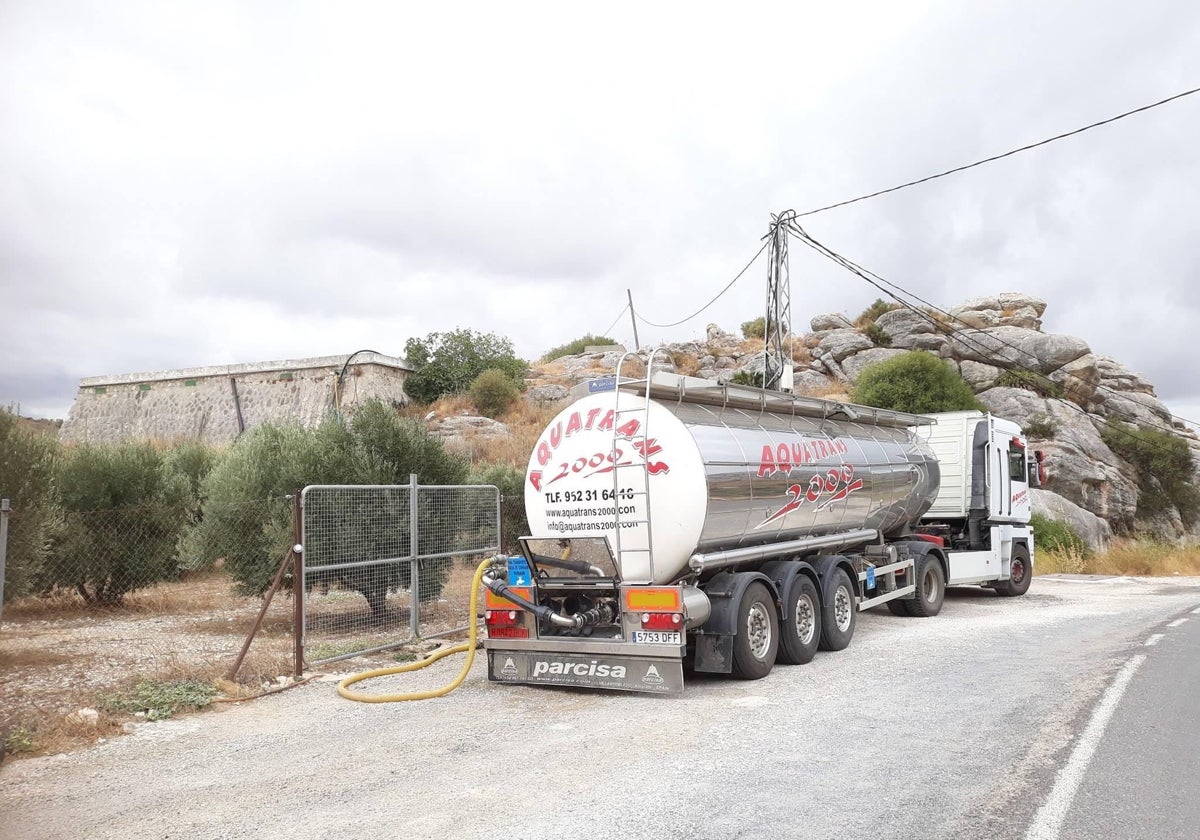
The municapility of Valle de Abdalajís in Malaga province has been generating a costly water bill for Spain's state railway infrastructure company Adif ever since the latter accidentally punctured the town's supply aquifer 20 years ago. During the construction of the high-speed Malaga-Cordoba railway line in 2005, one of the most expensive phases - the construction of a double tunnel - resulted in an incident that led to the boring machine affecting the water aquifer, which started to release as much as 800 litres per second.
The tunnel in effect became a water pipeline and 20 years later the Malaga town is still receiving water in tanker lorries sponsored by Adif and, therefore, by the Ministry of Transport. During the past two decades, more than 30 million euros have been invested and a new contract for more than one million euros has just been signed. All this money would have been enough to build a solvent hydraulic infrastructure in a town of barely 2,500 inhabitants.
High Court decision
A recent ruling by the High Court, however, has ruled in favour of Adif, exempting it from the responsibility to continue paying for this service. Instead, the top court accused Valle de Abdalajís town hall for not assuming any part of the responsibility during all this time. According to the ruling, Adif "has more than fulfilled its commitment", while the municipality has not carried out the maintenance work or set the service fees.
This court decision could therefore legally terminate the measure, but for now Adif will have to continue being responsible for the water supply, given that the town hall might soon lodge an appeal.
In the past two decades, Adif has carried out various costly attempts to create a stable water supply, both for human consumption and for agricultural irrigation, but the efforts have not been terribly successful. Together with the installation of a wastewater treatment plant, the upgrading of roads and even the recovery of the archaeological remains of a Roman villa, these actions have added up to a further 26.6 million euros.
![[]](http://static.vocstatic.com/voc26/latest/assets/images/favicon/surinenglish/apple-touch-icon-57x57.png)