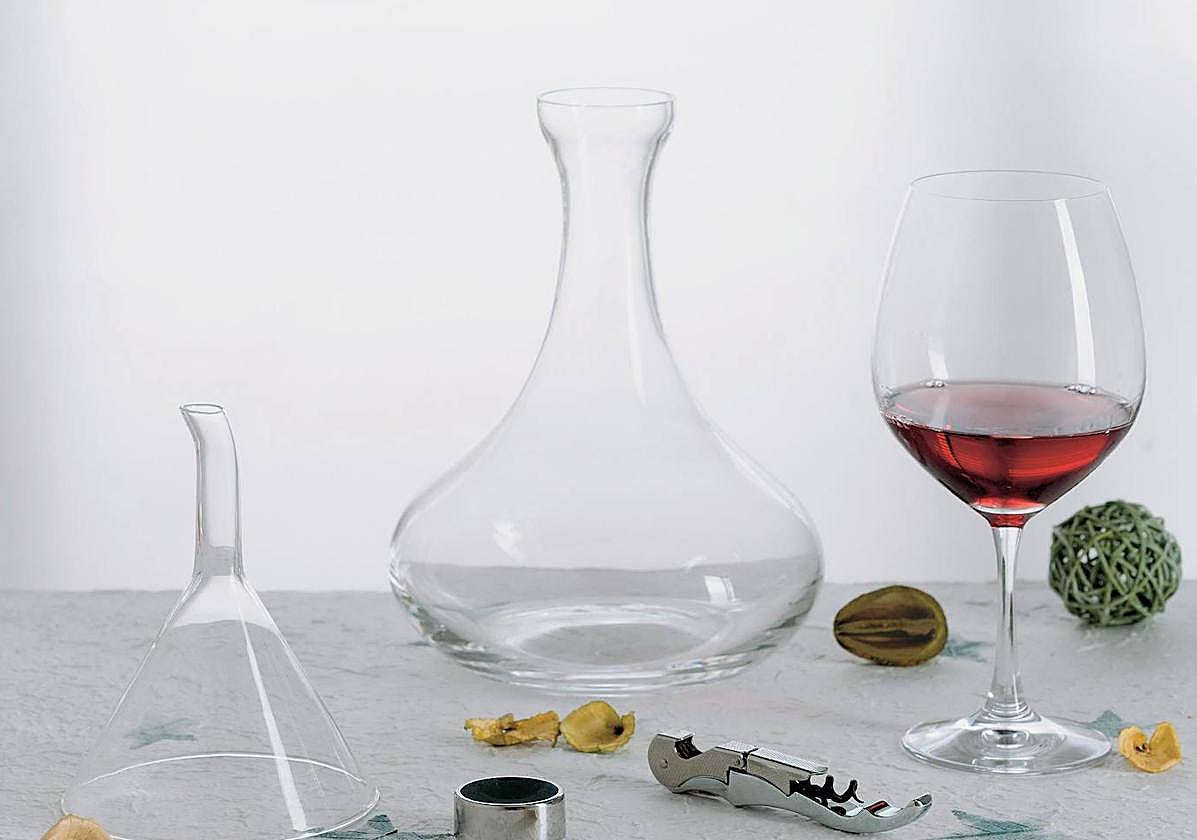
The decanting argument
As with most such matters, it often comes down to a personal choice
Andrew J. Linn
Viernes, 9 de junio 2023, 15:19
Few matters relating to the service of wine cause more divergence than whether or not to decant. There are persuasive arguments to justify decanting and ... the same for not decanting, and there are extremists who refuse to use a decanter and others who decant everything, even white wine. As with most such matters, it often comes down to a personal choice.
As a rule, red wines of a certain age should be decanted if there is a likelihood that the bottle contains sediment (pozos in Spanish), although decanted wine loses some of its bouquet and may taste flatter.
Another well-aired (excuse the pun) reason for decanting it to oxidise the wine, but this can be risky: who can tell whether a wine needs oxidising or not?
A fail-safe solution, which surprisingly is not practised more widely by sommeliers, is to open the bottle, taste the wine, and then decide.
When someone says, 'Let's open the bottle to give it some air', tell them not to waste their time. Scientific tests have shown that bottles opened several hours prior to consumption have the same oxygen content as those just opened.
Oxygen contact resulting from decanting can soften harsh tannins and release more complex aromas. This process is recommended for young, tannic wines like Cabernet Sauvignon, Syrah, and Bordeaux blends.
A practical argument against decanting is that, although there are some very old decanters provided with glass stoppers, it is normally impossible to cork wine in a decanter. It must be drunk (Arghhh..!) or returned to its original bottle for corking.
¿Tienes una suscripción? Inicia sesión