
'Romería' season in Andalucía gets under way with San José
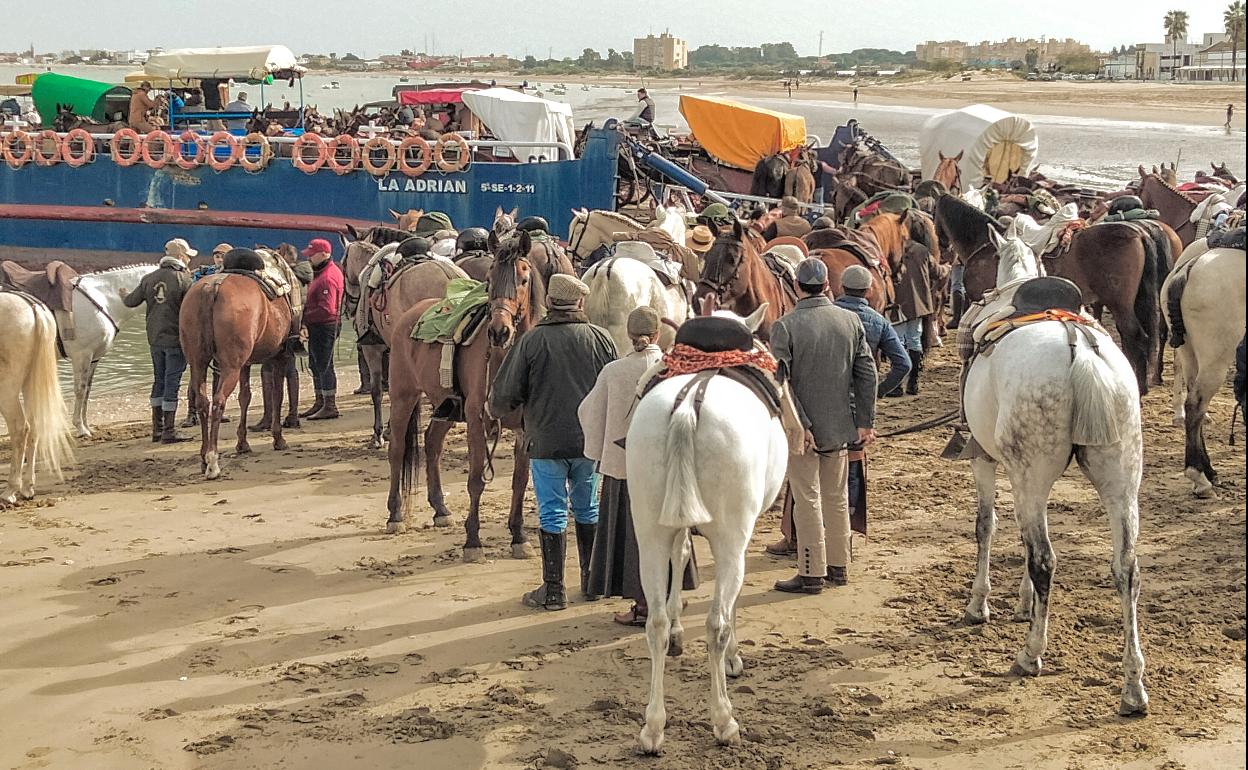
After being cancelled for two years, the Camino de San José, known as the winter pilgrimage, took place last weekend. Ferries carrying hundreds of horses and crowds of people, were clearly visible from the sandy beaches of Sanlúcar de Barrameda
ALEKK M. SAANDERS
Thousands of horses and people crossed the Guadalquivir river from Sanlúcar de Barrameda, with three ferries working non-stop, last Friday, 18 March. This was the start of the pilgrimage or 'romería', known as the Camino de San José (St Joseph's Way).
This annual excursion is one of Andalucía's most important cultural events. However it is less known than the Romería de El Rocío, which attracts nearly a million people from across Andalucía, the rest of Spain, and beyond, later in the year.
Although the Camino de San José is much smaller than El Rocío, the number of participants is also very high - more than 3,000 horses and more than 70,000 pilgrims
What the Camino de San José and the Romería de El Rocio have in common is that both paths lead through the countryside of the Doñana National Park to the tiny village of El Rocío, near Almonte. There, pilgrims gether together united by their religious devotion. However, in comparison to El Rocío there are no bright traditional costumes on the Camino de San José.
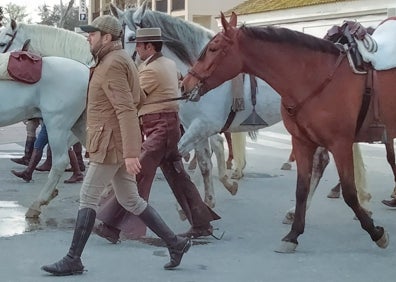
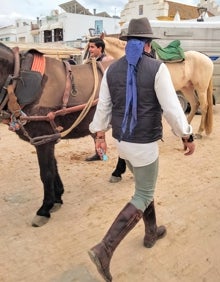
A large number of the horseback pilgrims wear the 'jinete' typical outfit. Lots of pilgrims look like real American cowboys, though some prefer the image of a 'bandolero' - a typical Andalusian bandit
A large number of the horseback pilgrims wear the traditional 'jinete' outfit - which includes shirts, boots, leggings, and rainproof clothes with dominant brown and green colours. Some look like American cowboys, though others prefer the image of a 'bandolero' - a typical Andalusian bandit.
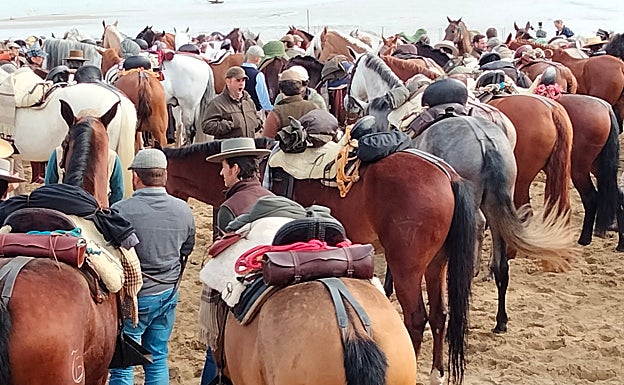
Although the Camino de San José is much smaller than El Rocío, the number of participants is still high - more than 3,000 horses and more than 70,000 pilgrims.
Most of them had registered and applied to take part since the end of January. However on Thursday last week additional people were still buying ferry tickets with a broad range of prices: a foot pilgrim paid five euros; one on horseback, 50; and the car crossing started at 60. The maximum price was 500 euros - for a tractor towing a wagon.
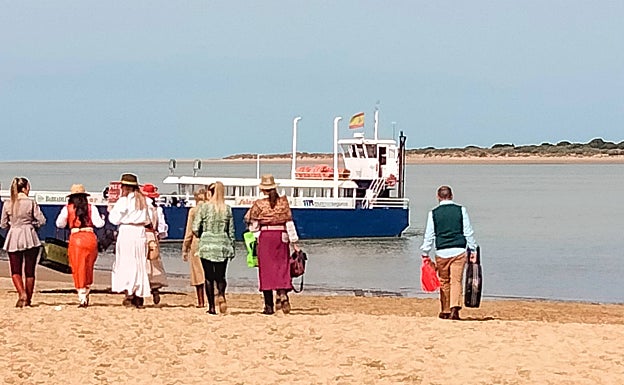
The Camino de San José was the first mass event to be held since the pandemic, and the festive ambience was especially appreciated, both by local participants and foreign guests - from Germany, France, Great Britain, Holland, and Sweden.
The atmosphere had inspired numerous foreigners, who went to the beach of Sanlúcar to join in a traditional Andalusian pilgrimage.
The atmosphere attracted numerous foreigners who heade to the beach of Sanlúcar to join in a traditional Andalusian pilgrimage
More will follow: the Romería de la Virgen de la Cabeza will be held in Andújar (Jaén province) in April; and the El Rocío pilgrimage starts at the beginning of June.
![[]](http://static.vocstatic.com/voc26/latest/assets/images/favicon/surinenglish/apple-touch-icon-57x57.png)