
Heritage
The Alpujarra village in southern Spain that has gone back in time to recreate an ancient agricultural practice
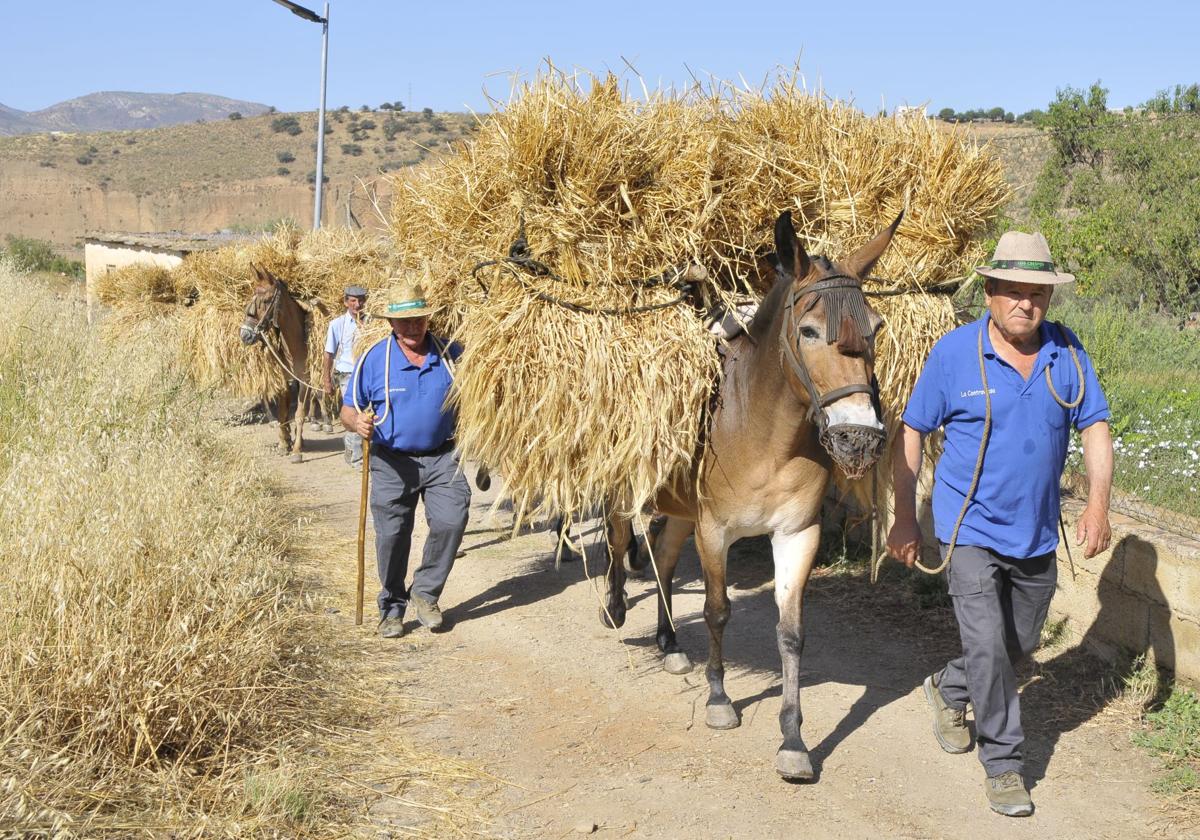
Ugíjar has held its annual festival which celebrates the traditional methods of harvesting and threshing barley in El Cerro, a place once famous for its pottery kilns

Rafael Vílchez
Granada
Threshing machines, shovels, forks and pitchforks, sieves, mules, piles of hay, sheaves, branches... Ugíjar in Granada province's Alpujarra recently celebrated the annual Fiesta de la Trilla (threshing festival) in the Eras del Cerro which lasted for two days.
The event was organised by Ugíjar town hall, the provincial Diputación de Granada and the Asociación de Muleros de La Alpujarra, the Aplujarra association of muleteers.
Among the people who drove the mule teams and the threshing horses were: Adolfo, Ángela, three Josés, Paco, Ismael, Manolo, Antonio and Rafael. Rosario and Trini were in charge of making fritters with great flour, yeast, salt and water and a the bar there was a great variety of tapas. Los Akipallá provided the music.
The event involves preparing the land, sowing, harvesting, threshing, separating the grain from the straw and transporting the barley in sacks. There were also migas (traditional dish of fried breadcrumbs) and homemade paella. The muleteers were also given a hearty breakfast including ham, sausages, tomato salad from Natalio's farm (from Válor), home-made bread, peppers and eggs with fried garlic, chistorra sausage and wine from the Sierra de la Contraviesa.
According to Francisco Pérez "in the past there were seven threshing floors in the Cerro de Ugíjar and now one is used to celebrate the Fiesta de la Parva. The farmers used to use them in shifts, taking it in turns. Before, all the farms were used and now they are not. Now the land is wasteland, without production. And if barley has been sown in a field, it has been to participate in this festival. This area was called the Ojo de la Piedra (eye of the stone). In the old days there were many mules and pigs kept in the houses. I have been a shepherd all my life. Now one of my sons is making a living like I did. I still grow fruit and vegetables every year to be able to eat natural foods."
The deputy mayor of Ugíjar, Julián Pérez, said that "the Fiesta de la Parva of Ugíjar has taken place for eight years" Many people from the village attended this event, which took place over two days. People from Mecina Bombarón, Yátor, Albuñol, Albondón, Cádiar, Válor, Yegen, Nevada, Alcolea, El Ejido, Roquetas, Adra, Laujar de Andarax, Turón and other villages have also attended.
"Through this event young people are introduced to what was the livelihood of their ancestors. That work was very hard work. When the machines began to work to separate the straw from the grain the work became more bearable," concluded Julián.
![[]](http://static.vocstatic.com/voc26/latest/assets/images/favicon/surinenglish/apple-touch-icon-57x57.png)