
Culture
When art makes noise: Timsam Harding brings urban sound to La Térmica
The Malaga artist has inaugurated A Tiempo Para La Espera, an installation that transforms the soundscape of the city into a physical experience through sculptures
Carmen Barainca
Noise never sleeps in Vallecas. The M-30 road. A million cars every day. Industrial workshops on the other side of the buildings. Discotheque music that keeps you awake at midnight. And, in the meantime, the rough rustling of oleander leaves, a plant that sometimes isolates the din and other times gives it back like a metallic echo. This soundscape - routine, persistent, almost intimate - is what the Malaga artist Timsam Harding has brought to La Térmica in A Tiempo Para La Espera (In Time for the Wait), an installation that can be visited on the first floor until 1 March 2026.
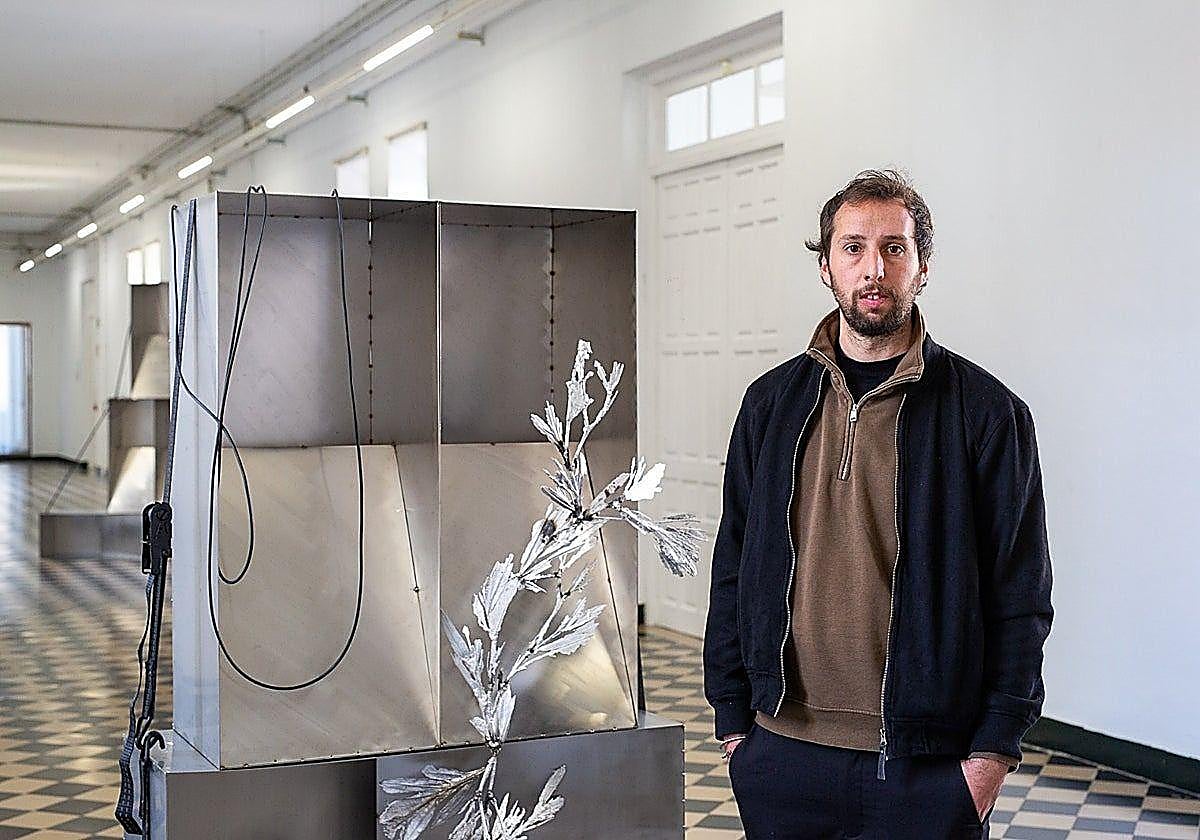
"The old corridor becomes a territory for stopping". The artist shows a photographic composition and five listening islands that function as small vibrating architectures: cubic stainless steel structures that house low-frequency subwoofers. From these emanate waves that are transmitted to sculptures of oleander leaves moulded in cast aluminium, suspended on the metal surfaces. Each piece is a system where sound, as it passes through the metal, deforms, reverberates and acquires body.
The ensemble generates a landscape where the everyday - the rain, the opening and closing of a gate, muffled voices, traffic or the conversation of young people trying to enter a Berlin discotheque - is transformed into tactile matter. "They are sound sculptures that transform urban noise into physical experiences. An invitation to stop and listen in a different way to what surrounds us", said the vice-president of Culture, Manuel López Mestanza, recalling that this exhibition completes an "unprecedented" programme with four simultaneous exhibitions, all of them produced in-house.
Noise turned into calm
The origin of the project points to Genalguacil, where Harding developed 'Sin Silencio' in 2024. It was there that he was selected for this solo exhibition at La Térmica. "This project is based on the spirit of converting a passing space into a place to stop," underlined the centre's director and curator, Antonio Javier López, who added: "It invites us to find a kind of calm in noise. This paradox is central to his work".
This paradox reaches its symbol in oleanders. "Their resin is deeply toxic, but it also protects us from noise," López explained. The verges of the M-30, where the plant grows without care, are the artist's everyday geography. "You can be in a discotheque listening to music and experience it in a very different way to the neighbour who hears it through the wall. I'm interested in how we relate to the same sound from different places," said Harding, who records vibrations with geophones and turns each recording into a living sculpture.
Harding says he will continue to explore this artistic line, combining sound and visual experience, as he has done in previous projects. The next stop for his work will be at the T20 Gallery, although the exact date of the exhibition has not yet been set.
Meanwhile, in A Tiempo Para La Espera, urban noise ceases to be background and becomes a form of intimacy. And in a corridor that used to be crossed without looking, now the visitor - for the first time - sits down, listens and discovers that the din can also be a pause.
![[]](http://static.vocstatic.com/voc26/latest/assets/images/favicon/surinenglish/apple-touch-icon-57x57.png)