
Culture
Hidden treasures of Golden Age Spanish painting at Malaga’s Fundación Unicaja exhibition centre
The exhibition El Viaje de la Luz. De Guido Reni a Murillo showcases jewels of the era from the collection of the Academia de San Fernando
-U73262021231ARB-1200x840@Diario%20Sur.jpg)

Malaga
The theft and disappearance of valuable paintings is not just the stuff of novels or spectacular news stories such as last year’s coup at the Louvre Museum. In fact, these thefts are as old as the history of art. And one of the first recorded in Spain involved the master Bartolomé Esteban Murillo.
According to Antonio Palomino, an 18th-century artist and treatise writer, the Sevillian artist’s paintings “are more highly valued outside Spain than those of Titian and Van Dyck”, which is why his works were highly coveted.
One of them, La Magdalena (c. 1650), was the unwitting protagonist of a pioneering attempt to loot and “extract” it from Spain in 1779, although, as in the films, in the final twist of story the piece was identified and seized by Customs. This recovered treasure is now on display in Malaga.
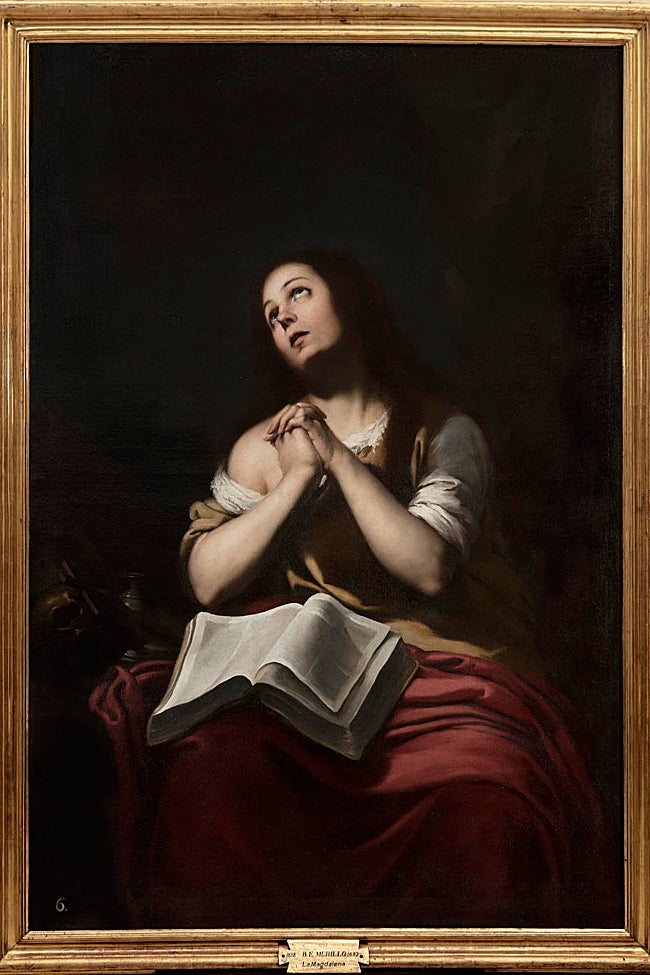
The rooms of the Centro Cultural Fundación Unicaja - formerly the Palacio Episcopal, next to the cathedral - now house this remarkable religious oil painting which, together with eighty other works, forms part of the new exhibition El Viaje de la Luz, (The Journey of Light), which traces the Golden Age of Spanish painting through the treasures of the collection of the Academia de Bellas Artes de San Fernando, many of them unknown to the general public. The subtitle of the exhibition, De Guido Reni a Murillo (From Guido Reni to Murillo), points precisely to the exceptional presence of the work of the Spanish painter, a master of drawing and colour, who is accompanied in the exhibition by Alonso Cano and Pietro Novelli
Murillo's La Magdalena "was intercepted at the Aduana de Ágreda, which was the border between the kingdoms of Castile and Aragon"
The presence of La Magdalena has been highlighted by the curator of the exhibition, Mercedes González de Amezúa, who recalled at the presentation on Tuesday at the Centro Cultural Fundación Unicaja that this oil painting was one of the first documented cases of recovery of Spanish artistic heritage. “Charles III signed a decree in 1779 prohibiting the removal of paintings by artists who had already died and, a few months later, this work was intercepted at the Aduana de Ágreda, which was the border between the kingdoms of Castile and Aragon,” said the expert and historian. He added that, once the canvas was recovered “when it was taken out of the kingdom, against the king’s orders” - according to the records -, the monarch himself decided to hand it over to the collection of the Academia de San Fernando, forming part of its collection since 1780.
-U46846782003jXP-1140x798@Diario%20Sur.jpg)
“If it had crossed the border it would have been lost via the Pyrenees,” said González de Amezúa. The work will be on display in Malaga until 5 July, showing the masterly lesson in tenebrism and the influence of Caravaggio’s chiaroscuro on Murillo’s brushwork.
Of the Andalusian painter’s seven ‘Magdalenas’ that have survived, this is considered the earliest work of his career.
The theme was one that pervaded the broader Baroque movement - and this is precisely one of the exhibition’s central arguments: that paintings served as the ‘reels’ and videos of their time, a means of conveying the values of the Counter-Reformation to a largely illiterate population that nonetheless identified deeply with these biblical scenes and martyrologies.
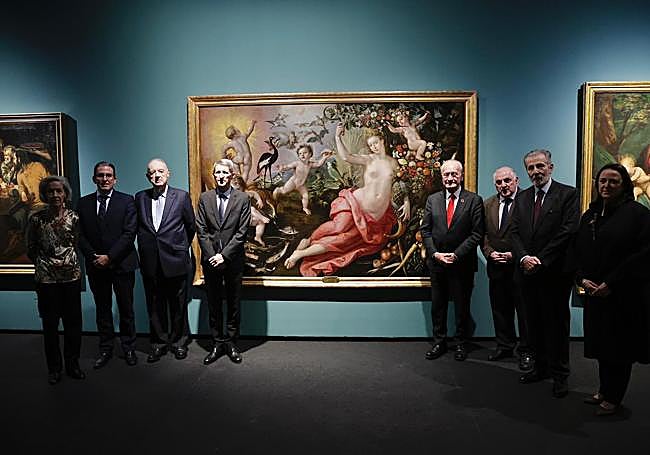
The hidden masters
“We are in the Golden Age of Spanish painting and in a period of extraordinary development for religious imagery, because the defence of the ideas that emerged from the Council of Trent in the 16th century relied on painting far more than on the written word,” explained Víctor Nieto, scientific director of the Academia San Fernando.
He added that the brilliance of the collection on display reflects the quality of Spanish, Italian and Flemish Baroque - an art that sought to “persuade” the faithful, and did so with remarkable force.
It is an excellence that El Viaje de la Luz has sought to capture not only through the great names of the period, but also through those masters who have long been overshadowed by the stars of their time.
-U73714086426fjv-1140x798@Diario%20Sur.jpg)
"This is an exhibition in which all the works are first class, with renowned painters such as Murillo, Alonso Caso and Rivera, but also many others who are not so well known"
“We are looking at an exhibition in which all the works are first class, with painters of great renown such as Murillo, Alonso Cano and Rivera, but also many others who are not so well known,” said Nieto. The exhibition puts the names of Pedro Atanasio Bocanegra, Francisco Collantes, José Leonardo, Matías Jimeno, Juan de Arellano, Jerónimo Jacinto Espinosa, Juan Carreño de Miranda, Leandro Bassano - his Venetian landscape of more than three metres is a revelation - Andrea Vaccaro, Luigi Amidani, Adam de Coster, Luca Giordano, Matías de Torres and Antonio Palomino, painter to the king, renovator of the iconography of the Immaculate Conception and admirer of Murillo, in the front line.
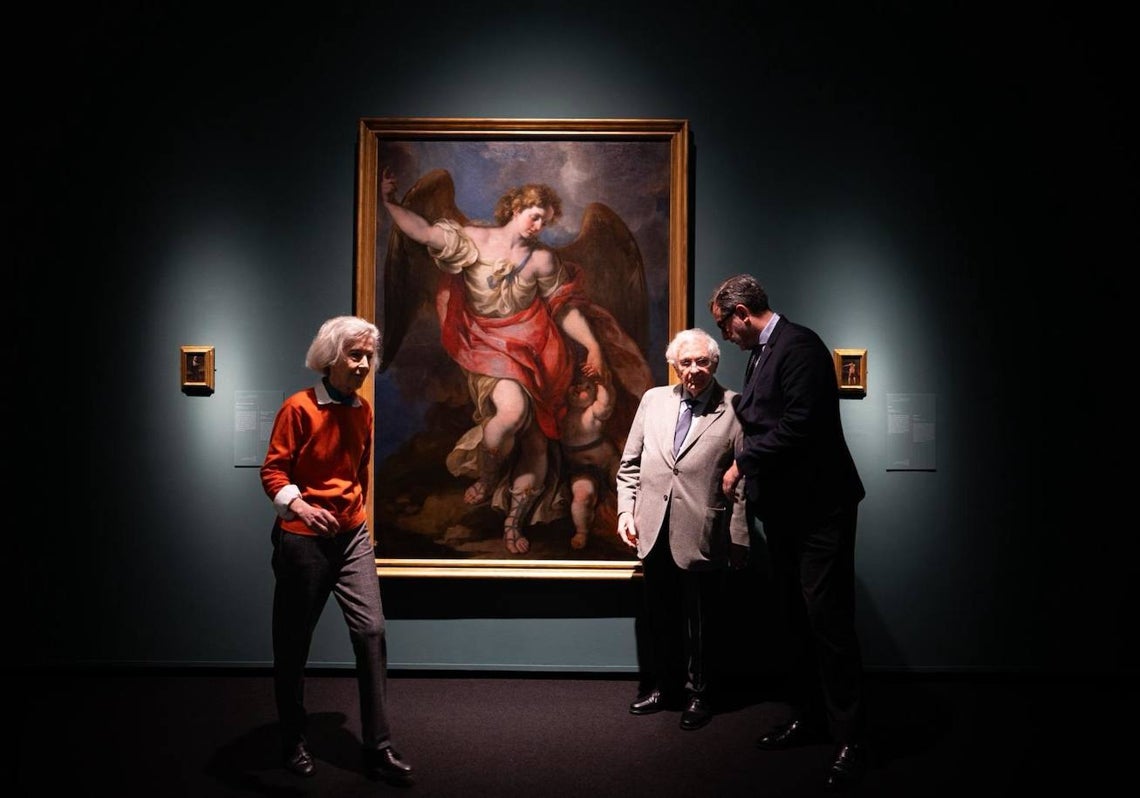
Authors “overshadowed” by the geniuses of their time, but of “remarkable quality who deserve to be better known,” said curator González de Amezúa, who also includes Claudio Coello, author of the enormous - more than two metres of painting - El Ángel de la Guarda (c. 1690) in the group of masters to be discovered in this latest exhibition. Director of cultural activities of the Unicaja Foundation, José María Luna, explained that El Ángel de la Guarda has been one of the great oil paintings that has been restored expressly for this exhibition, recovering its “original light” and also starring on the poster and on the cover of the luxurious catalogue of this “journey to the Baroque”.
-U01108666514snv-1140x798@Diario%20Sur.jpg)
“We are looking at a jewel that has been brought back to life thanks to the cleaning and restoration work, which has allowed us to see the mastery of the last great master of Spanish Baroque,” said the historian of Coello’s “angelic” work, which was blackened and covered with the “dirt” of time. “We are amazed because this painting went unnoticed and now it allows us to see all its beauty and quality,” said Mercedes González de Amezúa of a canvas with a remarkable history: it was rediscovered in 2019 in the collection of the Academia de San Fernando after having been lost from sight for several centuries, and is now being exhibited in Malaga in all its splendour for the very first time.
![[]](http://static.vocstatic.com/voc26/latest/assets/images/favicon/surinenglish/apple-touch-icon-57x57.png)