
Football
Visitor numbers boom at Malaga football club museum
More than 25,000 people visited last year, which is an increase of 50%, and already contributes a quarter of a million to Malaga's budget

Malaga
Football club museums are on the rise. They represent a new type of tourism, sports tourism. Sports fans often make the most of their time abroad to visit the local stadium and team showcases (and if they can go to a match, they will, of course).
In the case of Barcelona and Real Madrid, their museums receive more than a million visitors a year, making them some of the most popular cultural venues in Spain.
In terms of visitors, Malaga CF's museum is experiencing a major boom: last year, from July 2024 to 2025, it received 25,000 visits (which was double the previous year's amount). With an average ticket price of 10 euros (admission is 12 euros for adults and seven for children between 4 and 14 years old) the revenue total is 250,000 euros, and this year the estimates are that the amount will be considerably higher.
Unlike many museums, the football museum tour must be done with a guide. Due to the high influx of foreigners who visit Malaga throughout the year (according to the staff of the Martiricos club, foreigners make up around 80 per cent of those who visit), the guides offer tours in Spanish and English.
A core demographic of those who visit the museum are schools. For primary school children, the academic year has has just begun, and the club explains that from October onwards they receive around five visits a week, continuing until the end of the school year and the sports season.
The number of national visitors, museum staff confirm, increases significantly during Easter or the Christmas holidays, but they say that many of those who take the tour tend to come from the UK, Netherlands, Denmark, Italy or Germany.
The aim now is to bring in more Malaga fans, as this is an attraction that is really made for them. Every season ticket holder campaign in recent years has included discounted museum tours, in an effort to gain the loyalty of the more than 26,000 Blue and Whites fans. They emphasise that it is a completely different experience from going to La Rosaleda every other weekend, and that they are currently working on making it even more immersive, beyond just showcasing the history of the clubs or trophy exhibits.
The areas of the museum
The first thing you see during the visit are the paintings of all the 'Siempre Fuerte' awards by the artist José Luis Puche, who also designs the armbands worn by the footballers every match, which pay homage to the different villages and towns of the province.
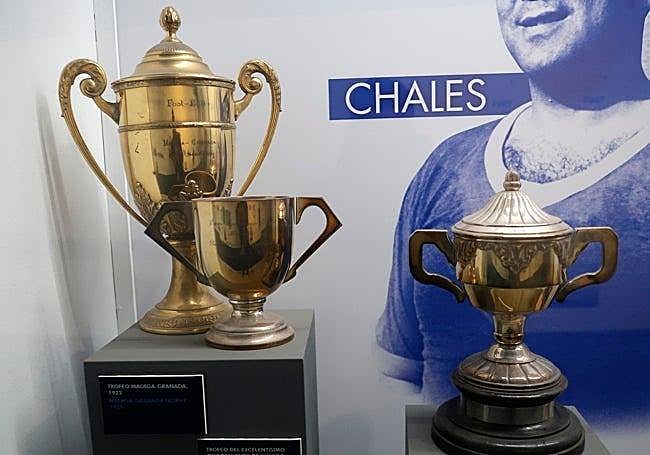
Then there are the trophies. On an individual stand is the Intertoto that Malaga won, which promoted them to the UEFA Europa League, where they ended up losing in the quarter finals to the Portuguese team Boavista, but successfully eliminated Leeds United along the way. There are also several other summer leagues that have elevated the club's status, such as the native Trofeo Costa del Sol or the Ramón de Carranza.
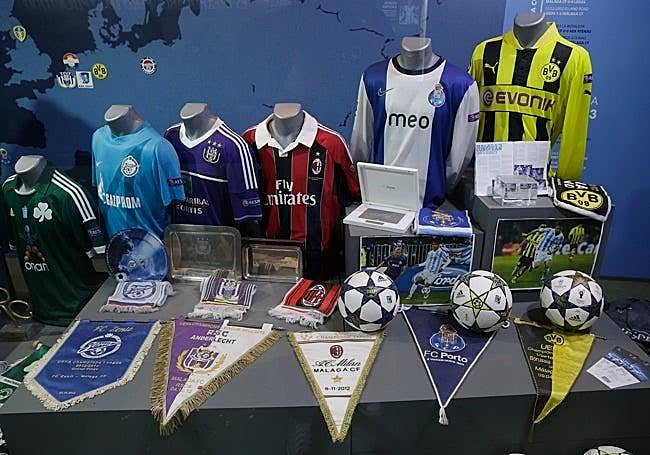
Without a doubt, the crown jewel is the section dedicated to the season when Malaga played in the Champions League. There are Malaga football shirts as well as of the six rivals they faced that season in Europe (Panathinaikos in the qualifiers, Zenit, Anderlecht, Milan, Porto and Borussia Dortmund).
Recently installed, is the section that showcased Malaga's promotion to the Second Division in 2024. It includes a mural with symbolic photos from that campaign, such as the team's celebration and various items such as Antoñito's and Roberto's boots, Alfonso Herrero's gloves, the armband worn by Genaro and the trophy that Pellicer recieved for best coach in Group 2 of the Primera RFEF.
There is another section that pays tribute to Malaga sportsmen and women: Carolina Navarro, Damián Quintero or Sole López; another section dedicated to women's football, displaying their titles; to the Spanish national team and the Blue and Whites footballers who made it internationally, as well as milestones, records and details of players (for instance a letter from striker Ruud van Nistelrooy, in which he bid farewell to Malaga and to football).
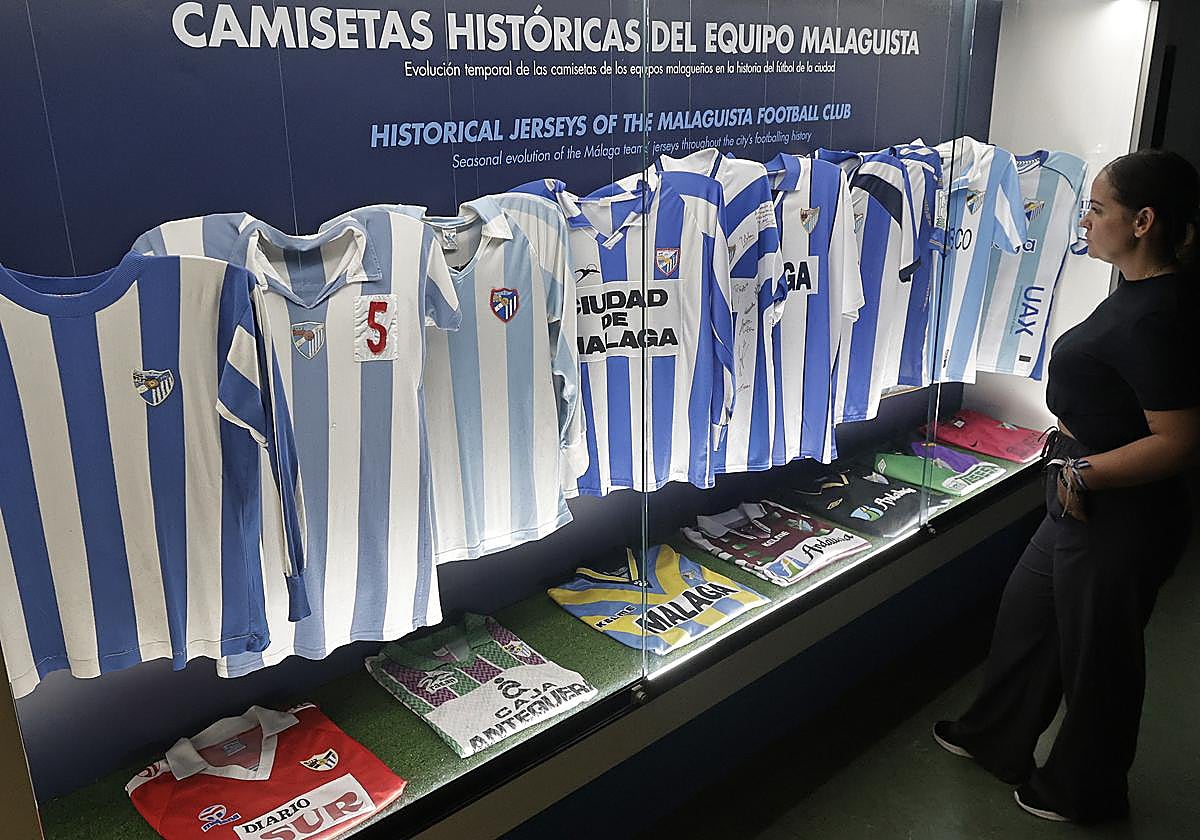
Finally, there's a corridor with a timeline that runs from 1904 to today, showing the club's evolution. There are shirts belonging to players from each era, trophies (such as the one from their first promotion to the First Division) and other symbolic objects.
![[]](http://static.vocstatic.com/voc26/latest/assets/images/favicon/surinenglish/apple-touch-icon-57x57.png)