
Motoring
What does the new '2+' sign on roads in Spain mean and what is the fine for not complying with it?
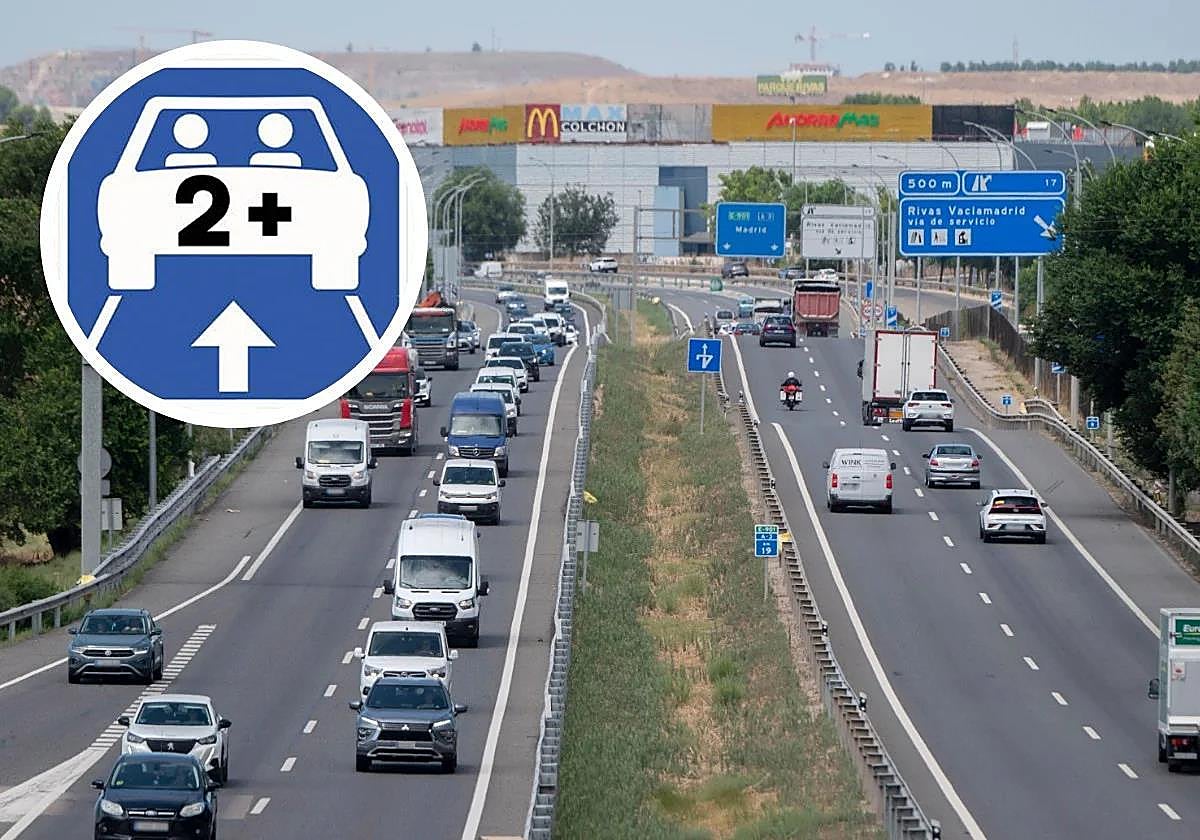
This new signage is technically known as 'S-51b' and has been appearing on some of the country's busiest roads since 1 July
Jorge Herrero
Madrid
Complying with traffic regulations is not only a legal obligation but also an act of responsibility that can make the difference between getting home safely or having an accident. Every road sign has a clear purpose: to improve safety, order traffic and ensure coexistence between different types of vehicles. That is why, when a new sign comes into force, it is important to know exactly what it indicates and who it affects.
Since 1 July, drivers on roads in Spain have been noticing a new blue square sign - it shows a car with two occupants and an arrow pointing forward; the car carries a '2+' symbol.
What does the '2+' sign mean?
This new sign is technically known as 'S-51b' and indicates that one or more lanes are reserved exclusively for high-occupancy vehicles, i.e. those vehicles that carry at least two people. The main objective of this measure is to encourage car-sharing, decongest the busiest roads and contribute to more sustainable mobility.
The number on the sign may vary according to the road and the competent authority. The minimum is two persons per vehicle when there is the '2+' symbol. In other words, only those drivers who are accompanied by at least one passenger, whether in a car, van or motorbike, may use these lanes.
Who can use the lanes with the '2+' sign?
Not all vehicles with more than one person can use these lanes and not all vehicles where the driver is alone are necessarily in breach of the rule. There are some exceptions and particularities. Cars carrying at least two people, including the driver, can use these lanes without any problem. Vans with a maximum authorised weight of up to 3,500kg are also permitted, provided that they are occupied by two or more people.
Motorbikes with two riders also have access to these reserved lanes. However, there are also vehicles that can circulate even with a single occupant, as long as they meet certain requirements. This is the case for city and intercity buses, taxis and private hire vehicles with an official licence; correctly identified car-sharing vehicles; and, of course, emergency vehicles such as ambulances, fire engines and police.
There are also specific exceptions that allow individual use of the lane. For example, vehicles with the V-15 sign for people with disabilities can use it even if only the driver is travelling, provided that the sign is visible. Drivers of vehicles with a zero-emission sticker also have access, as long as there is, once again, the necessary sign. The same applies to vehicles with an ECO, C or B sticker, depending on traffic conditions or pollution levels.
What is the fine for failing to comply with this signage?
Ignoring this new sign and using the lane without complying with the requirements can be costly. According to the DGT, the fine amounts to 200 euros, but it does entail withdrawal of licence points.
![[]](http://static.vocstatic.com/voc26/latest/assets/images/favicon/surinenglish/apple-touch-icon-57x57.png)