
Economy
War tensions trigger uncertainty among Spanish companies with Gulf funds
Middle Eastern capital is spread across national companies in the most strategic sectors: from Telefónica and Iberdrola to football clubs

More than 5,300 kilometers separate Madrid from Doha (Qatar); slightly farther east lie Abu Dhabi and Dubai (United Arab Emirates), and to the north, Riyadh (Saudi Arabia). Capitals that may seem distant on the map, yet whose money and influence are already present in strategic sectors of the Spanish economy, from telecommunications and energy to infrastructure and retail.
Over the past decade, major Gulf wealth funds have steadily taken positions in key companies listed on Spain's Ibex index and in assets considered strategic, quietly reshaping the country's shareholder landscape.
On Monday, following the US and Israel's attack on Iran, the Ibex moved in step with volatility in commodity markets and uncertainty surrounding petrodollars supporting more than a dozen Spanish companies.
This affects major companies, from Telefónica to IAG, from Iberdrola to Colonial and even professional football, with Girona FC and Málaga CF.
Flight cancellations
Gulf capital appears in different forms, ranging from minority stakes in strategic companies to controlling positions in energy and consumer groups. Its influence is therefore tangible.
The first sign of this interconnectedness came quickly. The escalation in the region had an immediate impact on air transport, one of the most sensitive sectors to any geopolitical disruption in the Middle East.
The partial closure of airspace forced Iberia to cancel its route between Madrid and Doha and temporarily suspend connections to Tel Aviv, while Air Europa also cancelled its flights to the Israeli capital.
Several European and Gulf airlines reviewed operations to destinations such as Riyadh or Dubai and some interrupted connections while awaiting greater stability. According to Spain's airport operator Aena, the country had around 30 cancellations linked to the conflict.
20 billion in Spanish assets
Middle Eastern capital participates in or controls Spanish assets valued at roughly 20 billion euros. In recent years, the Ibex has begun looking not only westward but also eastward.
The entry into Iberdrola’s capital in 2011 marked the beginning of sustained Gulf investment presence.
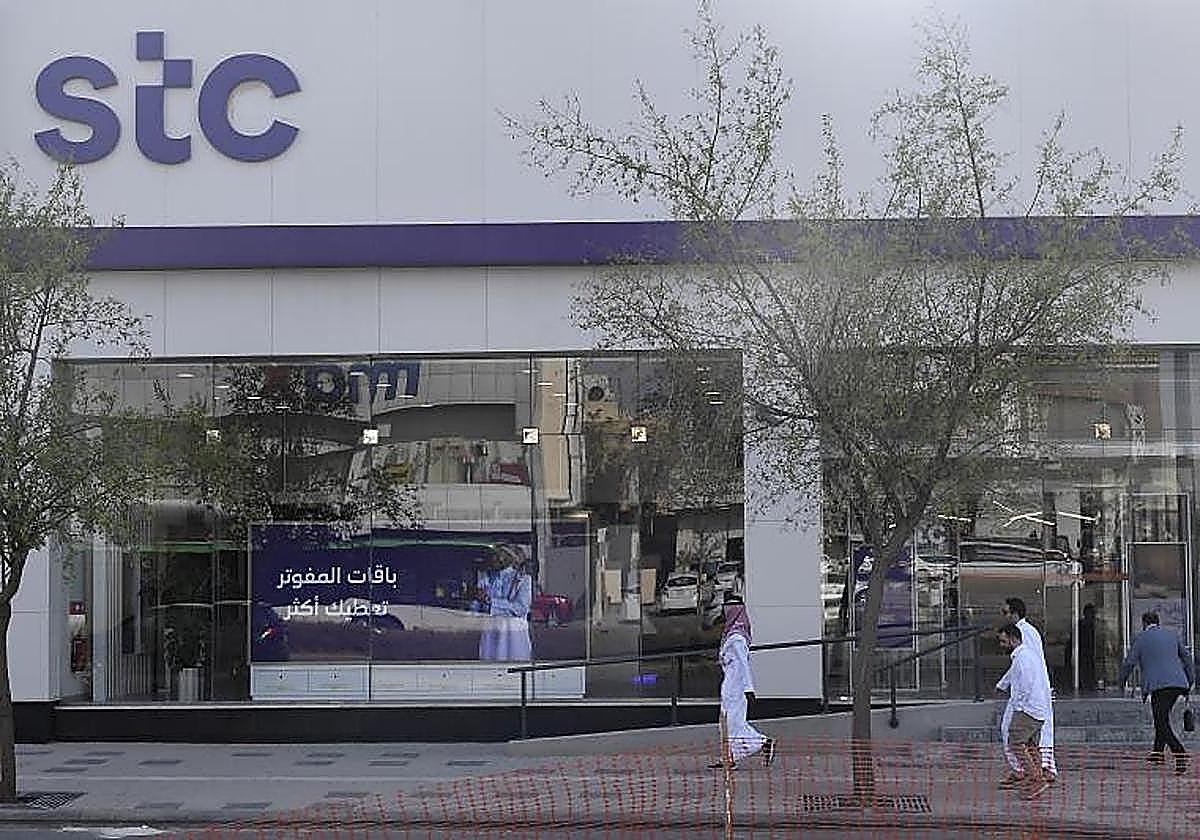
The most visible episode of this new phase was Saudi Telecom's (STC) investment in Telefónica. Its attempt to reach a 9.9 per cent stake, later authorised by the Spanish government following national security review, sparked an unusual strategic debate. It was not merely a financial investment, but the arrival of a state-controlled Saudi group into a company considered critical due to its role in telecommunications and digital infrastructure.
Since then, the ownership map has changed. If for years Qatar was the most visible sovereign actor, with positions such as 6.98 per cent in Iberdrola or 25.1 per cent in IAG, today the UAE has gained ground in the real economy. Through funds such as Mubadala and Masdar, Abu Dhabi controls 63 per cent of Moeve (formerly Cepsa), 67.9 per cent of Tendam and 49.99 per cent of Endesa's solar portfolio, with a direct presence in conventional energy, renewables and distribution.
Profitability and strategic positioning
Beyond the percentages, what is relevant is where the stakes are located. They are not scattered holdings but positions in sectors capable of influencing strategic decisions: energy, telecommunications, transport, and critical infrastructure.
In the Ibex, Gulf capital acts mostly as a relevant but not dominant partner; outside the index, on the other hand, it increasingly holds effective ownership in energy and consumer groups.
These are not opportunistic funds. Gulf sovereign wealth vehicles operate with long-term investment horizons, combining profitability with geopolitical and strategic positioning.
Spain's footprint in the Middle East
The relationship, however, is not unidirectional. While Arab sovereign wealth funds are strengthening their presence in the shareholding of Spanish companies, national companies have been consolidating business in the East for more than a decade, which has become one of the major global investment poles. Saudi Arabia, the UAE and Qatar have become priority destinations for billion-euro contracts in infrastructure, energy, transport, tourism and defence.
Hotel chains such as Meliá, Barceló and RIU have made the Middle East one of their growth axes, typically partnering with local developers or sovereign funds under models combining regional capital with Spanish management.
Fashion has also found a stable market in the Gulf: Inditex operates hundreds of shops in the region through franchise partners. Mango maintains a consolidated network and Tendam has the Emirati group Multiply as its main shareholder.
Inditex and Mango are operating in the Middle East with hundreds of shops
Infrastructure is likely the most economically significant chapter. Saudi transformation plans have generated multibillion-euro tenders in transport, energy, and water projects in which Spanish companies have secured major contracts.
FCC and Acciona are involved in major projects; Técnicas Reunidas plays a prominent role in energy; Renfe leads the consortium that operates the high-speed train between Mecca and Medina; and several engineering companies have operational bases in the region.
Defense represents another axis of interdependence. Navantia is executing contracts worth more than one billion euros to build vessels for the Saudi navy, while Indra supplies electronic defense and air-traffic control systems and has strengthened its industrial presence through local partnerships.
![[]](http://static.vocstatic.com/voc26/latest/assets/images/favicon/surinenglish/apple-touch-icon-57x57.png)