
Animal welfare
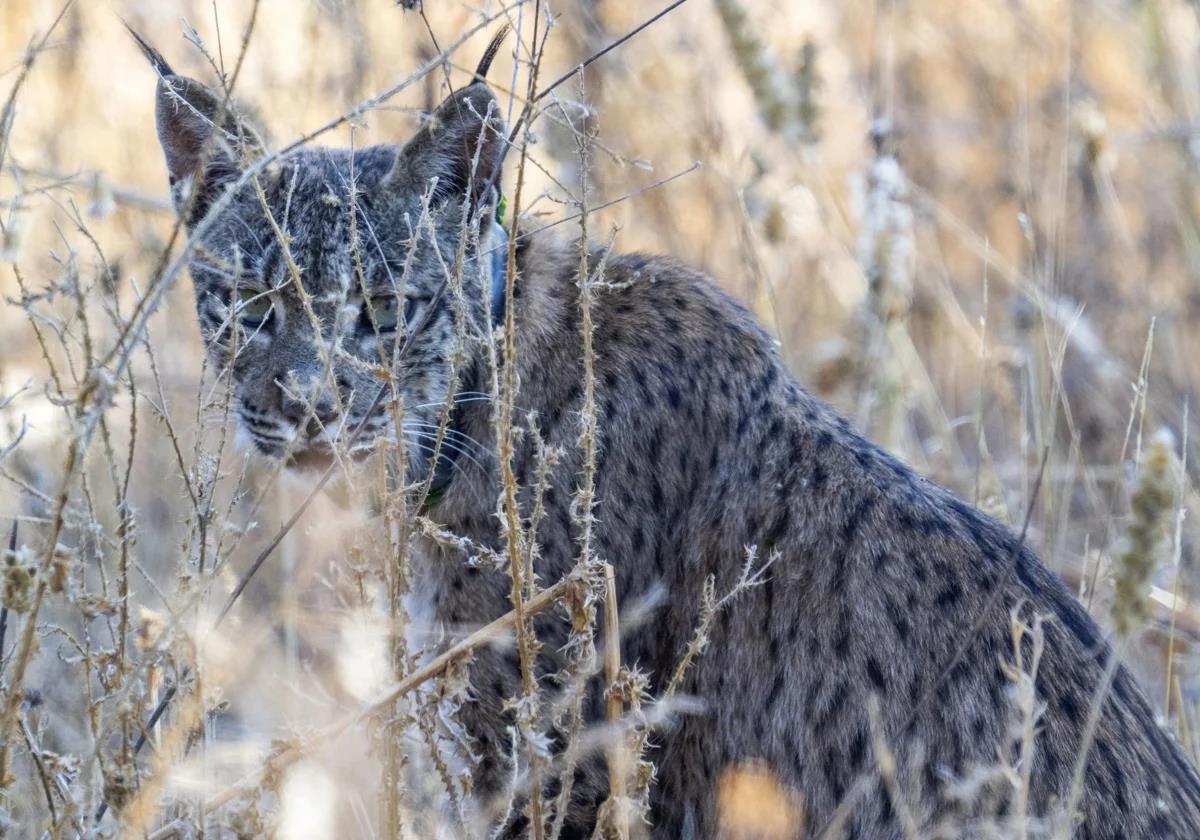
Uraclio, the first Iberian lynx to live in the Madrid region of Spain, is looking for somewhere to settle down
The presence of the two-year-old male, born in the wild in the Montes de Toledo, was detected a fortnight ago in the Corpa, Villalbilla and Santos de la Humosa areas
Enia Gómez
Madrid
The region of Madrid in Spain has detected the presence of a two-year-old Iberian lynx - Uraclio - in several municipalities in the eastern part of the area (Villalbilla, Corpa, Los Santos de la Humosa and Anchuelo). The animal was born in the wild in the Montes de Toledo and was reintroduced in February this year, together with his companion Ventolera - bred in the Iberian lynx captive breeding centre in Zarza de Granadilla (Cáceres) - by the regional government of Castilla-La Mancha in the province of Cuenca. Their release was part of a lynx conservation and expansion project in the areas of La Veguilla and Sierra Jarameña.
For two weeks now, Uraclio has been moving freely in different areas of the region of Madrid. He was located by technicians from the directorate-general of biodiversity and forest management and by the regional forest department, in collaboration with the authorities of Castilla-La Mancha.
The animal is in perfect health. "Lynx require habitats with a certain amount of scrub cover where they can take refuge and hide. In addition, Madrid offers an abundant population of rabbits, which are their main food source," said Laura Castro, head of habitats and protected species of the regional ministry of the environment, agriculture and the interior.
A fortnight ago, the authorities of Castilla-La Mancha informed that Uraclio had travelled from Cuenca to the northeast, entering the Madrid region. "Many of these animals are monitored by GPS collars as part of the conservation, reintroduction and monitoring programmes of the species, which allow their movements to be tracked and their position recorded. As a young lynx, Uraclio is making dispersal movements at this stage, looking for a territory to settle in. Uraclio's problem is that he does not yet have a mate and has not yet reached breeding age. Unlike females, males tend to be less fixed in the territory and are more mobile and tend to travel over large areas before settling down," said Castro.
Uraclio moves practically every day. "Sometimes, he goes backwards, but he has already covered a fairly large area of our region. This is the first time we have had a monitored, stable lynx in our territory. Although we don't know how much longer he will be in Madrid, we are happy to have had him here for two weeks now."
The regional government continues to work to ensure that this emblematic animal, still considered vulnerable despite not being in danger of extinction anymore, becomes a stable part of Madrid's fauna. Currently, the regional ministry of the environment is finalising the agreement with Patrimonio Nacional to add the area of El Pardo to the reintroduction area and complete the study of habitats.
El Pardo is a low traffic hazard area, which reduces the risk of animals being run over. The proposal envisages the incorporation of the 453-hectare estate of very high ecological value in the El Paular area, acquired by the region of Madrid in 2023, together with two plots of land from public forests 140 and 141, called Perímetro de Aguirre and Perímetro de Lozoya. The 2,058 hectares of Monte Cabeza de Hierro owned by the State and managed by the regional body of national parks would also be added.
It is a species considered vulnerable, so its presence in the region, although isolated, is a positive sign of its expansion
In June 2023, an Iberian lynx was also detected in Sevilla la Nueva (Madrid region), near the M-523 road. A resident spotted the animal near the Los Cortijos residential estate and was able to take photos and videos of it with his mobile phone. It had been 30 years since an Iberian lynx had been seen in the wild in the region. A few days after that sighting, the forestry officers of the region Madrid captured images of another animal near the financial city of Banco Santander.
The environmental department's team that located that specimen in the municipality of Boadilla del Monte had been monitoring since the first sighting in early June. This was a historic event for Madrid.
The Iberian lynx is considered vulnerable, so its presence in the region, although isolated, is a positive sign of its expansion.
![[]](http://static.vocstatic.com/voc26/latest/assets/images/favicon/surinenglish/apple-touch-icon-57x57.png)