
Astronomy
Spain creates special commission to manage upcoming trio of eclipse events and these are the dates to make a note of
One of these extraordinary astronomical phenomena will be total, and it is expected that tourists from around the world will flock to the country to experience the rare spectacle
Agencies
Malaga
A meeting of central government's council of ministers in Spain has approved a royal decree involving the creation of an interministerial committee for the preparation, organisation and coordination of actions related to the trio of eclipses expected in 2026, 2027 and 2028.
The phenomenon is extraordinary in the field of astronomy. What is even more interesting is that it will be visible from Spain, which will draw the scientific community and the general public to the Iberian Peninsula, attracting tourists from all over the world.
It will foreseeably involve massive displacements and the influx of hundreds of thousands of people to the points where the total eclipses will be visible, which poses logistical and security challenges for public administrations.
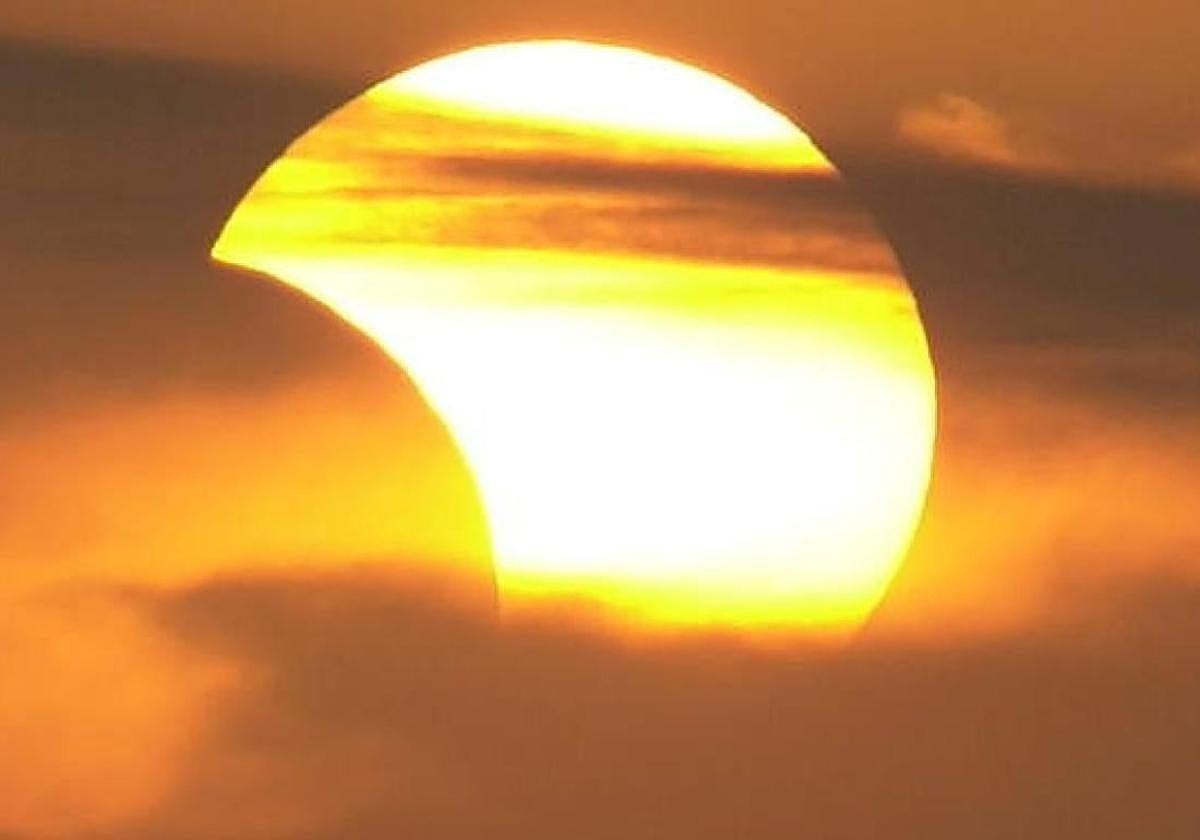
Specifically, two total solar eclipses (i.e. where the Moon will completely cover the sun and the sky will darken as if it were night) are expected on 12 August 2026 and 2 August 2027. An annular eclipse is expected on 26 January 2028.
The total solar eclipse on 12 August 2026 can be considered unique, as the Iberian Peninsula has not seen one since 1905. Spain will be the only inhabited territory where it will be possible to observe it.
The interministerial committee that will manage these events will be part of the Ministry of Science, Innovation and Universities and will be co-chaired by the Ministry of Transport, as both institutions hold the national astronomy commission.
Also involved will be the Ministries of Defence; Finance; the Interior; Education; Industry and Tourism; Territorial Policy and Democratic Memory; Ecological Transition and Demographic Challenge; Culture; Economy, Trade and Enterprise; Health and Social Rights, Consumption and Agenda 2030. In addition, the National Astronomical Observatory, the Institute of Astrophysics of the Canary Islands and the Institute of Astrophysics of Andalucía will also participate.
The committee will be responsible for planning and coordinating actions aimed at guaranteeing public safety when eclipses occur. Among its objectives will be to manage and supervise tourism promotion, scientific and cultural dissemination, attention to security and prevention and attention in matters of public health.
Ensuring safe transport and managing massive displacements will entail special measures, especially in the areas where the total eclipse can be observed. In addition, minimum services (water and food supplies) will have to be provided in places that will be visited by a large number of people. Other measures include prevention of fires and eyesight damage during the observation of the eclipse.
The committee envisaged by the royal decree will be shut down in 2028, following the last eclipse and the completion of the tasks associated with it. The ministries involved will take charge of all the expenses.
The three eclipses
A large part of Spain will be able to witness the triple phenomenon.
The total eclipse of 12 August 2026 will undoubtedly be the most spectacular, not only because of its rarity, but also because of the number of people on the Iberian Peninsula that will be able to observe it without travelling.
A solar eclipse is an astronomical phenomenon that occurs when the Moon comes between the Earth and the Sun, totally or partially obscuring the solar disc. These eclipses can be classified as total, annular or partial and, although they occur several times a year in different parts of the world, they are not always visible from the same place.
On Wednesday, 12 August 2026, at sunset, one of the most important astronomical events of the century will take place on the Iberian Peninsula: a total solar eclipse that will cross the country from west to east. It will be the first one visible from Spain in more than 100 years.
The entire route will pass through many provincial capitals, including A Coruña, Oviedo, León, Bilbao, Zaragoza, Valencia and Palma.
Since Spain is at the end of the path, the eclipse will occur with the sun very low on the horizon, making it necessary to find a location with a clear view to the west. Summer conditions increase the likelihood of clear skies.
The longest duration of the path (one minute and 40 seconds) will occur on a route that includes Oviedo, León, Palencia, Burgos, Soria and parts of southern Aragón. Seen from Madrid and Barcelona, the eclipse will not be complete, although the percentage of the solar disc obscured will exceed 90% even in the southwest of the peninsula.
The 2027 eclipse, visible from Malaga and the Costa del Sol
One year later, on 2 August 2027, another total solar eclipse will take place, this time visible in the morning (at around 10.50am CET).
The path will pass through Ceuta and Melilla and almost the entire province of Cadiz, parts of Malaga, Granada and Almeria. In the rest of the country, the eclipse will be partially visible. The Sun will be at a good height on this occasion, which will facilitate the phenomenon's visibility.
On 26 January 2028, there will be an annular eclipse visible from much of the country. Unlike a total eclipse, an annular eclipse is when the Moon does not completely cover the Sun, leaving a bright ring around it.
The route will cross Spain from the south-west to the north-east and the phenomenon will be visible in almost all of Andalucía, southern Extremadura, areas of Castilla-La Mancha, Murcia, Valencia, some areas of the region of Madrid, Aragón, Catalonia and the westernmost islands of the Balearic Islands.
The eclipse will occur shortly before sunset, with the Sun low, which could make it difficult to see without an elevated location or a good horizon line.
![[]](http://static.vocstatic.com/voc26/latest/assets/images/favicon/surinenglish/apple-touch-icon-57x57.png)