
Housing crisis
Housing shortfall in Spain is worsening and accounts for up to 40% of unstoppable rise in prices
Data from the Ministry of Housing indicates that purchases by foreign buyers with a greater purchasing power are at an all-time high, accounting for around one in five sales

Madrid
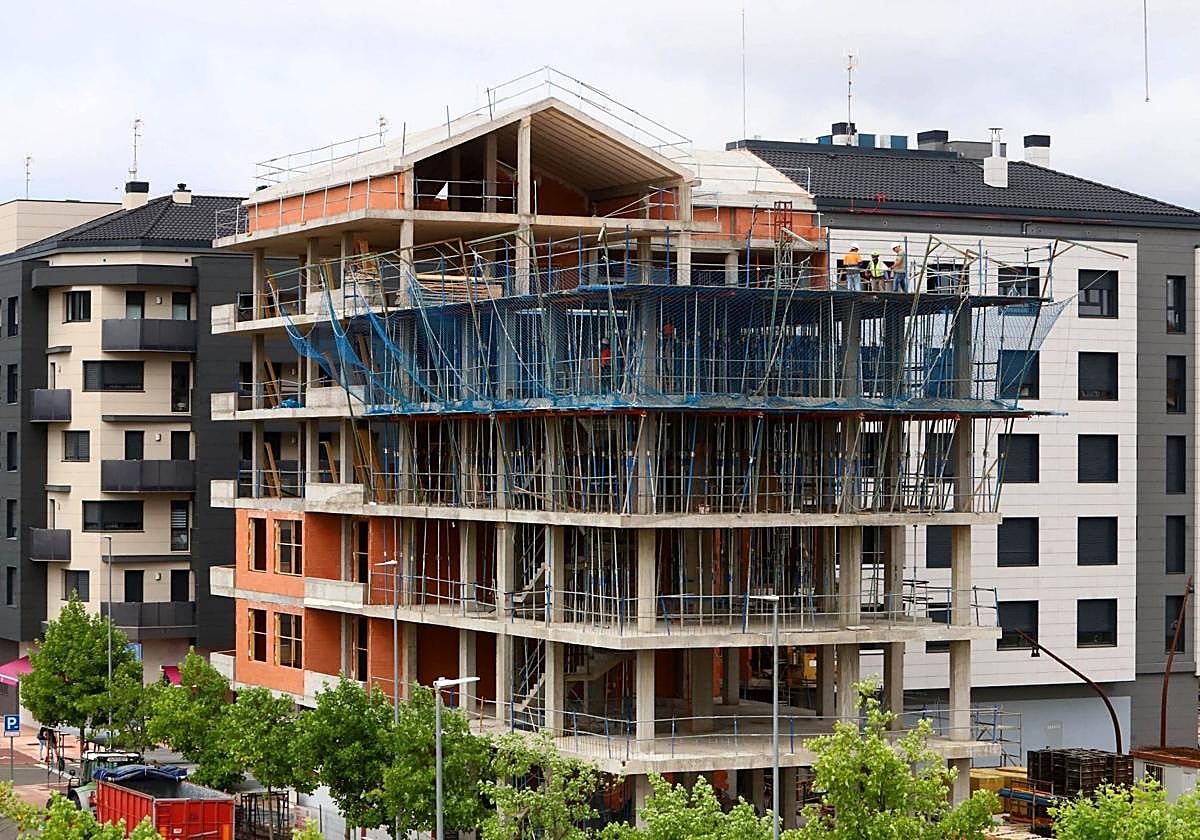
Spain's housing market is in the midst of an expansionary phase. High prices - the highest since 2010, adjusting for inflation, just as the real estate bubble burst - are not slowing down demand, which has seen 700,000 sales in the last year, a 20% increase. CaixaBank Research's report on the real estate sector, published this Friday, explains that improved financing conditions, increased household purchasing power due to strong performance in the labour market and sustained demographic growth - both due to migratory flows and new types of families - are behind this phenomenon, which is exacerbated by the lack of housing supply. For this reason, experts warn of the need to step up the construction of affordable housing to rebalance the market.
Although 132,000 new homes have been approved for construction in the last year (13% more than in the previous year), production is still insufficient to balance the market and the housing deficit "continues to widen". The report's authors indicate that the housing shortage is the main factor behind the pressure on prices, which "continue to accelerate and make access to housing more difficult", especially in areas with the highest demand. The report highlights the fact that, according to data from Spain's INE national statistics institute and the Ministry of Housing, cited by Caixabank Research for this report, the only Spanish province with no housing shortage is Soria.
The housing shortage is no small matter. The authors of the study calculate that, between 2021 and 2024, a shortage of up to 765,000 houses has accumulated, equivalent to 4% of Spain's housing stock. Moreover, it is precisely this housing shortage that explains 39% of the increase in housing prices observed during this period. "It is urgent to reactivate residential development to mitigate price pressures," state the authors. At regional level, the lack of housing is most acute in Madrid, Alicante, Barcelona, Valencia and Malaga, all five with more than 60,000 homes needed. Meanwhile, in 'empty Spain' (the parts of the country with declining populations), the deficit is smaller, but the provinces of Jaen, Guadalajara, Lugo, Albacete, Burgos and Ciudad Real are also showing a shortfall above 3,000 homes.
An appetite for investment
20%
of sales are to foreign buyers
who buy property at a much higher price than Spanish peeple - in fact, almost double.
Most purchases are for existing homes, but new builds are gaining ground due to the "gradual recovery" in supply. In the first half of the year, these transactions increased by 22.2%, although the figures are still much lower than in 2007, when 42% of purchases were for new housing, reflecting the construction boom of those years.
The forecast is for price rises
The lack of housing is relentlessly driving up prices. In real terms, it has already exceeded 2010 levels. By region, the trend is heterogeneous, although price increases have been recorded in all regions. The report has Madrid and Catalonia leading the way, followed by Andalucía, the Balearic Islands, the Canary Islands, Valencia and Murcia. In fact, the strength of the upturn in prices since mid-2024 in these regions "has shifted demand towards more affordable areas", thus pushing up prices in provinces bordering Madrid, such as Segovia, Avila, Toledo and even Valladolid- Likewise around Barcelona.
Soria is the only Spanish province spared from the housing shortage
Unfortunately, the situation will not be improved, at least for the time being. The Caixabank Research study forecasts that prices will rise by 10% this year and by a further 6.3% in 2026. This growth will outpace household disposable income and will "further strain" housing affordability indicators, especially in areas with the highest demand.
Foreigners are buying more apartments in Spain
One of the reasons for the rise in prices is also the increase in demand from foreign buyers. The increased appetite for investment in Spain is evident, with more than 50,000 homes purchased by foreigners in the first half of this year alone, 14% of total sales, according to the national association of property registrars, four points above the historical average for the period 2006-2024. Data from the Ministry of Housing indicates that purchases by foreigners are at an all-time high, meaning that one in five homes on sale are currently being bought by foreign buyers, when in 2007 they constituted only 7% of the total.
Non-resident foreigners have a clearly different purchasing profile compared to residents. Their reasons for buying are more for holidays or investment purposes and their purchasing power is greater. This trend influences demand for certain areas, especially those with the greatest tourist appeal. Thus, the average price per square metre for non-resident purchases was 3,063 euros in the second half of 2024, practically double the 1,713 euros per square metre paid by domestic buyers.
Furthermore, the increase in the average price at which non-residents purchase homes in recent years has been much more significant, rising by 38% since 2019. "This trend reflects that Spain has established itself as one of the most attractive destinations for investment in luxury real estate in Europe," the report states.
Bubble bursting alert: there are signs of "overvaluation"
The report published by Caixabank Research warns that the tension in the housing market, both in terms of demand and prices, is already causing experts to observe "signs of overvaluation" in the real estate market. Furthermore, the experts warn that prices and sales will continue to rise in the coming quarters and therefore recommend increasing the supply of affordable housing if the market is to be "rebalanced". Even so, they note that the current context is "very different" to that of the boom in the noughties, as the financial situation of households and institutions is "much more solid", but they insist that there are "imbalances" that deserve attention sooner rather than later.
![[]](http://static.vocstatic.com/voc26/latest/assets/images/favicon/surinenglish/apple-touch-icon-57x57.png)