
Travel
Spain's government refuses to 'submit' to Ryanair, already negotiating with other airlines to compensate for its 'abandonment'
The Irish airline announces the closure of its base in Santiago, cancels flights to Vigo and Tenerife Norte and continues not to operate in Valladolid and Jerez

Madrid
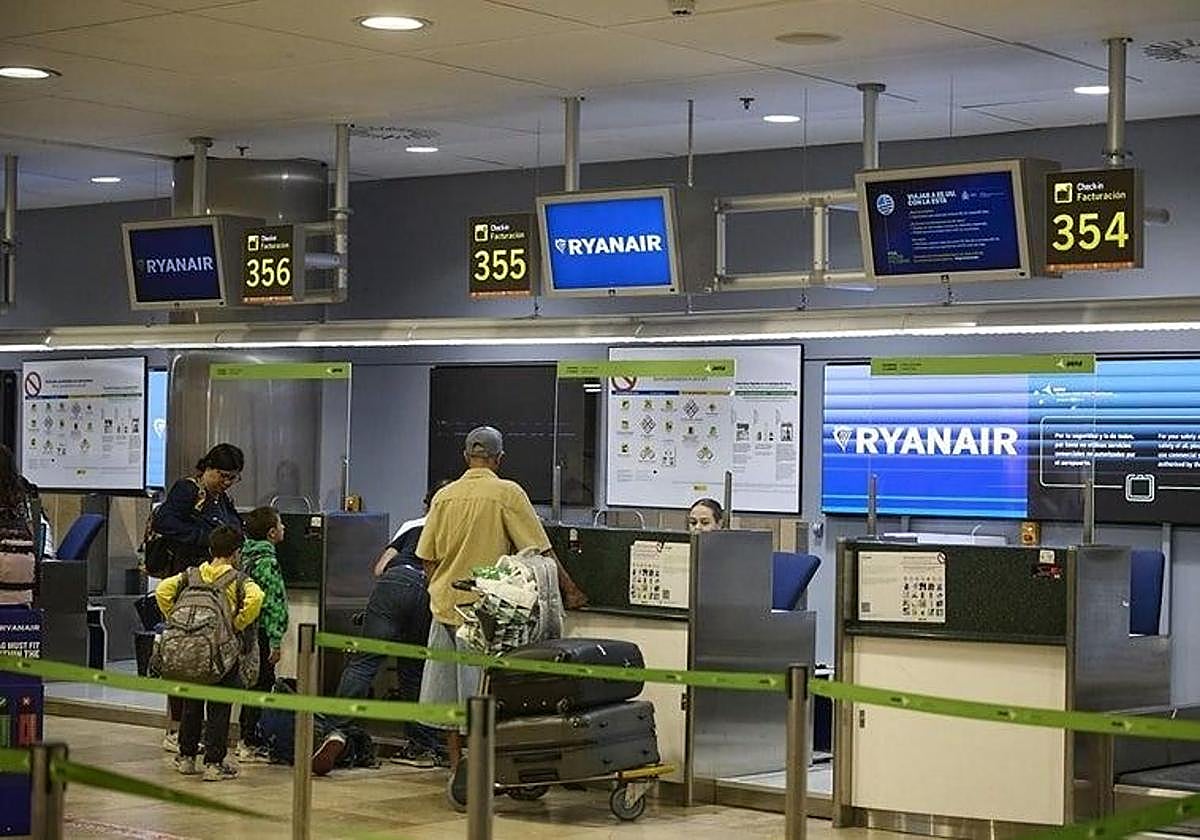
Ryanair's decision to cut one million seats at Spanish airports threatens Spain's hegemony as the world's second largest tourist power - a position that has been consolidated, among other reasons, by the quality of its air connectivity, with 80% of its visitors arriving by plane. The government is, however, already working with other airlines to cover this "abandonment". The adjustments that the Irish airline announced on Wednesday involve a reduction in air traffic at secondary airports - those with less than three million passengers - of 41% (600,000 seats). In addition, the low-cost airline will reduce its seat offer in the Canary Islands by 10% (400,000 seats), with a cancellation of 36 connections with the Peninsula and the suspension of all its flights to Tenerife North from 1 October.
This cutback will most affect Santiago de Compostela, where Ryanair is closing its two-plane base; Vigo, where it is suspending all flights from 1 January; Zaragoza (-45% capacity); Santander (-38%); Asturias (-16%); and Vitoria (-2%). In addition, Ryanair will continue not to operate in Valladolid and Jerez during the winter.
Diversion to other countries
Ryanair has stated that the reason for this cut is due to the "excessive" fees and the lack of competitiveness at Spanish facilities that the airline attributes to Aena. "Ryanair remains committed to Spain, but we cannot justify continued investment in airports whose growth is blocked by excessive and uncompetitive fees," said CEO of the Irish company Eddie Wilson at a press conference held in Madrid on Wednesday.
Wilson said that this implies the diversion of two million seats a year to countries such as Italy, Morocco, Croatia, Albania, Sweden and Hungary, "which are reducing access costs (especially at regional airports) to boost traffic, tourism and employment, which makes Spanish regions hopelessly uncompetitive".
According to Ryanair, Aena has no interest in developing traffic at regional airports and only wants to focus on obtaining "record profits from the main Spanish airports" after increasing charges by 6.5% by 2026 to 11.03 euros per passenger.
The suspension of Ryanair's services at some of the regional airports is a blow that the government is already trying to cushion by diversifying operators to make up for the loss of connectivity. "We will not submit to the arbitrary decisions of one company," said minister of industry and tourism Jordi Hereu.
The danger of the lack of connectivity for these territories comes at a crucial time for the tourism sector, as some of the airports affected are those in medium-size cities that are less crowded and where tourism was beginning to take off after the pandemic. Sources from the Ministry of Transport told SUR that "there will be no harm to users", because "the supply of seats will continue rising despite Ryanair". The ministry stated that the Irish company "is once again blackmailing Spain" with this cut in seats, given that the country's airport system "is one of the most competitive in the world in terms of fares".
Aena reported on Tuesday that airlines will offer another record number of seats for the winter season (from 26 October to 28 March 2026). "Spain is a great power with enormous attractiveness, where connectivity is based on the quality of its airport network, among other reasons," said Hereu.
Are the 100 million tourists at risk?
The dispute between Ryanair and Aena is another obstacle on Spain's way to conquering the coveted historic barrier of 100 million foreign visitors in 2025. The national institute of statistics data for July shows certain signs of a slowdown, with a drop in the arrival of German, French and British tourists in July - the three main markets.
In the first seven months of the year, 55.5 million foreign tourists have visited Spain, which means that it is difficult to reach the statistical milestone despite the fact that occupancy in many destinations, such as Valencia, remains very high.
![[]](http://static.vocstatic.com/voc26/latest/assets/images/favicon/surinenglish/apple-touch-icon-57x57.png)