
Wildfires
Spanish government believes the end of the worst wave of forest fires in a century is in sight
Galicia, for the first time in three weeks, has no active fire of any seriousness and in Castilla y León only 39 residents have been evacuated from their homes

Madrid
The end of August seems likely to coincide with the end of the wave of wildfires that has been raging in Spain for the last three weeks, with the largest amount of forests, meadows and woodland burnt in the last 31 years. This, at least, is the view of the group of experts and government policy-makers who daily evaluate the progress of the major fires in order to assign state and European troops and resources to the areas with the highest risk fires.
Related story
Its coordinator, the director general of civil protection, said today that she sees the end of this nightmare near and said that the 24 hours between Thursday and Friday "can be definitive". Virginia Barcones believes that if the emergency devices deployed in Galicia, Castilla y León and Asturias are able to consolidate on Thursday the great advances against the flames achieved the day before, "this tragic episode can be definitively settled". She said that a window of opportunity opened on Wednesday, with a sharp drop in temperatures and a large increase in humidity, which continued on Thursday, but which will change on Friday. Now is the time, she stressed, to consolidate the improvement so that "there is no turning back". Her optimism was shared by her counterpart in Castilla y León, Irene Cortés, who said that we seem to be seeing light at the end of the tunnel. Both, however, asked everyone, technicians and citizens, not to lower their guard, because the forestry situation and the weather are still at extreme risk.
The fact is that the turnaround in the situation between Tuesday and Thursday was remarkable. The firefighting teams managed to contain and stabilise six of the large fires burning in the northwest: in Galicia, for the first time in more than three weeks, since before the start of the outbreak of the wave of blazes, not a single fire remained active; in Castilla y León there were only two villages evacuated. The road closures, usually more than a dozen, were reduced to three, while the UME, Spain's emergency military unit deployed on the front line of any major fire, was only called upon in six cases.
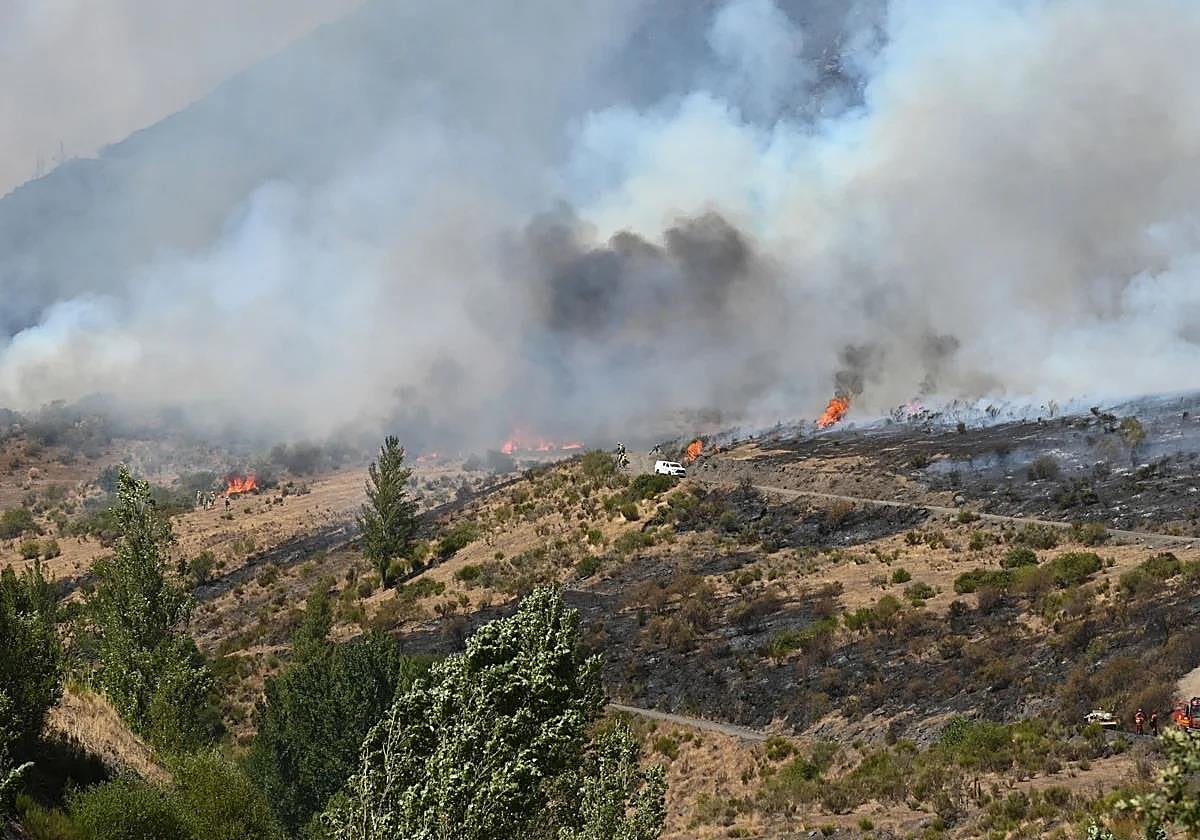
The only major fire of concern in the whole country today is the one in Fasgar in Leon, which is still raging and out of control for 21 days
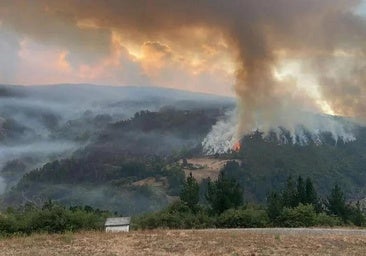
The only concern in this radical turn of events was the Fasgar fire in Leon, the super-fire that has been devastating thousands of hectares of the Bierzo region for 21 days, since the very day the wave of fires began. It is a violent and explosive fire that has not been controlled at any time, with constant reactivations, in which three highly adverse factors for its extinction have come together: extremely dry vegetation, very steep terrain that is extremely difficult to tackle from the ground, and frequent gusts of wind. According to Barcones, it is the fire of greatest concern and the only one in the country with an unfavourable progression.
Related story
In contrast, the general situation in Castilla y León is much improved. Two of the four major fires, the Anllares del Sil and Garaño fires in Leon, have been contained and stabilised; and the Porto fire, which encircled the Sanabria region of Zamora, is still burning, but it is progressing favourably and, if there are no new outbreaks, is on the way to being contained. The stabilisation of the Anllares fire is symbolic, as it was 21 days old. The result of the clear progress is that in Zamora not a single village was evacuated and in León the figure was reduced to two localities and 39 residents, when the average of the wave was between 2,000 and 3,500 evacuees per day, with peaks of up to 10,000.
Perpetrator of six fires
In Galicia the word is turnaround. The region, which has broken all annual records for major wildfires and scorched land this month, with 115,000 hectares burned – 12 per cent of the province of Ourense – was today left without a single active fire. On the same day, the two major blazes in Lugo (A Pobra do Brollón and A Fonsagrada) and the two in Ourense (Avión and Carballeda de Valdeorras) were brought under control, the latter having burned for eleven days.
Asturias added to the general good news on Thursday with the stabilisation of three of the four forest fires in its territory and progress in the work to contain the San Antolín de Ibias fire, which appears to be on the way to stabilisation.
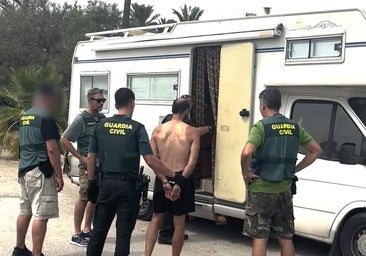
While the control of the flames was spreading in the northwest, the Guardia Civil announced the imprisonment by the examining magistrate of a resident of Malaga who was arrested this week as the alleged perpetrator of six fires set this month in Mijas, Ojén, Alhaurín de la Torre and Alhaurín el Grande. The security forces have brought 193 suspected arsonists before a judge this summer.
Europe's latest flame-fighting reinforcements return home
This Friday, the two large fire-fighting helicopters that arrived in Spain a fortnight ago from the Netherlands to reinforce the fire-fighting operations during the most tragic days of the wave of fires will return to their bases in Holland. They are the last remaining resources and professionals in our country of the powerful deployment made by the countries of the European Union to combat the flames in Extremadura, Galicia, Castilla y León and Asturias. A few hours earlier, the 51 Romanian volunteer firefighters had finished their work in Galicia and had boarded a plane in Santiago.
They are the last two units of a contingent of ten countries that in the days of greatest need added eight planes and helicopters (which made more than 730 drops), 335 professionals, seven teams of forest firefighters and dozens of vehicles. It was the largest fire-fighting assistance ever received by Spain and accounted for a third of the entire European Civil Protection Mechanism.
![[]](http://static.vocstatic.com/voc26/latest/assets/images/favicon/surinenglish/apple-touch-icon-57x57.png)