
Emergency aid
Spanish government declares 121 areas in 16 regions as 'disaster zones'
All the regions except the Basque Country will benefit from the aid designed for recovery after the 114 fires and the seven episodes of heavy rain in the last two months

Madrid
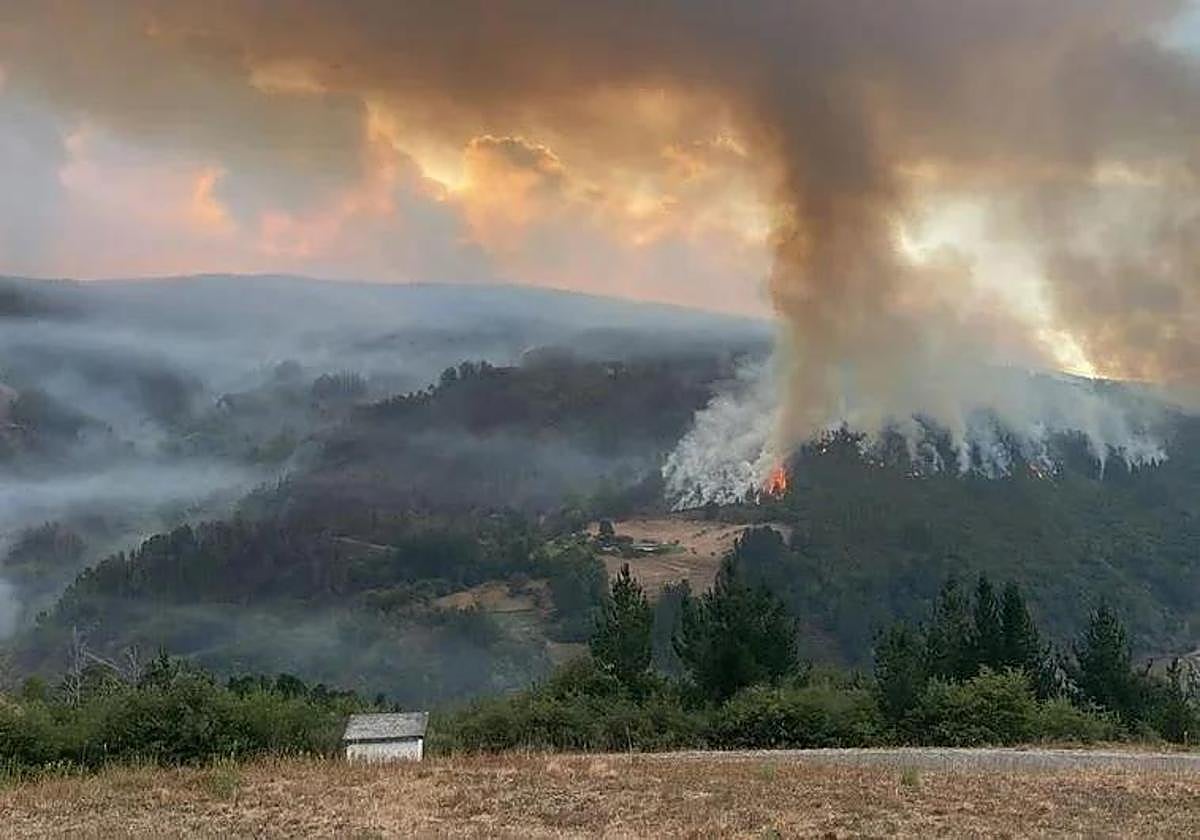
Spain's council of senior government ministers has agreed to declare several areas in 16 of the 17 regions in Spain, with the exception of the Basque Country, as "areas affected by an emergency". According to the Ministry of the Interior, these are for incidents that happened between 23 June and 25 August, caused by 114 forest fires and seven 'Danas' (cold drop weather systems) and subsequent floods.
The aim of this declaration is to enable all those affected by the 121 emergencies recorded in Spain during this period to apply for the various types of direct aid provided for in the Ley del Sistema Nacional de Protección Civil. The agreement covers the three waves of major forest fires which, with varying intensity and severity, have been recorded since the end of June. The outbreaks have varied between risk levels 1 and 2.
These catastrophic events have resulted in personal loss - with eight deaths and a number of injuries yet to be quantified - as well as serious damage to infrastructure and public and private property, which justify the intervention of the central government.
In short, the Ministry of the Interior is responsible for direct aid to alleviate personal damage; material damage to housing and household goods; expenses of local corporations; industrial, commercial and service establishments; and to natural or legal persons who have provided personal and property services.
It also provides for the possibility that the central traffic headquarters may approve an exemption from fees for procedures such as issuing duplicates of vehicle registration or driving permits, as well as deregistering damaged vehicles and also for the issuing of the national ID card (DNI).
Other measures under the responsibility of other ministries may include certain tax benefits (Ministry of Finance), labour and Social Security measures (Labour and Social Economy and Inclusion, Social Security and Migration) and aid to local corporations (Territorial Policy and Democratic Memory) or subsidies for damage to agricultural, livestock, forestry and aquaculture production (Ministry of Agriculture, Fisheries and Food).
'Major natural disasters'
The other ministerial departments, within the scope of their responsibilities, may declare a special action zone to repair the damage caused to publicly-owned infrastructures located in the affected areas. According to minister of the interior Fernando Grande-Marlaska, "although the emergency episode is not over, it is clear that we are facing one of the biggest environmental catastrophes in recent years and that the personal damage to infrastructure and public and private property is undoubtedly high".
Marlaska stressed the importance of activating the aid mechanism for the victims "as soon as possible so that they can recover a certain degree of normality". He added that the fire emergency "has not yet been considered closed". "These institutions will have their government by their side at all times and will have all the aid necessary to achieve the greatest possible recovery of the areas affected by the disaster," he stated.
According to the European Commission's Copernicus satellite information system, more than 300,000 hectares of land have burned in four of the provinces most affected by the fires this August - Castilla y León, Galicia, Asturias and Extremadura. Marlaska pointed out that the simultaneous fires coincided with the "most intense heatwave since records have been kept, with an average temperature some 4.6C higher than usual for this time of year and the longest in this period".
In addition, the minister reviewed the means and resources mobilised by central government and conveyed his condolences to the families of the deceased. He also expressed his recognition "to the thousands of men and women" who have not stopped providing efforts in the extinguishing of the fires despite the length of the emergency and the exhaustion it has caused. He thanked forest firefighters, military emergency troops, environmental officers, civil protection agency, the Local Police, the Army, the Guardia Civil, National Police and every volunteer that joined the efforts.
'Resizing' climate change
According to data from the ministry of the interior, the three waves of fires started at the end of June, with Alicante, Madrid, Toledo, Seville and Valencia in operational situation 1, which meant the activation of the affected regions' fire prevention and firefighting plans.
The second wave began with the fire in the province of Tarragona on 7 July (operational phase 2), which resulted in the death of one person, six more injured and the confinement of residents. From 11 July onwards, fires were reported in Cadiz, Ciudad Real, Toledo and Valencia. The situation worsened from 17 July onwards and fires also appeared in Alicante, Ávila, Madrid, Badajoz, Valladolid and then in Albacete, Cáceres, Ciudad Real, Cordoba, the Balearic Islands, La Rioja, León, Orense, Navarra, Pontevedra, Santa Cruz de Tenerife and Teruel.
The third and most destructive wave began on 8 August with the forest fires in San Bartolomé de Pinares (Ávila) and Brazatortas (Ciudad Real). From that date, outbreaks were reported in León, Navarra, Orense and Zamora. On 11 August, nine fires in operational situation 2, of intense severity, were declared in Cáceres, Cadiz, León, Madrid, Orense, Toledo and Zamora. They prompted civil protection to declare phase 1 of pre-emergency of the national state emergency plan to coordinate the provision of all state resources to the affected regions. On 12 August, 11 more fires of the highest severity were reported, with Asturias and Huelva joining the list of affected provinces.
The other measure agreed by the council of ministers this week is the creation of a new inter-ministerial commission on climate change to pave the way for a state pact against the climate emergency. The commission is headed by third deputy PM and head of ecological transition Sara Aagesen, together with Grande Marlaska. Prime minister Pedro Sánchez demanded that they "resize" and "redefine all aspects associated with mitigation and adaptation to climate change".
![[]](http://static.vocstatic.com/voc26/latest/assets/images/favicon/surinenglish/apple-touch-icon-57x57.png)