
Economy
Bank of Spain improves growth forecast to 2.6% on the back of consumer spending
High housing prices are increasing the real wealth of many families due to the number of homeowners in the country, according to the financial institution
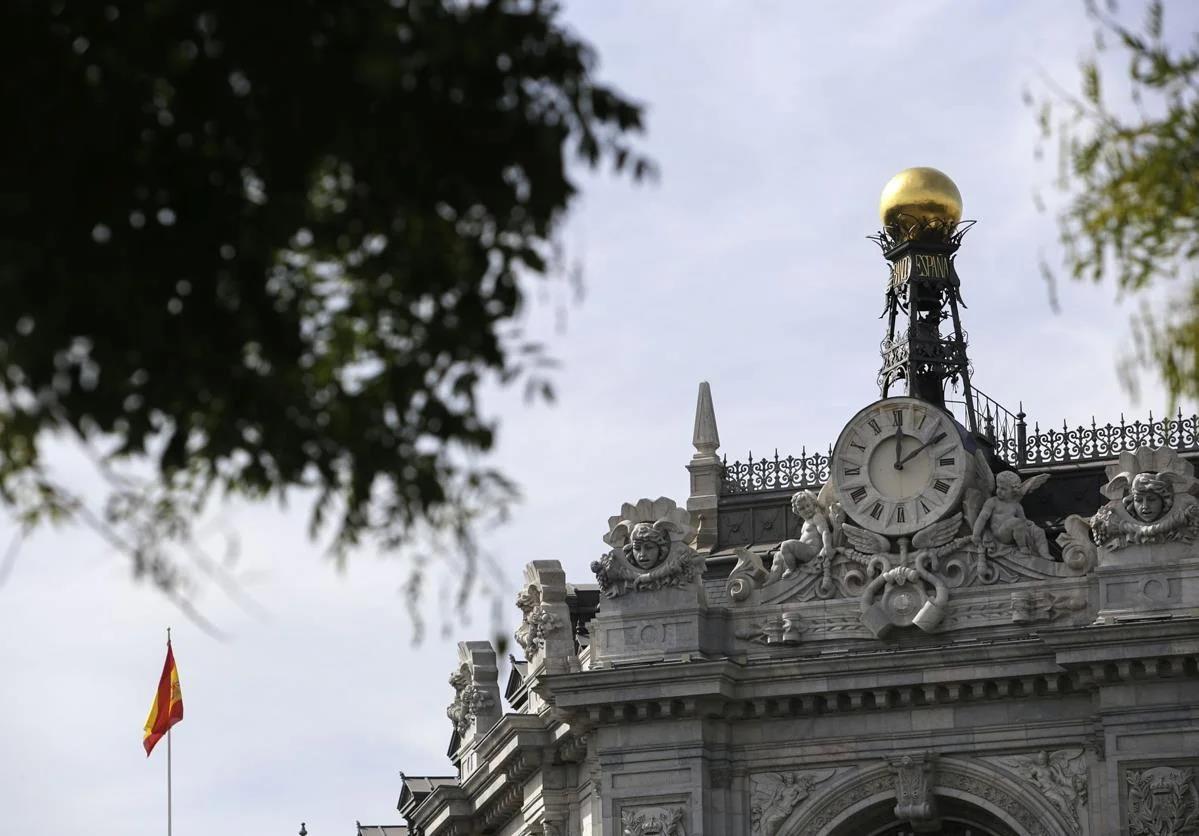

Madrid
The Bank of Spain is experiencing economic instability and uncertainty, even in its forecasts. Just three months ago, the institution lowered its forecasts for Spain's economic growth for the first time in two years - down three tenths of a percentage point to 2.4% - but, this Tuesday, it has had to backtrack. In the first forecast report signed off by the institution's deputy director-general of economy, Galo Nuño, confidence in the country's economic growth is once again bolstered, with an upward adjustment of its estimate for GDP growth (gross domestic product) for this year of two-tenths of a percentage point, to 2.6%.
The estimate for next year remains unchanged at 1.8%, well below the Spanish government's forecast, currently at 2.2% following the revision of the macroeconomic framework updated this Tuesday by central government's cabinet of senior government ministers. "The Spanish economy continues to show a remarkable capacity for resilience in the current international context," said the new deputy director of economy.
Therefore, the more favourable than expected performance in the second quarter - when the economy grew by 0.7% according to Spain's INE national statistics institute due to favourable financial conditions that have strengthened consumption and investment - plus the greater dynamism of activity in the current quarter, have raised the Bank of Spain's forecast for this year to 2.6%. Looking ahead to the third quarter, economic indicators suggest that the economy will maintain a "robust growth" rate of between 0.6% and 0.7%, said Nuño.
Inflation is another factor underpinning the Bank of Spain's forecasts. The financial institution believes that this year the CPI (consumer price index) will close at 2.5%, one-tenth higher than expected, but will stabilise at 1.7% next year if there are no major surprises. Nuño acknowledged that this more normalised inflation, the positive performance of employment, the maintenance of transport discounts and the reduction in interest rates are all keeping consumption on the rise and supporting economic activity.
The housing bottleneck
The housing crisis is also clearly impacting the Spanish economy. High house prices (the quarter-on-quarter increase from April to June was 2.9% in real terms) are boosting the real wealth of households in Spain. In other words, high property prices are generating extra income for many homeowning families, even though they are driving down the income of other households (non-owners), Nuño explained.
"The high percentage of homeowners [in Spain] means that rising prices mechanically increase their real wealth," said Nuño, who made it clear that this does not isolate the "social drama" and "major economic problem" posed by the housing crisis. The central bank reiterates that the housing crisis remains a major "bottleneck" for economic growth.
This presentation was given by Galo Nuño, the Bank of Spain's deputy director-general of economy. The new director of economy will be Diego López Salido, following the departure of Ángel Gavilán after a controversial annual report in which the issue of pension sustainability was not as fully reflected as on other occasions. His conflicting views with the Bank of Spain's governor, José Luis Escrivá - the former Minister of Social Security who was in charge of the last pension reform - could not be confirmed by those present.
![[]](http://static.vocstatic.com/voc26/latest/assets/images/favicon/surinenglish/apple-touch-icon-57x57.png)