
War zone
The Spanish health workers who are trying to save the children of Gaza
A group of medical professionals is working flat out to bring more young patients from the war zone to Spain for life-saving procedures and calling on more hospitals to open their doors to them

Madrid
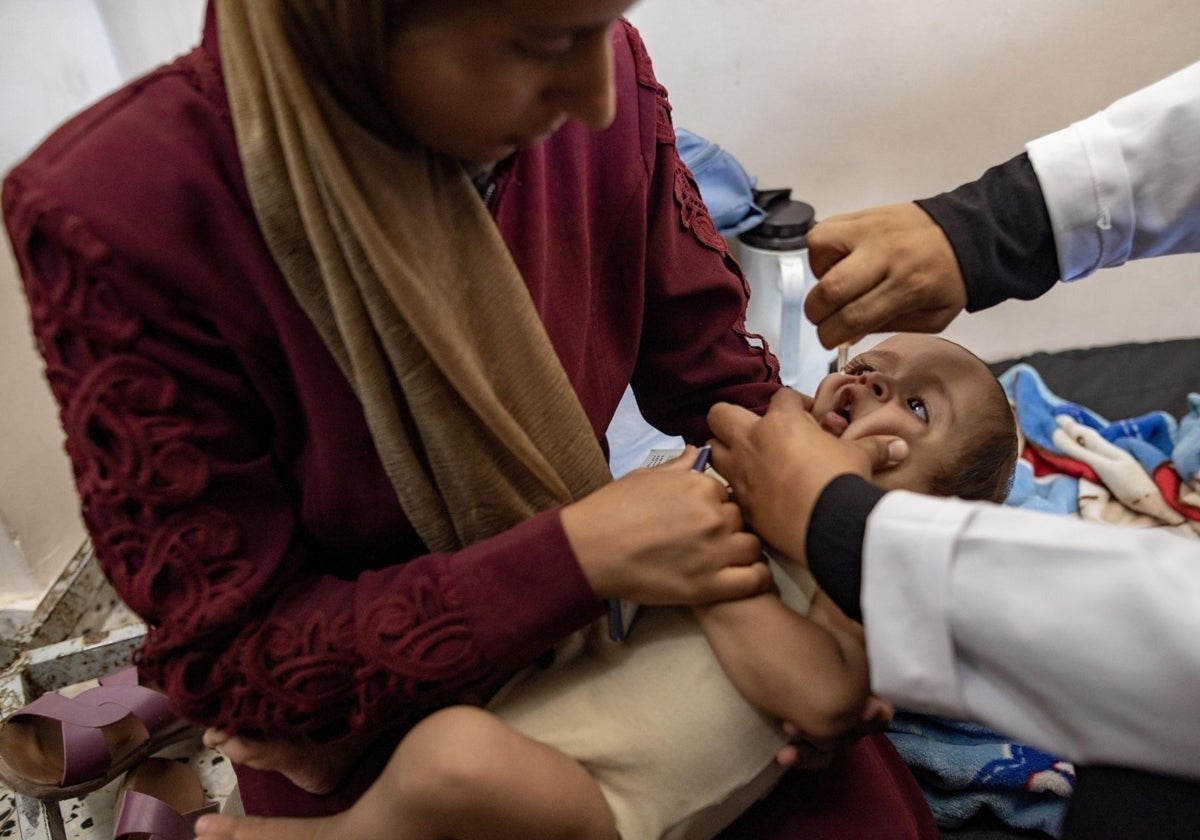
Amputations, trauma, burns, severe malnutrition, preventable conditions that cannot be cured, chronic diseases such as cancer, for which treatment has stopped; patients in Gaza have no medical care. The very few who manage to travel to the Egyptian border find some help, but it is a precarious journey.
The most complex cases are discussed every fortnight by international doctors who provide advice to locals, but treating them there and then is not enough to save lives. Patients need to be evacuated, especially children. "Evacuations are very difficult, they are blocked by organisational constraints," said Victoria Fumadó, coordinator of the Comité de Cooperación Internacional de la Asociación Española de Pediatría (international cooperation committee of the Spanish paediatric association) or AEP, which participates in these operations from its Sant Joan de Déu hospital in Barcelona and describes the situation as "catastrophic". "In particular, oncological cases involving minors cannot be done remotely.
In the midst of devastation accentuated by the veto on international aid, workers are trying to get Spanish hospitals to open their doors. Since July last year only 31 patients from Gaza have been transferred to a handful of hospitals in the Basque Country, Asturias, Navarra, Barcelona and Madrid regions, accompanied by 56 family members, according to Health Workers Palestine Spain (HWPS).
"When we saw that in a year of genocide we had only received 15 patients, compared to the 200,000 Ukrainian refugees we received in three months without any kind of problem, we found it horrifying," said Soledad Ascoeta, a cardiologist and activist member of this group of health workers which is trying to "increase the flow" of patients in evacuations in which five Spanish ministries, led by the Ministry of Health, are involved.
"The appeal is for hospitals to offer to take in paediatric patients," explained Fumadó, whose centre is treating two and is expecting three more children with cancer in the next few days. "If they take charge, they would remove one of the limitations, the economic one. Scientific societies can also take over and dedicate a budget through their foundations. In Gaza there are 10,000 patients awaiting evacuation, half of whom suffer from some type of cancer, and 4,000 are children, according to World Health Organization (WHO) data provided by HWPS.
Once the medical facility, whether public or private, accepts a patient and issues a letter stating that it is responsible for treatment and ongoing care, the process begins with the central government, which is responsible for the bureaucratic management of the departure, transfer and permission from the local authorities. "We work together, but we are not an NGO. We are a medical and healthcare group, united to exert pressure. How can we leave children there to die?" they ask.
The situation is bleak. Between April and mid-July "more than 3,000 children have been severely malnourished," the WHO warned this week. "Hospitals have reported a rapid increase in hunger-related deaths in children under five years of age, with at least 16 deaths reported since 17 July. Every two days three children die from hunger. If they survive, "they may have impaired brain development," Fumadó explained. "By diminishing the intellectual capacity they could potentially have, the future productivity of the population is diminished."
Uncertainty and silence
To date almost all of the beneficiaries of this medical initiative have been children, thanks to the action of the Spanish Society of Paediatric Haematology and Oncology (SEHOP). The budget per patient depends on the disease. "We think that the more institutions and professionals that offer to participate, the more patients will be accepted," said Fumadó. "Most of our hospitals could take in between two and five children, if there is a significant response of solidarity from the medical staff. In addition, in the cities there are hospitals with resources that have their own private foundations. Imagine if they all responded."
Usually, after their treatment and surgery patients return to their countries of origin. However, the uncertainty in Gaza makes the return of minors "more complicated", especially with "long treatments", which "often turn into a reception for the whole family", acknowledged Fumadó.
The Spanish health groups work with the dossiers of some patients and try to get Spanish scientific societies to initiate the demand for each individual to bring them to Spain, according to Ascoeta. Ideally, however, "evacuations should be continuous and systematic from the Ministry of Health, which has the data provided by the WHO and not just depend on scientific societies".
The pro-Palestinian health group also demands that these entities take a "clear position against genocide, but the response has been very scarce", said Ascoeta. No scientific society has joined, except the paediatrics society, which issued a statement last week. Nevertheless, those involved in this initiative have managed to get sick children back to Gaza, albeit just a handful.
![[]](http://static.vocstatic.com/voc26/latest/assets/images/favicon/surinenglish/apple-touch-icon-57x57.png)