
Culture
The Rolling Stones sued by Spanish band for plagiarism in song released during Covid pandemic
The complaint, filed in a Madrid court, claims that Mick Jagger and Keith Richards copied elements of two songs by Angelslang
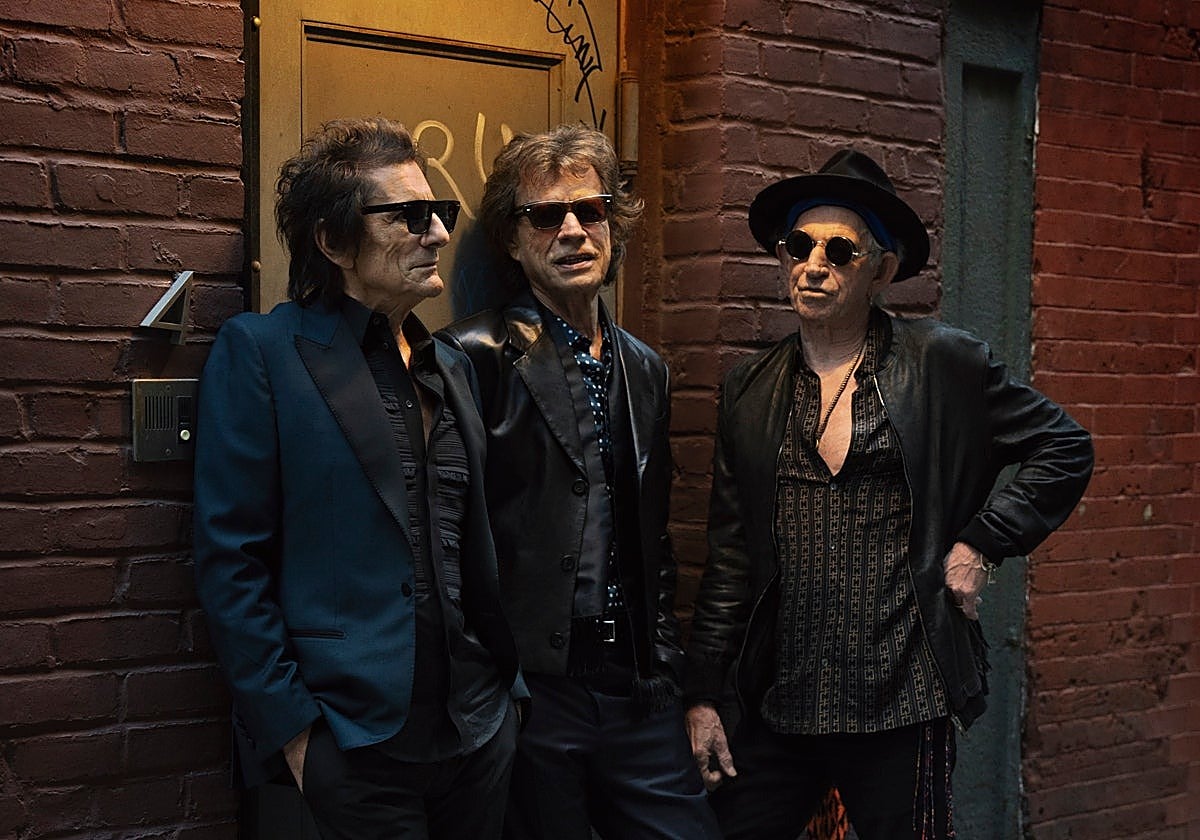

Nacho Serrano
Madrid
The frontman of Spanish band Angelslang, Sergio García Fernández, is suing the Rolling Stones for the alleged unauthorised use of two of his songs to create the song Living in a Ghost Town, the song that the legendary British band released at the height of the coronavirus pandemic in April 2020.
García Fernández argues that the Stones presented the song as "composed by Mick Jagger and Keith Richards, created and recorded in Los Angeles and London during lockdown". The song, a reggae / blues-rock track accompanied by a Covid-themed video, reached number three on the Hot Rock & Alternative Songs chart in May of that year.
Fernández, an Argentinian musician based in Madrid, is suing the band for copyright infringement in the Madrid's Commercial Court (Ordinary Proceedings 489/2025), specifically against Michael Phillip Jagger (whose copyrights are managed by Universal Music Group, Inc, LLC) and Keith Richards (by BMG Rights Management).
In March 2023, songwriter García Fernández claimed in a lawsuit in New Orleans federal court that Jagger and Richards "misappropriated many of the key recognisable and protected elements" of Angelslang's 2006 track So Sorry, as well as Seed of God, which was released in 2007.
Fernández says that he sent a CD with the demo of the songs to Mick's brother Chris Jagger, who he met in Madrid in 2013 for a performance at Café Berlín. Later, Chris wrote to him by email saying that "my songs and my style were a sound that The Rolling Stones would be interested in using," said the complainant, who also has other emails in which he and Jagger shared impressions of the song lyrics.
But seven years later, Fernández discovered that the Rolling Stones' song Living in a ghost town appeared to be borrowing key features from Angelslang songs, including "the vocal melodies, chord progressions, percussion patterns, harmonica parts, electric bass parts, tempos and other musical cues from So Sorry and the harmonic and chord progression and melody from Seed of God".
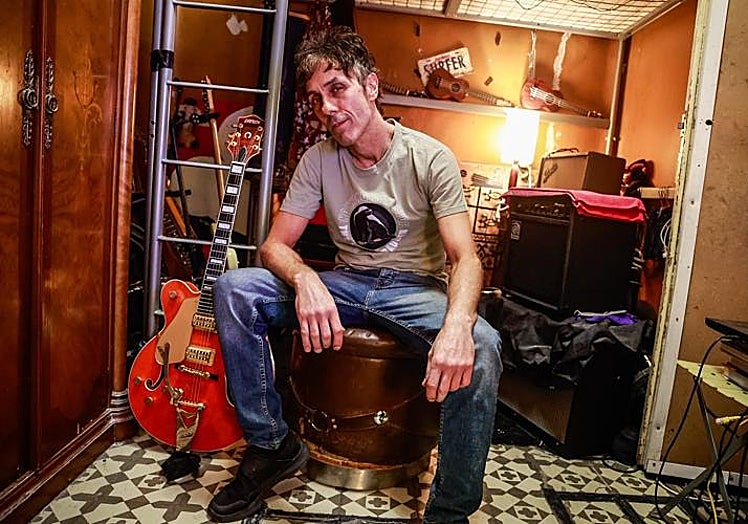
So Sorry in particular bears a striking resemblance to Living in a Ghost town, he argues, but "the defendants never paid the plaintiff or obtained permission to use it", their lawyers in New Orleans argued. However, Judge Eldon E. Fallon ruled that his Louisiana federal court lacked jurisdiction over Fernández's case, saying that Jagger and Richards are British, Fernández lives in Spain and the Rolling Stones "have only performed in New Orleans four times".
"The mere fact that people in this district listen to The Rolling Stones does not allow this court to exercise specific jurisdiction over the defendants," Judge Fallon wrote in dismissing the case. The judge dismissed the case "without prejudice", meaning that Fernández was free to take to the case to court "in a more appropriate" place. The Rolling Stones' own lawyers said the case should have been filed somewhere in Europe and that is what Fernández has now done in Madrid.
"The Rolling Stones team argues that the resemblance is in the style, but I have an expert report by a musicologist according to which there has been a fragmented plagiarism, which consists of the copying of several loose parts of the composition and is contemplated in the Intellectual Property Law," explained Fernández, who believes that "perhaps the Stones fused the two songs with AI, produced a hybrid and played over it".
Fernández added that in addition to that first meeting with Chris Jagger, he was about to take part in a tribute event for a visual artist with the Rolling Stones in 2014. The event was cancelled due to the sudden death of Mick's girlfriend, the fashion designer L'Wren Scott, but the teams of both bands had already shared information and material about their work and songs, so there would have been not one but two contacts with the immediate entourage of the legendary British band.
Since Fernández has brought the case to court, he claims he has "suffered digital harassment and hacks on various devices" about which he does not want to talk in depth "so as not to alter the management of the case". However, he says that they have caused him physical and mental exhaustion, corroborated by medical reports and he has even written a will in which he has signed that if anything happens to him, his family and lawyers will have the power to continue with the trial.
ABC has contacted both Universal Music Group, Inc, LLC and BMG Rights Management, but they declined to comment on this information.
The Stones' version
At the time, all four members of the Rolling Stones gave their version of how Living in a ghost town came about. "The Stones were recording new material in the studio before the lockdown and there was one song that we thought had a special resonance given the circumstances we're living in. We worked on it in isolation. And here it is, it's called Living in Ghost Town, I hope you like it," said Mick Jagger.
Keith Richards added, "Long story short, we recorded the song a year ago in Los Angeles for our new album, a project we're still working on, then the shit hit the fan and Mick and I decided the song should be out now and here it is: Living in a Ghost Town."
The late Charlie Watts said of the song at the time: "I had a good time working on this song. I think it captures the general mood and I hope people listening to it will agree" and Ronnie Wood described it as "a captivating tune".
![[]](http://static.vocstatic.com/voc26/latest/assets/images/favicon/surinenglish/apple-touch-icon-57x57.png)