
Electric transport
Spain breaks record for number of public electric chargers, but one in four does not work
The network of charging points is still insufficient and lacking in fast charging stations, industry data shows
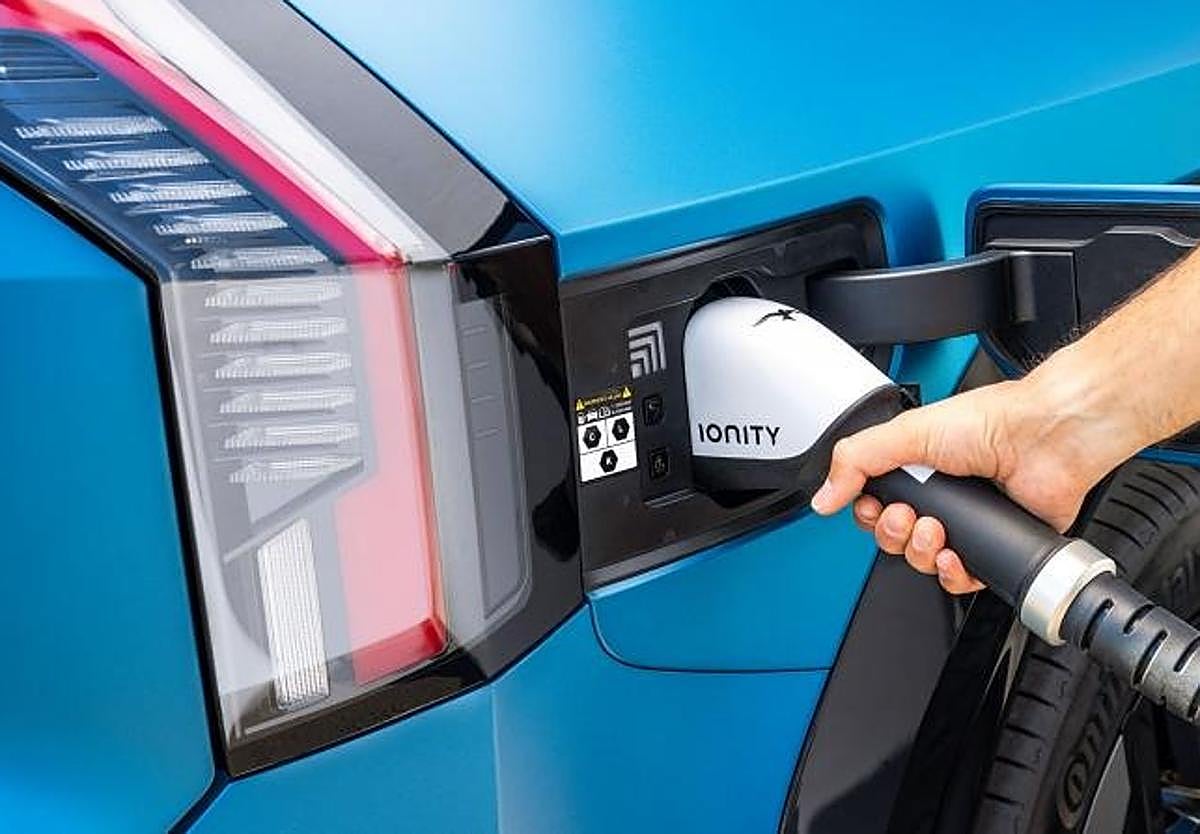

Spain currently has a total of 53,072 public charging points for electric vehicles. This is a new record, according to car manufacturers' association Anfac's latest report. Last year, the network marked the highest increase in the number of charging stations (37%) ever seen in Spain.
Despite the good numbers, there is still a lingering challenge that has replaced the question of installing them: putting them in operation.
In fact, the growth of non-operational points, either due to breakdowns, poor condition or because they are not even connected to the electricity grid, is greater than that of installations: 43% compared to 37%, to be precise. In total, there are 16,340 inoperative charging stations out of a total of 53,072. This means that one in four is out of service. "If all of them were active, Spain would have 69,412 public access charging points," Anfac says in its report.
It is not the only stone on the road to accelerating green transport in Spain. Fast charging is still a pending issue on national roads and motorways. Only 10% of the points deployed (5,151) recharge car batteries at 150 kW, which allows an electric car to recover its range between 15 and 27 minutes of charging. "This is essential for long-distance journeys," Anfac says. It is also essential for the heavy-duty vehicles, which only start charging at 150 kW," they add.
The majority of Spain's public charging points are still those with a power rating of less than 22 kW. "This means recharging takes more than three hours," Anfac points out. Seven out of ten stations in urban and interurban areas have this charging power, which complicates the move towards electric transport, according to the car manufacturers' association. "This must be reversed so that the electric vehicle can be considered a first choice for customers or as an 'all-rounder'. On the manufacturers' side, this is already possible, as current technology allows charging powers of more than 100 kW," Anfac CEO José López-Tafall says.
By region, Madrid (34.1), Navarre (29.8) and Catalonia (25.4) lead the ranking in terms of the number of charging points. Madrid stands out, with a 12.4% increase over the year, close to the European average. In contrast, Ceuta and Melilla lag behind, with a slight increase of 0.2% with respect to the end of 2024.
However, Spain's figures are far behind those of other EU countries. Spain scores 22.9 out of 100, an increase of 7.4% over the previous year. This improvement is largely due to the expansion of the vehicle indicator, while the contribution of infrastructure has been more limited over the period. At the European level, Spain managed to close the gap with the European average of 35.5 index points by 1.6, although the latter is still more than 10% higher.
Deployment required
The growth of the operational charging network is key in a context where the electrification of the market is advancing at a rapid pace. In 2025, nearly two out of every ten passenger cars registered in Spain were electrified vehicles, with a share of 19.6%, 8% higher than in 2024. Registrations of pure electrics and plug-in hybrids exceeded 225,000 units for the first time - a historic figure that reflects the growing interest of both private consumers and corporate fleets.
This boost has been accompanied by the promotion of public policies to support the purchase of electric vehicles. The entry into force of the new Auto+ plan, which replaces the Moves III plan, seeks to speed up aid for the purchase of electric vehicles with an allocation of 400 million euros, in addition to the extension of the 15% tax deduction in personal income tax for the purchase of electric cars and the installation of charging points. The government's goal is to accelerate the entry of plug-in models and bring their share closer to 30 % by 2026, a challenge that depends largely on the public charging network being fully operational and having sufficient power.
The emergence of Chinese brands has become a decisive factor in accelerating electrification. Manufacturers such as BYD, MG, Omoda or Xpeng have rapidly gained ground thanks to a competitive offer in terms of price, autonomy and technology, especially in the access segments and in the corporate channel. Their growth is increasing pressure on the existing infrastructure and highlighting the need to expand, maintain and activate charging points, particularly fast charging points on the road.
At the same time, the European regulatory framework is evolving towards a model in which the electric car is firmly established as the backbone of the mass market. The recent easing of the timetable for banning combustion engines beyond 2035 does not represent a step backwards. It rather introduces a quota-based system that confines internal combustion engines to niche and high value-added production. This approach underscores the urgency of developing a sufficient, reliable and fast-charging network if Spain is to successfully complete the transition to electric transport.
![[]](http://static.vocstatic.com/voc26/latest/assets/images/favicon/surinenglish/apple-touch-icon-57x57.png)