
Environment
Nestlé invests 12 million euros in aid for Spain's farmers and livestock breeders to improve their sustainability
The world's largest publicly held food company aims to achieve net zero carbon dioxide emissions by 2050

Madrid
Two thirds of the planet's total greenhouse gas emissions come from agriculture and livestock, making it a "key area to tackle and invest in". This was stated by Nestlé España's general manager Jodi Llach during a press conference held in Madrid on Thursday. Nestlé is the world's largest publicly held food company. It aims to achieve zero net carbon dioxide emissions by 2050, for which it is investing hundreds of millions of euros. "We want to lead the transition to sustainable food," said Llach.
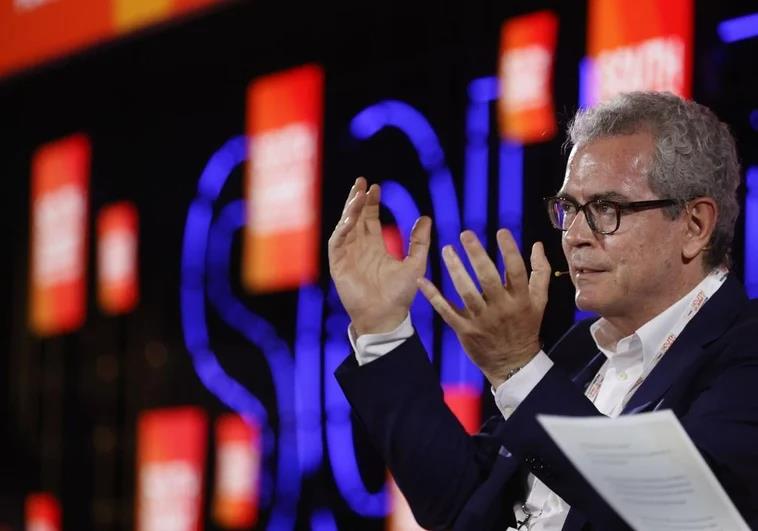
The multinational company is appointing Pablo Isla as its new global president on 1 October. He was initially supposed to take the post in April 2026, but the hasty dismissal of CEO Laurent Freixe for concealing a sentimental relationship with a female employee prompted current president Paul Bulcke to leave his post earlier than planned. Isla started working as a director at Nestlé in 2018 - while still chairman of Inditex. He became the company's deputy chairman in 2024.
Nestlé has spent 112 million euros on chain sustainability in Spain in the last five years. On Thursday, Llach announced that the company has invested 12 million euros in aid to the farmers and livestock breeders it works with in Spain to help them be more sustainable. As an example, the CEO explained that all the tomatoes used to produce some of its sauces in the Miajadas factory in Extremadura, as well as all the cereals from Castilla y León and Navarre that are used to make baby food are obtained through regenerative agricultural practices: the reduction of fertilisers, the use of water to the equivalent of the consumption of 10.5 million people, crop rotation, the installation of hedgerows that encourage the presence of beneficial wildlife in the fields or winter cover cropping, among other techniques.
Regenerative agriculture measures have also been implemented together with the farmers of the Cantabrian coast with whom Nestlé works to provide crops for dairy cows' food. For example, individualised fertilisation plans have been drawn up for each farm, reduced ploughing has been promoted as opposed to traditional ploughing (turning over the soil).
Farms located in Galicia, Asturias and Cantabria managed to reduce more than 43,600 tonnes of CO2 emissions by the end of 2024, also by installing solar panels, promoting animal welfare such as air-conditioning of livestock sheds or covering manure pits.
![[]](http://static.vocstatic.com/voc26/latest/assets/images/favicon/surinenglish/apple-touch-icon-57x57.png)