
Health
Government approves new anti-smoking law in Spain: this how it will affect all smokers and vapers
Amongst other numerous measures, it is envisaged that the existing restriction on smoking in certain closed areas will be extended to bar and restaurant terraces, concert venues and even university campuses

Elena Calvo
Madrid
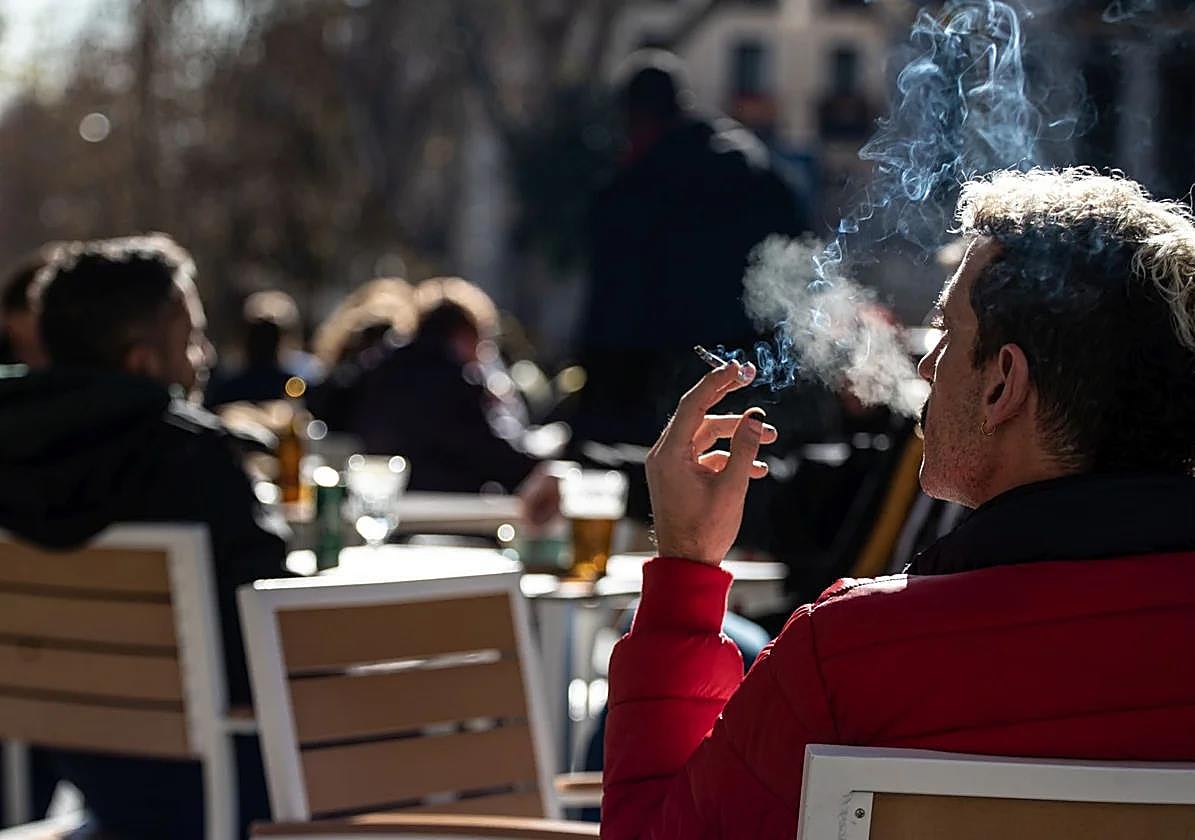
Spain's cabinet of senior government ministers has given the green light this Tuesday to the new anti-smoking law that, among other things, will ban all smoking on bar and restaurant terraces. The approved law expands the ban on smoking in public places, but falls far short of the intentions that Mónica García had when she took over as Minister of Health, as it leaves out two of the main measures most demanded by health experts and other lobby groups: price increases and plain packaging. The first, although included in the initial versions of the tobacco prevention plan - the roadmap that outlined the regulations to be developed in this regard - was eliminated in the latest version of the document, the one that received approval from the ministerial council. The second, which consisted of eliminating cigarette pack designs to make them all the same and neutral, regardless of the brand, will also not be implemented due to disagreements between the government partners.
Even so, the new law restricts tobacco use, especially in outdoor spaces, as it increases the number of places where lighting up a cigarette or vaping will be banned. However, while the ban is clear, for example, in the case of bar terraces and public transport shelters, the draft bill still leaves other situations up in the air. According to sources in Mónica García's department, these will be defined and refined during the law's processing, which still has, at the very least, several months to go before it comes into effect as the new reality.
Where will smoking be banned?
The draft anti-smoking law envisages a ban on smoking, not only in enclosed spaces, but also in other, more communal areas, such as bar terraces, sports facilities, public swimming pools, children's playgrounds, public transport stations, bus stops or shelters and educational centres. It will also be banned in venues where public events are held, for instance, open-air concerts. It is understood that smoking will also not be permitted at music festivals or during orchestral performances at popular festivals, but health ministry sources do not clarify whether the law will affect these situations and stress that this will be clarified during the process to pass this as law.
A 15-metre perimeter
Smoking will also be prohibited outside centres for healthcare, social services and education, including university campuses. Specifically, smoking tobacco and other tobacco products will be banned within a 15-metre perimeter around these centres. Similarly, smoking will be banned in vehicles with professional drivers or in work vehicles, such as delivery vans.
Will vaping be allowed on terraces?
These bans are not limited only to conventional cigarettes, but also extend to e-cigarettes, both with and without nicotine, so they also affect vaping. The law will impose the same restrictions as tobacco on these new products that, in addition to those mentioned above, will also include herbal compounds such as shisha pipes or devices for consuming heated products. Nicotine pouches are exempt from these restrictions.
Goodbye to single-use vapes and hello to fines for underage smokers
The sale of tobacco to minors is already banned. However, this draft bill also bans the consumption of tobacco and related products, such as vapes for example, for this segment of the population. So, minors who smoke in any form or consume nicotine pouches may be fined. Furthermore, the sale and supply of single-use or disposable e-cigarettes, which in recent years have become increasingly popular among young people, especially at parties, is banned. In addition to this reason, the Ministry of Health justifies its veto for the impact these products are known to have on the environment. "It is a particularly serious or harmful product for the environment", said Mónica García at the press conference following the ministerial meeting. She also referred to the fact that these products "hook" young people into smoking because they are "cheap, with sweet flavours and flashy packaging".
Clear signage that smoking is banned
The law will oblige those responsible for spaces and places where smoking is banned, such as hospitality venues, to place clear signage in their premises informing everyone of the ban.
Furthermore, the new law will also ban all types of advertising of tobacco and tobacco-derived products, both direct and indirect. This includes, in addition to advertisements in print, audiovisual, digital and social media channels, the distribution of samples or discounts, as well as any tobacco advertising on equipment, facilities and furniture located in public or collective spaces, including those in bars, nightclubs, terraces or other leisure venues. This includes signs, posters, street furniture or fixtures and fittings in hospitality venues that incorporate logos, images or references to tobacco product brands or related products.
Companies in the tobacco sector will be banned from sponsoring activities, events or any content used within events. Nor will their brands be permitted to appear in publications, festivals, cultural or sporting activities, whether in person or online.
When will the new anti-smoking law come into force?
The law still has some way to go before it becomes a reality, meaning that the ban on smoking on terraces isn't happening right now. What the council of ministers did this Tuesday was approve the preliminary draft of this anti-smoking law, which is now open to public consultation, meaning that businesses, the general public and industry interests can submit their comments. Once that is over, the ministry must re-examine the text and admit or reject any amendments it considers appropriate. Once the final text is complete, the bill must go back to the council of ministers for their final approval. Only then will it pass to Congress and Senate. The law will only come into effect if it obtains sufficient parliamentary support, so it will take at least several months for the bans to materialise.
Financial penalties
The new anti-smoking law updates the offences, fine amounts and liabilities in the current legislation to include the new restrictions. According to Health Minister Mónica García, fines will be up to 600,000 euros. A 12-month transitional period is given to allow manufacturers to adapt their products to the new legal framework, as well as to allow for the depletion of single-use e-cigarette stocks. This means that, once this becomes law, single-use vapes will continue to be available for purchase for a year.
Biennial reports on the impact of this law
The law also sets out the creation of an official group to monitor its progress, typically known as an 'observatory'. This observatory will include government representatives and also scientific societies and other appropriate participants. Every two years it will produce a monitoring report on how the law is playing out in practice, its implementation and the outcomes for public health, among other issues. García explained that the law will also promote programmes for prevention, education and to stop smoking.
![[]](http://static.vocstatic.com/voc26/latest/assets/images/favicon/surinenglish/apple-touch-icon-57x57.png)