
Health
Man in Spain quarantined after contracting Crimean-Congo haemorrhagic fever from tick bite
The 63-year-old patient was transferred from Salamanca to the Gómez Ulla military hospital in Madrid, where he remains stable and under surveillance

Madrid
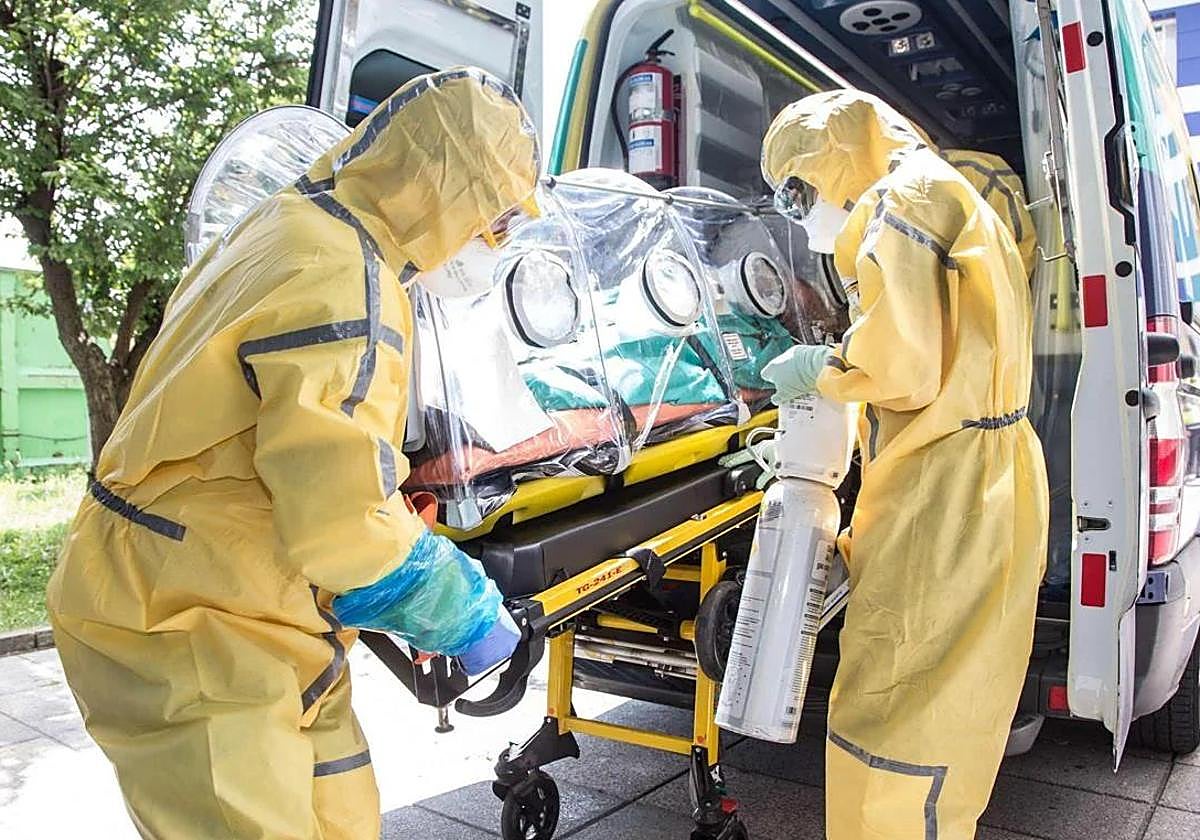
A 63-year-old man remains isolated at the Gómez Ulla military hospital in Madrid after testing positive for Crimean-Congo haemorrhagic fever virus (CCHF), which he contracted from a tick bite. This is the second reported case of the disease so far this year, the other one concerning a 70-year-old man from the same province who tested positive in May.
CCHF is an emerging disease, i.e. a disease that had not existed in Spain until recently. It can be transmitted by a tick bite but also through human contact with an infected person. It is exactly for this reason that careful and strict quarantine is required.
The patient is being monitored
The man was first treated in Salamanca, before getting transferred to the hospital in Madrid, which specialises in such infections and where he will be monitored. Although he remains stable, the disease itself implies clinical severity, especially given that there is no specific medication for it.
"As it is caused by a virus, not a bacteria, there are only antiretroviral treatments for the efficacy of which there is not enough scientific evidence," said Dr José Ramón Ramos Rincón, expert in emerging infections at the Hospital General Universitario de Alicante.
Crimean-Congo haemorrhagic fever has a high fatality rate, which is "not insignificant". If it reaches up to 40%, it is more concerning than other illnesses such as imported dengue, which is common, but has a mortality rate of less than 1%.
Previous cases
Of the 18 cases registered in Spain to date (the first case was reported in 2016), six people have lost their lives. The average incidence so far has been two cases per year.
Climate change, globalisation, changing temperature and rainfall patterns have recently led experts to detect an increase in so-called emerging diseases: the West Nile Virus, dengue, Zika. Contrary to expectations, there has been no noticeable increase in the number of CCHF cases. There was only one year - 2024 - when four cases were reported.
Castilla y León is the region in Spain with the highest incidence of this pathology. With the exception of a couple of cases in Extremadura and another in Cordoba, all cases were recorded in provinces of this region, especially in Salamanca. This is the usual habitat of the tick. Specimens of this insect have been carrying the disease since 2010, possibly having contracted it from migratory birds.
Symptoms and precautions
Dr Ramos urges people to be careful when they walk out in the wilderness and when they touch animals. Some tips include wearing socks over trousers and using repellents when out in the wild. Once at home, everybody should check their body for signs of bites or insects, which should be removed by health professionals.
The first symptoms appear after one to three or even nine days. These include general malaise and, above all, fever. If there is a trace of a tick bite, which sometimes goes unnoticed, an analysis must be carried out to rule out diseases.
Lyme disease can also be contracted through insects, but it is not as fatal as the Crimean-Congo fever. What determines whether the medical condition progresses badly and the outcome is fatal? "Three main factors: the viral load carried by the insect that has bitten the person, the patient's state of health and the strength of their immune system and, finally, the strain of the virus transmitted by the insect because not all strains are equally lethal," says Dr Ramos.
The virus causes inflammation of the blood vessels, which may start to bleed. If the disease spreads throughout the body and to different organs, the vessels rupture, which can lead to death.
Because CCHF has been an urgent notifiable disease (NOD) since 2015 and given that it is emerging in Spain, the detection of a single case would be considered an outbreak. It should be reported as an alert to the Centro de Coordinación de Alertas y Emergencias Sanitarias (CCAES).
![[]](http://static.vocstatic.com/voc26/latest/assets/images/favicon/surinenglish/apple-touch-icon-57x57.png)