
Animal welfare
Embryos of rare Iberian lynx produced for first time in a laboratory in Spain
This milestone has been achieved thanks to the in vitro fertilisation of oocytes rescued from female specimens that died in road accidents and cryopreserved spermatozoa
M. Salado
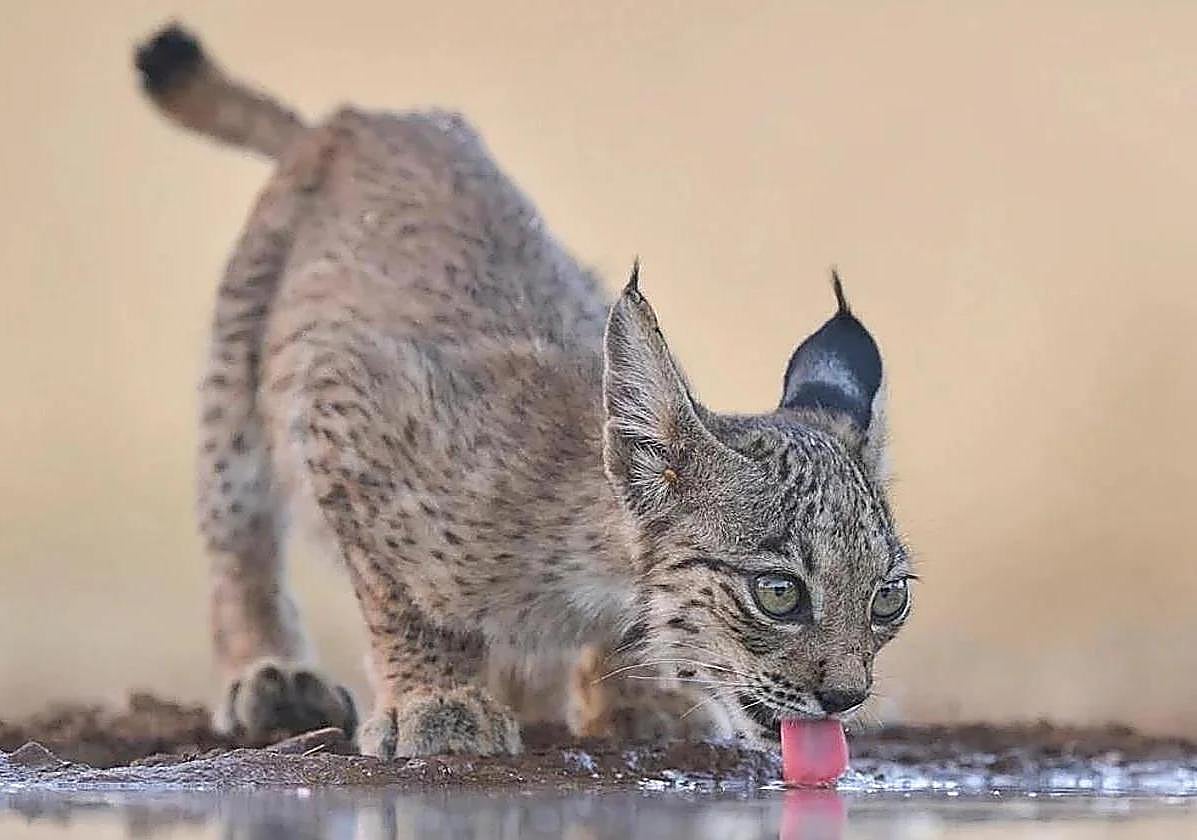
A study led by the national museum of natural sciences (MNCN) of the Spanish national research council (CISC) and the faculty of veterinary medicine of the Complutense University of Madrid (UCM) has used laboratory reproductive technologies to contribute to the survival of the Iberian lynx, one of the most historically endangered species.
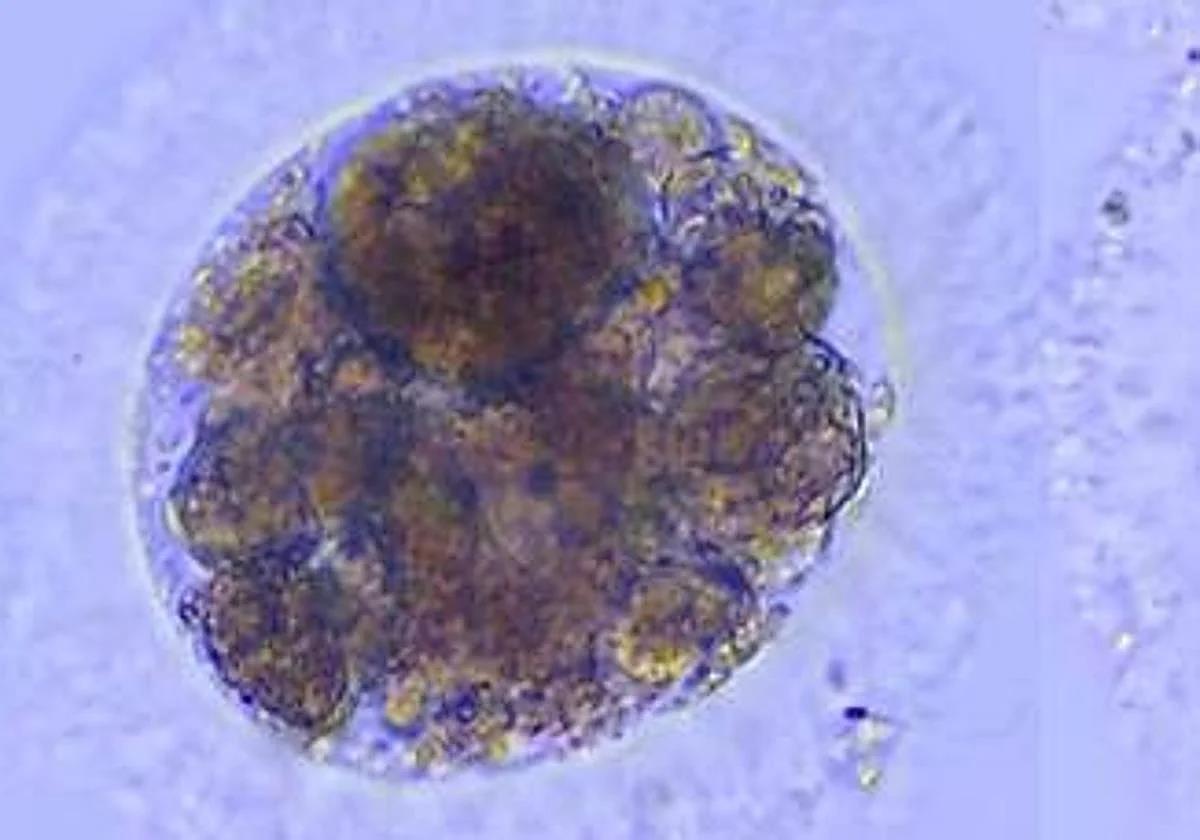
The results, published in the Theriogenology Wild journal, show the possibility of generating embryos of this species through in vitro fertilisation of reproductive cells from females that died in accidents, from sperm cryopreserved in the species' biobank.
The Iberian lynx is a species endemic to mainland Spain and Portugal. In 2002, the census of fewer than 100 specimens in the wild led the international union for conservation of nature (IUCN) to declare the species the most endangered cat on the planet. However, by 2024 the species accounted for more than 2,000 animals in the wild, according to data from the Ministry for Ecological Transition and the Demographic Challenge (Miteco).
In barely two decades, conservation, breeding and reintroduction programmes, together with genetic, reproductive and health studies, have allowed this species to go from being considered critically endangered to being classified as vulnerable by the IUCN.
Today the Iberian lynx still faces significant risks that threaten its survival due to the loss of genetic diversity. Reduced genetic variability leads to inbreeding depression, which decreases the likelihood of survival and leads to disease and reduced reproductive capacity.
Techniques remain to be developed to transfer embryos to recipient females and enhance the diversity of the species
Researchers state that assisted reproductive techniques could reduce the prevalence of these complications through reproductive management of captive and free-ranging populations.
"Our research brings new options to the lynx conservation programme because it makes possible the reproduction of animals that have not had that opportunity, for example, because they die prematurely or because they have behavioural problems and do not mate," CSIC researcher and co-director of the study Eduardo Roldán says.
The reproductive material of the males has been obtained thanks to the collaboration of the Iberian lynx captive breeding centres in Spain and Portugal, which have allowed the collection and cryopreservation of the sperm for storage in the wild species germplasm and tissue bank of the MNCN, which functions as a biobank for the species.
The reproductive material for the females has been obtained through the wildlife recovery centres, which support the lynx conservation programme in the wild. The coordination provided by the regions of Andalucía, Castilla-La Mancha and Extremadura, Miteco and the autonomous body of national parks, has made it possible to obtain the reproductive material of males and females necessary for this work.
The research started with the rescued ovaries, which were transported refrigerated to the laboratory to obtain oocyte maturation under controlled conditions. These oocytes were successfully fertilised to generate embryos that were cryopreserved by vitrification and are currently stored in the Iberian lynx biobank.
The in vitro technique will also make it possible to plan matings of spatially distant individuals from different populations or generations
"We now need to develop methods to transfer these embryos to recipient females, which will undoubtedly contribute to enhancing the genetic diversity of this species," pre-doctoral researcher at UCM and lead author of the study Ana Muñoz Maceda says.
Another remarkable observation of the study is the importance of the time of year in which the ovaries are retrieved. "We found that the time of year had an important effect on embryo retrieval. We were more successful when they were recovered in autumn and winter, which is the time of year when lynxes reproduce," UCM professor and co-director of the research María Jesús Sánchez Calabuig says.
"The success rate achieved, however, is far from ideal, as it is less than that obtained with domestic cats, the species we use as a model," Sánchez Calabuig adds.
Among the factors affecting the results, the authors highlight the key role of the time that elapses until the injured females are located and their ovaries are recovered. To overcome these limitations, the team proposes to use alternative methods to obtain oocytes.
"Our results confirm that reproductive biotechnology can play a key role in complementing conservation"
"It will be necessary to find the least invasive method possible and ensure the maximum recovery of oocytes that can be used for in vitro fertilisation," pre-doctoral researcher at the UCM and lead author of the study Andrea Priego González says.
This work is a major scientific breakthrough, as it demonstrates that it is possible to produce Iberian lynx embryos in the laboratory from ovaries obtained post mortem and cryopreserved sperm. "Thanks to the semen that we store in the biobank, we have genetic insurance," Roldán states.
These advances open the door to the recovery of the genetic diversity of individuals that die prematurely, leaving no offspring. They will also make it possible to plan matings of individuals that are distant in space, belonging to different populations, or distant in time, i.e. belonging to different generations, which will improve strategies aimed at boosting the genetic diversity of the species and, in some cases, at rescuing genotypes of interest.
"Our results, although initial and still improvable, confirm that reproductive biotechnology can become a key tool to complement conservation efforts and ensure the long-term genetic sustainability of the Iberian lynx," Sánchez Calabuig concludes.
![[]](http://static.vocstatic.com/voc26/latest/assets/images/favicon/surinenglish/apple-touch-icon-57x57.png)