
Housing crisis
The growing divide between homeowners and renters widens as Spain's housing crisis worsens
For those priced out of the housing market, this has undoubtedly been the year of unaffordable housing, with a steep 13% price increase in the third quarter, the largest in 18 years
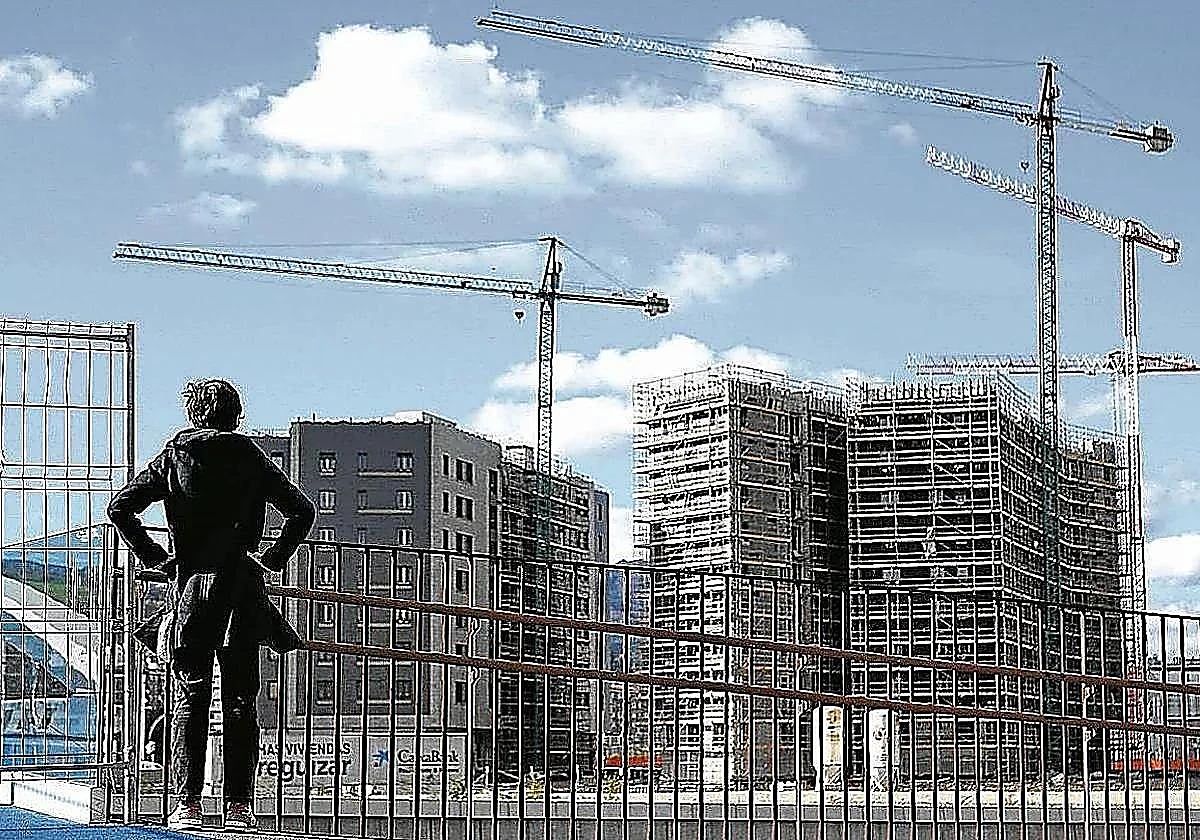

When Javier Rincón returned to Madrid last April after eight years working in Zaragoza, he was confronted with the harsh reality of the housing market in Spain's capital city. After more than four months of lodging with a friend and already working as a cook in a restaurant in the city centre on a steady salary, all he could afford to stay in the district he'd known his whole life was a flatshare with two students - a 52-square-metre, 3-bedroomed apartment. Javier pays 620 euros per month for his room that, at least, is the largest in the apartment. However, there's a catch with the apartment: the owner put up a partition wall to convert the living room and thus rents the place out as a 3-bed instead of just two rooms, at the cost of making the kitchen the only communal space. With three paying tenants, the landlady earns around 1,700 euros per month for those 52 square metres.
Although Javier's case is extreme, this gap between tenants being forced to accept restrictive living conditions and landlords benefitting from rising prices has widened considerably in 2025. "The gap in the average net worth of the over-74s versus the under-35s has increased elevenfold in recent years," explained Gonzalo Gortázar, CEO of CaixaBank, at a recent breakfast briefing. During his speech, he highlighted the difficulties that young people experience in buying a home, "finding themselves in unfortunately worse circumstances than we had".
The Bank of Spain has also been warning for some time that, despite the more than 70% increase in rents over the last decade, younger generations own fewer homes and, therefore, accumulate less net wealth than their parents and grandparents. Yet the statistics clearly show Spain today to be a nation of homeowners. Of the 26.5 million homes that Spain's financial regulator estimates exist in the country (of which 69.6% are primary residences, 16% are second homes and 14.4% are vacant), 75.5% are registered as owner-occupied, compared to an average of 68% in the European Union, according to Eurostat data.
The same sentiment is echoed by Sociedad de Tasación (a major consultancy in Spain for the real estate market), which has observed two distinct pools of demand. One is a solvent, active pool, made up of buyers with purchasing power, also with a strong contingent of foreign buyers. The other consists of young people, immigrants and a middle class with limited purchasing power. "This second pool is growing steadily and, as it has no place in the real estate market due to today's price levels, it is increasingly turning to rentals, where it also encounters growing barriers."
A year to forget
For those priced out of the housing market, this has undoubtedly been the year of unaffordable housing, with a steep 13% price increase in the third quarter, the largest in 18 years, according to Spain's INE national statistics institute. That makes it 42 consecutive quarters of price hikes. The average increase in the Eurozone is around 5%. The appraised price per square metre exceeds the levels of the previous housing bubble prices, exceeding 2,153 euros, according to Spain's Ministry of Housing. This is 35% higher than the 1,600 euros paid at the end of 2019. The meteoric rise has been even more pronounced in the rental market, where rooms for 600 euros are commonplace for those seeking a roof over their heads. According to data from Pisos.com, the price per square metre for a rental in November was 14.08 euros, 18% higher than in 2024.
Structural deficit
With all these figures on the table, the Bank of Spain notes that the mortgage burden remains above the recommended 30% of household income, with prices rising faster than wages and a shortage of supply exacerbating price pressures. The regulator estimates that Spain is facing a housing shortage of some 700,000 homes. This is despite the fact that, in the last year, some 132,000 new building permits were issued (up to May), a 13% year-on-year increase. However, this number is still insufficient to balance the market.
The situation doesn't appear likely to improve. Despite this year's protests and massive demonstrations on the housing crisis, experts predict that price pressures will continue in 2026. "We estimate increases of 7%, above the 4% we had initially forecast, given the shortage of supply and rents that have risen more than expected," explains Aránzazu Cortina, from Bankinter's data analysis department. Singular Bank projects an average price increase of around 9%, while the experts at Pisos.com put it at 7.8%. Rents, meanwhile, will also rise by another 6.8%.
The reality is that affordable housing does not exist in Spain. To get an idea of how out of control the market is, almost 23% of homes already cost more than half a million euros. Furthermore, only 29.5% are priced below 150,000 euros, according to a study by Pisos.com.
Despite this, the consensus among all these experts rules out a housing bubble on the verge of bursting, arguing that households are facing this situation with more ease than in 2008, with banks keeping mortgage lending criteria in check. Mortgages are about to close their best year since 2010, with 420,000 mortgage deals signed across Spain by the end of October. "The financial situation for households, the construction and development sector and the financial system are all much stronger than before and the risks of a sharp price correction are contained. Even so, imbalances persist that deserve attention," note the experts at CaixaBank Research.
![[]](http://static.vocstatic.com/voc26/latest/assets/images/favicon/surinenglish/apple-touch-icon-57x57.png)