
Energy
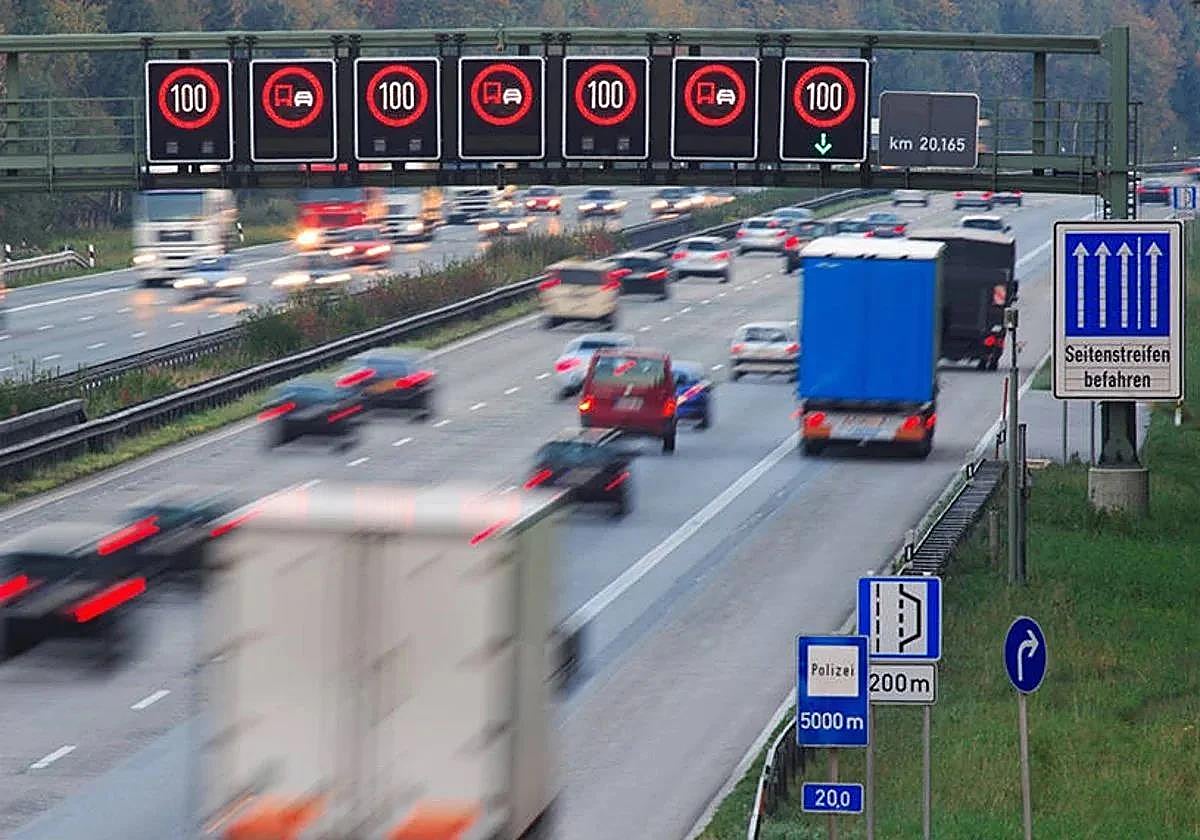
Could this be the end of the 120km/h speed limit on motorways in Spain?
The International Energy Agency, based in Paris, has proposed a reduction of speeds on main roads across Europe in a bid to make financial savings for drivers

Madrid
In an effort to promote more responsible and efficient energy consumption, the Paris-based International Energy Agency (IEA) has launched a series of recommendations, including the reduction of the maximum speed on European main roads and motorways.
One of the most prominent and, at the same time, controversial measures is the suggestion to set the maximum speed on motorways, including those in Spain, to 110km/h (a 10km/h reduction). This will facilitate significant savings in fuel consumption.
According to the IEA, driving at a consistently lower speed not only reduces drivers' fuel bills by around 60 euros per year (if the reduction is 10km/h), but also contributes to the energy efficiency of the vehicle.
The IEA claims a decrease of 10km/h could save around 290,000 barrels of fuel per day in the short term. The savings for the end consumer will depend on the length of the journey. Traffic authorities indicate that going from 90km/h to 120km/h implies an increase in consumption of up to 30%. However, it should be borne in mind that speed is not the only or the most decisive factor.
Changing the way you drive or servicing your vehicle properly can make a difference. Simple decarbonisation, i.e. removing carbon from the engine, can reduce pollutant emissions by up to 20% and reduce fuel consumption by up to 10%.
Driving steadily at a speed between 50 and 90km/h can also save fuel. When driving faster than 80km/h, it is more efficient to use the air conditioning than to open the windows. Setting the air conditioning 3C warmer will also immediately improve fuel consumption.
The proposal is part of a package of measures advocating smarter driving, which includes maintaining correct tyre pressure and switching off the engine when the car is stationary.
How to save according to the International Energy Agency
These are some of the measures in the decalogue published by the IEA
Lower the heating: If you lower the thermostat by just 1C, you will save about 7% in heating energy consumption and cut your average heating bill by 50-70 euros per year. Set the thermostat to the lowest comfortable setting and wear warm clothes when you are at home. Use a programmable thermostat to set the temperature to 15C while you sleep and to 10C when no one is at home. This will cut your annual heating bills by up to 10%. Try heating only the room you are in or the rooms you use frequently.
Adjust boiler parameters: Factory settings of boilers are often higher than necessary. Lower the hot water temperature to save 8% on heating energy consumption, which will cut your average bill by 100 euros per year. If you have a modern, complex combi boiler and you are not able to make the adjustment by consulting the manual, you may have to arrange a one-off visit from the plumber to do it. Switch from bathing to showering to use less energy to heat the water. If you already shower, shorten the time you spend doing it. Hot water pipes and boilers should be insulated to prevent heat leakage. Clean wood- and pellet-fired boilers frequently with a bristle brush to keep them running efficiently.
Insulate to preserve warm air: Close windows and doors, insulate pipes and plug gaps around windows and fireplaces or other openings to keep warm air indoors. Unless your home is of very recent construction, heat will be lost through draughts generated by doors and windows, grilles close to the floor or through the chimney. Insulate or seal these gaps to save up to 100 euros per year. Install curtains or blinds on windows to further conserve the heat. Close chimney openings (unless they are lit) so that warm air does not escape directly through the chimney flue. If you never use the fireplace, seal the flue to prevent heat from escaping.
Change your lightbulbs: Replace old bulbs with new LED bulbs and leave on only the lights you need. LED bulbs are more efficient than incandescent and halogen bulbs, burn out less often and save about 10 euros per year per bulb. Check the energy rating when buying bulbs and try to go for A-rated bulbs (the most efficient) rather than G-rated bulbs (the least efficient). The easiest way to save energy is to turn off the lights when you leave the room.
Avoid the plane and use the train: For distances under 1,000 kilometres, high-speed trains offer a high-quality alternative to air travel. Consider taking a train instead of a plane whenever it is practical and affordable. Companies should encourage train travel instead of short-haul flights for employee business trips or promote virtual meetings instead of travelling. Overnight trains are an option for even longer distances and have the advantage of spreading traffic over different times of the day. With the existing high-speed rail infrastructure, almost 5 % of air travel in the EU could be made by train, including both leisure and business travel.
In addition to driving recommendations, the IEA stresses the importance of choosing sustainable alternatives for commuting. For short journeys, citizens are encouraged to walk or cycle, while the use of public transport is suitable for longer distances. These actions, in addition to saving energy and money, help reduce emissions and ease traffic congestion in cities.
The IEA encourages car-sharing with neighbours, friends and colleagues to save energy and money. In addition, cycling achieves huge savings and health benefits. Many governments also offer subsidies for the purchase of electric bikes.
For longer distances, where walking and cycling are not practical, public transport also helps to reduce energy use, traffic jams and air pollution. The agency recommends leaving the car at home and using the train for longer journeys. Purchasing a travel pass saves money over time.
According to the agency, cities should promote car-free Sundays - a practice that is "already a custom in many countries and cities". The initiative promotes "public health, community spaces and cultural events" in Brussels, Edinburgh, Milan and Paris. According to estimates, leaving the car at home in bigger cities can result in 100-euro savings per year.
Remember that companies or local authorities may also offer subsidies for travel passes. It is best to plan your journeys in advance to save on tickets and find the best route.
![[]](http://static.vocstatic.com/voc26/latest/assets/images/favicon/surinenglish/apple-touch-icon-57x57.png)