
Fast boat-taxis, the new ruthless method of trafficking migrants to mainland Spain
Mafia groups offer speedy trips across the Strait at 5,000 euros which end up with passengers being thrown overboard before they reach land as if they were mere merchandise

Madrid
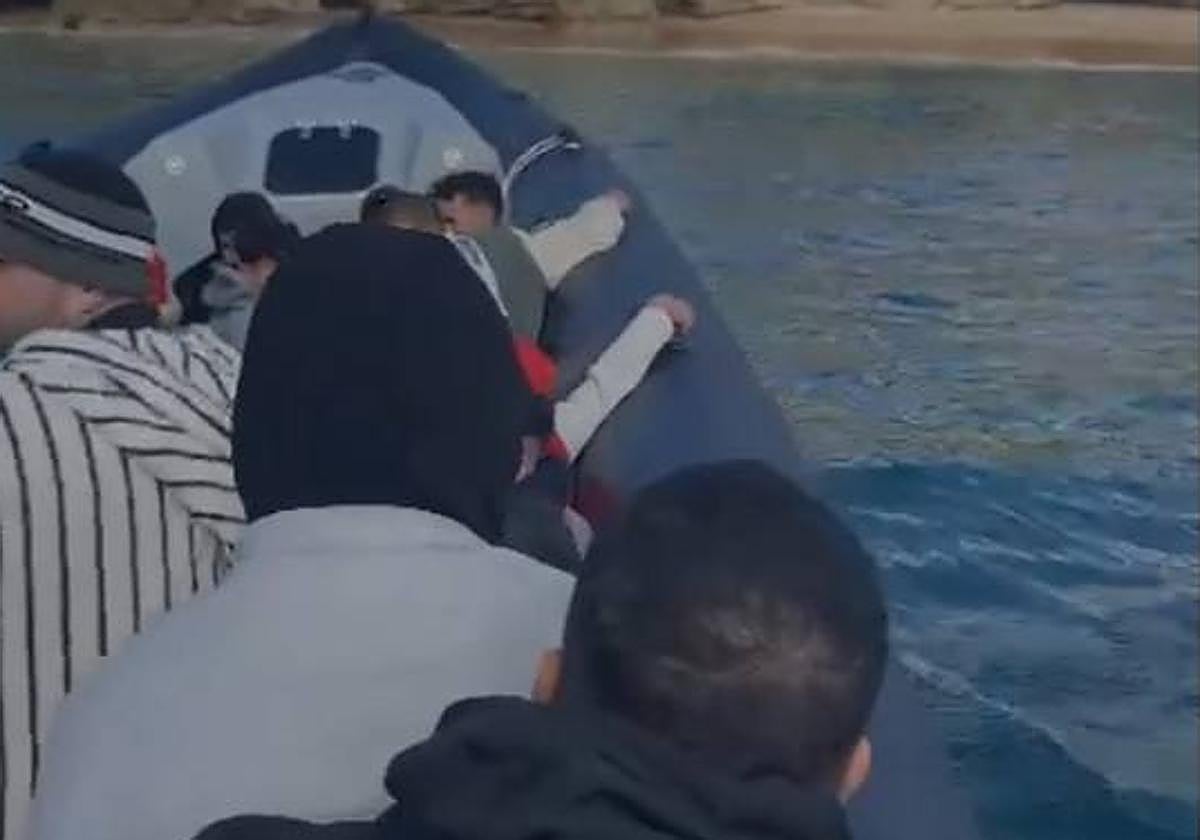
It was on Wednesday 29 November, off the beach of Camposoto, in the town of San Fernando, Cadiz, that four migrants drowned after being thrown overboard from a boat more than 50 metres from the shore. This episode has only come to light because it was recorded by several people who were in the area, but it is by no means an isolated incident. This is the increasingly common modus operandi of the 'migrant boat-taxis', the new unscrupulous business of mafia-style groups operating between Morocco, Algeria and Spain.
The tragedy could, however, have been much greater. There were 35 passengers in that taxi-boat. The crew threw the migrants into the sea in two batches: eight people on the beach of Sancti Petri and the rest in Camposanto. In both cases, the smugglers dumped the migrants in particularly dangerous areas, with whirlpools and currents of up to four knots.

In Sancti Petri, only the action of the employees of a nautical company - who fortunately were on the beach because they were hired to film a group of 'Instagrammers' - prevented many more from drowning. In their small inflatable boat, they pulled several migrants who were already unconscious out of the water.
The criminals piloting the boat cared little that many of the passengers had told them they could not swim or that they were all dressed in heavy clothing; some were wearing three coats and as many pairs of trousers, one under the other, an added hindrance to staying afloat and saving their lives.
The traffickers were only interested in returning to Morocco as soon as possible, a journey of less than an hour to the coast of Cadiz and slightly longer from Algeria to Almeria, Murcia or Alicante, the other route for this type of boat, which this year is proliferating as an alternative for migrants with greater financial resources.
According to Guardia Civil officials, the cost of a passage on these boats can reach 5,000 euros. The mafia groups attract migrants with the argument that the trip is much shorter and safer. The criminals fail to mention how they end up throwing these supposedly VIP passengers overboard.
Profitable trips
According to national security sources, North African and Spanish drug trafficking groups have now branched out into migrant smuggling with this new fast "taxi service". Until now they had remained largely on the fringes of the criminal groups that organise the migrant crossings in the traditional small wooden boats.
The drug traffickers who control the Strait of Gibraltar and the Mediterranean coasts have replaced the old 'pateras' (unmodified artisanal fishing boats) with the 'narco-boats' they regularly use to carry hashish to the mainland. From boats that barely exceeded ten kilometres per hour (around 5.3 knots), migrants now travel at almost 130 kilometres per hour (70 knots).
These boats are very valuable to the drug traffickers who have started smuggling migrants, but who have not left the hashish business. Their inflatable boats and their engines can cost more than 300,000 euros, so, unlike the pateras, they cannot be left stranded on the beaches. Hence, the criminals' priority is to return to Africa as soon as possible with their dinghy intact, even if this means not even touching land and throwing the passengers overboard.
Specialists from the Guardia Civil explain that these boats only touch the beaches in two cases: when they carry bundles of drugs along with the migrants, which is becoming more common; or when the mafias use the return trip to carry cargo, usually stolen telephones, or to transport amphetamines and ecstasy manufactured in Europe to Algeria or Morocco.
In fact, just a few days ago, at the end of November, the Guardia Civil seized 68 kilos of amphetamines valued at three million euros in 'Operation Emissary', in which they arrested seven human traffickers who took advantage of return trips to Algeria to take these drugs to Africa.
With the migrant journey alone the gangs can earn 150,000 to 200,000 euros and, according to the same sources, it is likely that each narco-boat makes a daily round-trip.
Handling these fast boats with such a heavy load of people and sometimes drugs requires an experienced 'crew', who also act as a security service to throw the migrants overboard before they reach land.
On the recent trip that ended in tragedy on the beaches of San Fernando, the crew consisted of four suspects, two Spaniards - a man and a woman - and two Moroccans, who were able to flee out to sea. A different fate befell the four arrested last Monday in Cadiz for the death of another migrant on a beach in Barbate on 21 October. They are accused of crimes of homicide, against the rights of foreign citizens and against public health.
![[]](http://static.vocstatic.com/voc26/latest/assets/images/favicon/surinenglish/apple-touch-icon-57x57.png)