
Politics
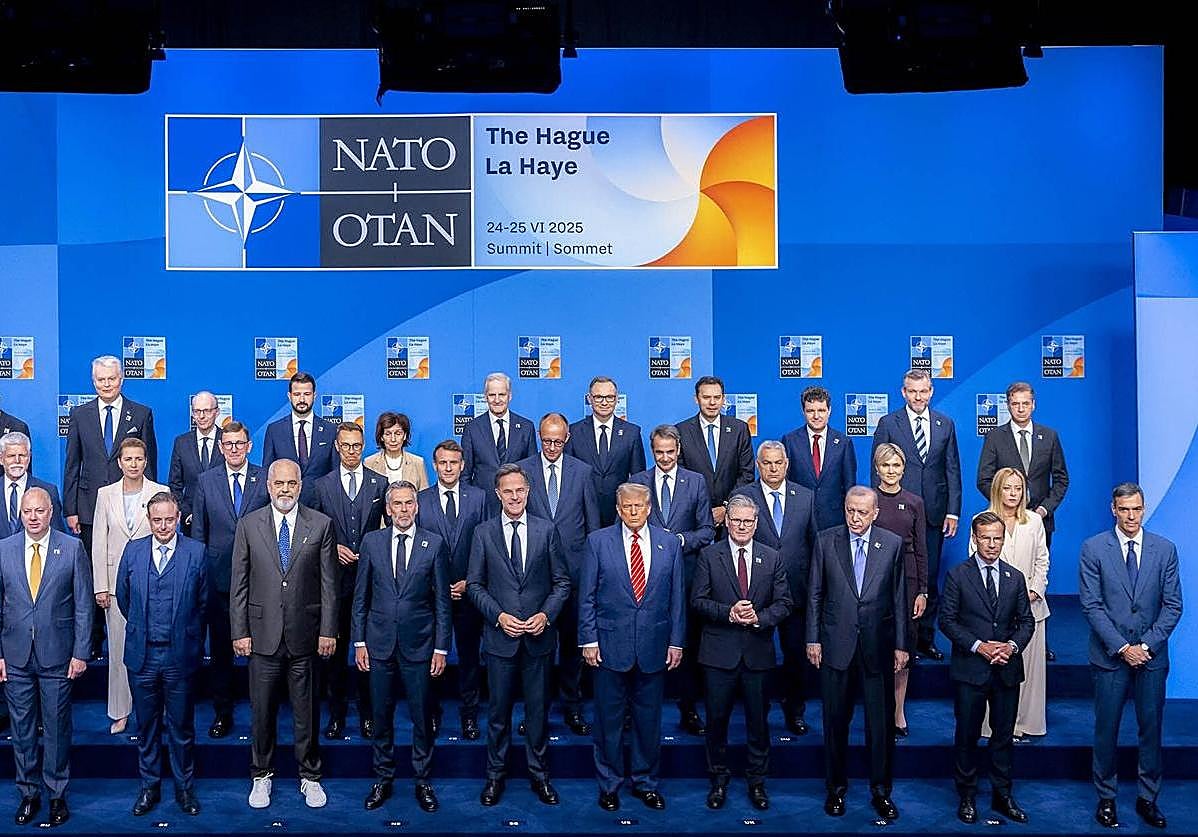
Europe excludes Spain from Ukraine dialogue
The European Commission has published a resolution with the signatures of several leaders, excluding Pedro Sánchez
Antón Etxebarria
Since the beginning of the Russian invasion, Pedro Sánchez has shown his support for Ukraine. Spain's PM has visited Kyiv on several occasions and President of Ukraine Volodymir Zelenski has often thanked him for the aid received, be it Leopard tanks or power generation equipment. The two leaders spoke for the last time on Saturday and expressed their positive relationship on their respective X (formerly Twitter) accounts. Sánchez called for "a just and lasting peace that respects Ukraine's independence and sovereignty" and Zelenski applauded the fact that they have "the same vision".
However, on Sunday, 10 August, the European Commission sidelined Spain by approving a resolution in support of Ukraine without the signature of any representative from Madrid. It did include the signatures of the leaders of Italy, France, Germany, Poland, Finland and even the UK, which is no longer even part of the EU.
However, the text signed does not say anything new. It stresses that "only an approach that combines active diplomacy, support for Ukraine and pressure on Russia" can end the war between Ukraine and Russia, applauds "President Trump's work to stop the massacre in Ukraine" and states that the signatory countries are "ready to support that work diplomatically, in addition to maintaining substantial military and financial support for Ukraine". All this while imposing "restrictive measures against the Russian Federation".
Although these ideas are shared by Sánchez's government, this is not the first time Spain has been excluded from the group of leading European countries on this issue. Sánchez was not invited to the meeting on Saturday between the European allies and US Vice President JD Vance, who seems to be preparing the ground before Trump and Putin meet on Friday, 15 August, in Alaska. The US president also spoke by phone with various EU leaders to brief them on the progress of his envoy - Steve Witkoff - in Moscow. There is no record of Sánchez being in that group.
Sánchez in London
However, the Spanish Prime Minister will travel to London on 3 September to meet UK Prime Minister Keir Starmer at his official residence. Although Sánchez has travelled to the UK four times, this will be the first time he has held a bilateral meeting with his counterpart, in a meeting in which he plans to discuss the recent agreement between Spain, the UK and the EU on Gibraltar. It has not been revealed whether the two leaders will discuss the situation in Ukraine, which may be very different by then.
So far, little has changed on the ground. Fighting and deadly attacks continue, with mutual drone launches in the early hours of Sunday morning, as the Russian army continues to advance in the east against a less numerous and less well-equipped adversary.
In the afternoon, Russia bombed a bus station and university in Zaporiyia, injuring at least 19 people. "This is the terrorism that we Ukrainians suffer every day," said governor Ivan Fedorov.
To end the conflict, Moscow demands that Ukraine cede four partially occupied regions (Donetsk, Lugansk, Zaporiyia and Kherson), as well as Crimea, annexed in 2014, and renounce Western arms supplies and any Nato membership.
These demands are unacceptable to Ukraine, which demands the withdrawal of Russian troops from its territory and Western security guarantees. This would include more arms supplies and the deployment of a European contingent, which Russia opposes.
Given the ineffectiveness of the economic measures and military support that the West has offered Kyiv so far, hopes are pinned on the meeting between Trump and Putin, although the three bilateral meetings between Russia and Ukraine have so far failed to produce any results.
![[]](http://static.vocstatic.com/voc26/latest/assets/images/favicon/surinenglish/apple-touch-icon-57x57.png)