
Heritage
Dishes from Roman Hispania make their way in to haute cuisine
A chef from a Michelin-starred restaurant prepares dishes based on research by several universities into what the inhabitants of the Roman villa of Noheda in Cuenca once ate
J. M. L.
Cuenca
Jesús Segura is the chef at the Casas Colgadas restaurant, located in the iconic building of the same name in Cuenca. His talent and skills have been recognised by one Michelin star and a Sol Repsol and he has now embarked on a new project, applying his gastronomic creativity to dishes from Roman Hispania. He has joined a project at the Roman archaeological site of Noheda, located in the small village of Villar de Domingo García (Cuenca), with a population of 215 inhabitants.
What the inhabitants of this town ate between the 1st century BC and the 4th century AD will be the basis of his new dishes. At the same time, the haute cuisine will help researchers learn more about the diet of the Romans from Cuenca. The diet of the 'domini' (lords/masters) - rich owners of the villa - but also that of their servants and slaves will be studied more in depth for the first time.
"We have studied seeds, found a large accumulation of skeletal remains of animals in among the rubbish and discovered a high consumption of donkey meat among the poorer classes," Professor of Ancient Archaeology at the University of Castilla-La Mancha Miguel Ángel Valero said.
Body fluids
A small necropolis has also been found in Noheda. The bones there preserve collagen and are currently studied by researchers from the University of A Coruña. "We want to know what they ate and what diseases they had. When a person dies, their fluids rot under the coccyx and sometimes these get preserved, which may help us reconstruct their diet," Professor Valero said. There has been one more finding of great importance: two ceramic bowls containing traces of oils, which are being analysed at Malaga University.
Rich roasts and poor stews
The discoveries so far already provide clues about the diet of the inhabitants of this Roman villa. The domini used to eat preserved fish; game meat - wild boar, deer, partridge and rabbit; chicken, suckling pig, baby goat and lamb. The meat was usually roasted and washed down with Syrian wine.
The poor ate oxen, donkeys, sheep and goats, but at an advanced age. When these animals were too old to work in the fields or provide wool and milk, they were slaughtered. In order to tenderise their meat, they had to be boiled or stewed. This may have been the origin of today's 'morteruelo' from Cuenca - a pâté made from mashed pork liver, game meat, paprika and breadcrumbs, which ends up as a thick paste with a high calorific value.
The Spanish Pompeii
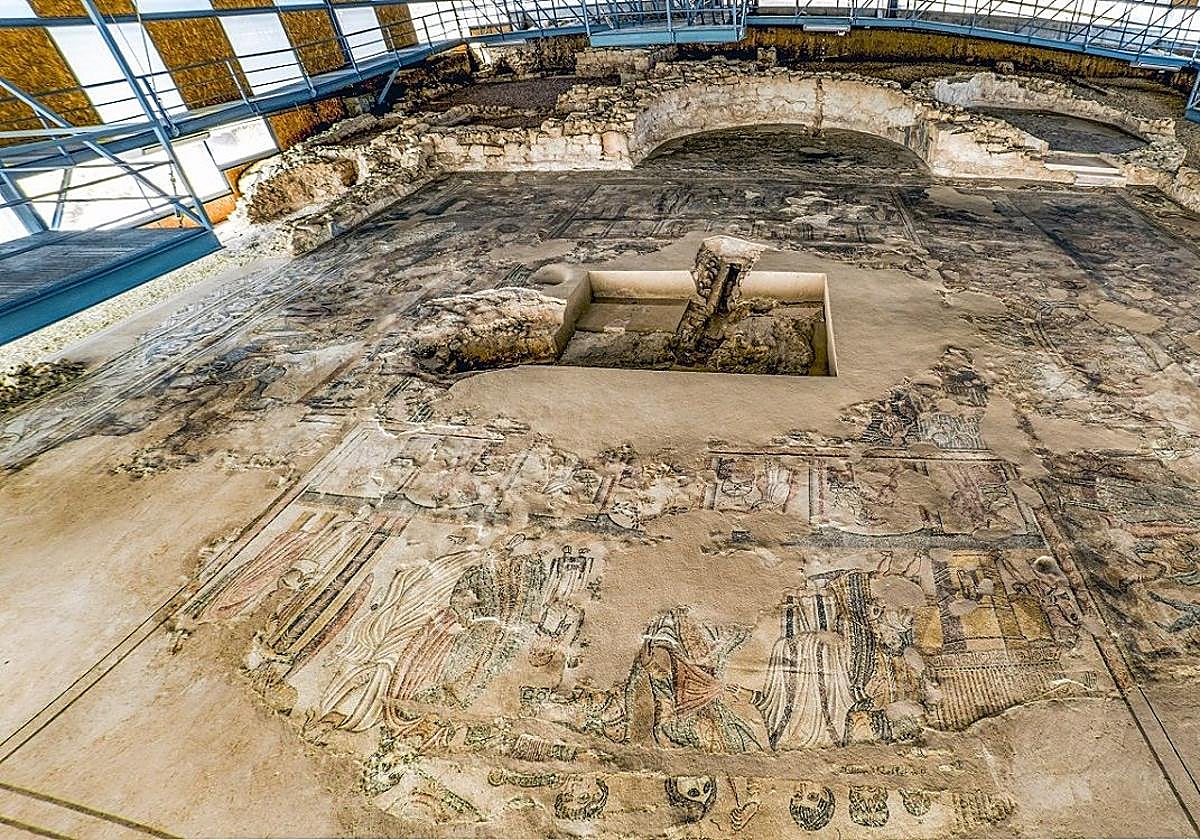
The diets of both social classes were also rich in cereals, legumes and local fruit and vegetables. The seeds found at Noheda bear witness to this, as do the mosaics that can be visited at this site. Internationally renowned for housing the most spectacular figurative mosaic of the Roman Empire, Noheda preserves rooms of the residential building with rich decorations and a thermal complex. Some call it the Spanish Pompeii.
![[]](http://static.vocstatic.com/voc26/latest/assets/images/favicon/surinenglish/apple-touch-icon-57x57.png)