
Motoring
These are the four models of V-16 hazard warning beacons Spain's DGT has removed from its authorised list at last minute
Directorate-General for Traffic approved geolocation devices will be mandatory for most motorists driving on Spain's roads as from 1 January
Canal Motor
Madrid
The countdown to the mandatory requirement for the connected V-16 warning light in Spain has taken an unexpected turn. With only days to go before these geolocation devices become mandatory in all vehicles (with a deadline of 1 January), the Directorate General of Traffic (DGT) has withdrawn four models from its authorised list that were already on the market, unleashing a storm of criticism and "tremendous legal uncertainty".
The decision has taken by surprise thousands of drivers who had already purchased the devices. The withdrawal of these four specific models has generated a wave of indignation in social media and consumer associations, who highlight the fact that Spain is the only country in the European Union that requires this warning system, which in itself has generated suspicion.
The DGT has had to clarify the legal situation for those affected: drivers who already have one of the recalled models will be able to continue using them. It says that those carrying these devices will not be fined and that they will be allowed to use them until the end of their "useful life" (usually linked to the 12-year prepaid data plan they come with).
Although there are no fines, the measure has slowed down the sales of certain manufacturers and raised doubts about the certification criteria used so far. Autocasión recommends that "although the DGT says that nothing will happen if you use one, if you have kept the receipt, return it immediately as it makes no sense to drive with a safety device which has been revoked (without the technical reasons having been clearly explained, although everything points to problems of geolocation or connection stability).
A unique experiment in Europe
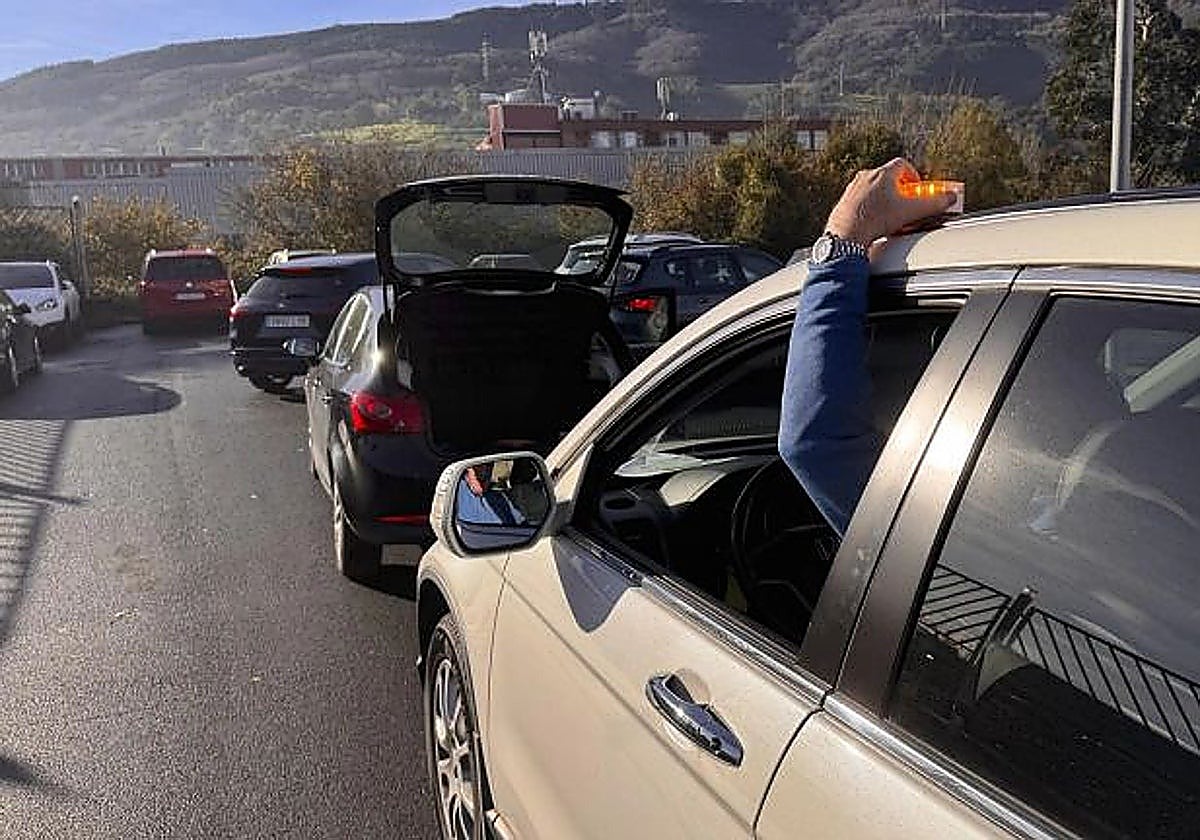
According to the DGT, the V16 device, which will replace the traditional warning triangles from 1 January, is a small yellow light which is connected to the car and is capable of emitting a high-intensity 360º light intermittently and continuously for at least 30 minutes. It incorporates a battery with a useful life of at least 18 months, regardless of whether or not it is rechargeable.
We must carry it in the glove compartment of our vehicle and in the event of a breakdown or accident, we can activate it in a matter of seconds, preferably by placing it on the roof. At that moment, in addition to emitting the warning light signal, it will connect to the DGT 3.0 platform to transmit its location in real time and warn other road users of the situation. It is not necessary to use a mobile phone to send the signal, as the device includes a GPS chip and a non-removable SIM card that makes the connection.
Moreover, telephone companies will not charge individuals any fee for the connectivity service, as the legislation stipulates a minimum connectivity availability of 12 years, the cost of which is included in the sale price of the device.
It is important to remember that the V-16 beacon only transmits the exact position of the vehicle involved in order to prevent road accidents, but does not transmit any personal information or information about the vehicle. Therefore, it does not function as a warning system for emergency services or medical attention. This task is left to the occupants of the vehicle, as far as possible.
You can access the list of DGT-approved models by clicking here.
They must be carried by passenger cars, mixed vehicles, goods vehicles and buses, in accordance with the provisions of Annex XII of the General Vehicle Regulations, approved by Royal Decree 2822/1998 of 23 December 1998.
These are the beacons that are no longer on the DGT's approved list
Don Feliz V16IoT (Certificate PC24020028)
The Boutique For Your Car V16IoT (Certificate PC25020290)
Ikrea V16IoT (Certificate PC25060006)
(These first three manufactured by Ledel Solutions / Yuyao Jiming Electronic)
Call SOS - Model XL-HZ-001-VC (Certificate 2024060583G1)
(Manufactured by the Spanish company Ditraimon S.L.)
Industry experts point out that this situation highlights the complexity of implementing a mandatory geolocation system that has no precedent in other neighbouring countries. The automatic connection with the DGT 3.0 platform aims to reduce road accidents by avoiding the driver having to get out of the car to place triangles, but the launch is being marred by administrative failures just 96 hours before it comes into force.
For drivers, the message is one of calm but caution: if you already have your warning light, check if your model is one of those affected, although the law, for now, seems to be on your side to avoid a massive wave of returns and complaints.
![[]](http://static.vocstatic.com/voc26/latest/assets/images/favicon/surinenglish/apple-touch-icon-57x57.png)